
How frequently should warehouse racking systems be inspected by a SEMA Approved Inspector to ensure ongoing safety and compliance?
Warehouse racking should be examined by a SEMA Approved Inspector at least annually, or more frequently where the risk assessment, operating conditions or inspection findings indicate a shorter interval is necessary. Staff should also carry out regular visual checks, reporting damage or other safety concerns immediately so that remedial action can be taken without waiting for the next formal inspection.
Warehouse racking should be inspected by a SEMA Approved Inspector at least annually, and more frequently where the risk assessment, working environment, system usage or previous findings indicate that a shorter interval is appropriate. This formal inspection complements regular in-house checks, which should identify damage and unsafe conditions between professional inspections.
The inspection frequency should be based on the way the warehouse racking is used, rather than treated as a fixed calendar exercise. A risk assessment should consider factors such as forklift traffic, loading and unloading practices, stock weights, turnover of operators, impact exposure, the condition and age of the installation, environmental conditions and any history of damage. Busy facilities with frequent vehicle movements or repeated impact may need more frequent independent inspections.
Annual independent inspection
A SEMA Approved Inspector provides an independent, competent assessment of the warehouse racking installation. The inspection should examine the structure, frames, beams, bracing, connections, protection, safety components, load notices and the general condition of the system. It should also consider whether the installation is being used in accordance with its design and whether changes to the layout, loads or operating methods have introduced new risks.
An annual inspection is the usual minimum interval where the risk assessment supports it. It should not be regarded as a substitute for ongoing monitoring. Waiting for the next scheduled visit after damage has been identified could leave employees and stock exposed to avoidable risk.
Regular in-house visual checks
Employees who work around the warehouse racking should carry out regular visual checks in line with the site risk assessment and operating conditions. These checks are intended to identify obvious problems promptly, including:
- bent, twisted or otherwise damaged uprights, beams, bracing or protection;
- dislodged or missing locking devices and other safety components;
- loads that are unstable, overhanging or incorrectly positioned;
- signs that the warehouse racking has been struck by handling equipment;
- changes to the layout or loading arrangement that are not supported by the system design; and
- missing, damaged or unreadable load notices.
Checks should be completed by people who have been trained to recognise warehouse racking defects and understand the site’s reporting procedure. Findings should be recorded, communicated to the responsible person and followed through to completion. A simple inspection record can help demonstrate that concerns are being actively monitored and managed.
When an additional inspection is needed
A further inspection should be arranged before the next planned annual visit where there has been a significant event or change. Examples include a collision, structural damage, relocation, alteration, change of load, change of handling equipment, substantial change in warehouse activity or concerns raised during an in-house check. An inspection may also be appropriate after repairs, particularly where the damage affected a load-bearing component or the repair method requires verification.
Where the warehouse racking is exposed to unusual conditions, such as corrosion, heat, moisture or aggressive working practices, the inspection interval should reflect the increased risk. The responsible person should review the interval whenever operating conditions or inspection results change.
What happens when damage is found
Damage should be reported immediately rather than left until the next scheduled inspection. The affected area may need to be isolated, unloaded or taken out of service until it has been assessed. Depending on the severity and location of the defect, the inspector may recommend prompt remedial work, temporary controls or immediate restriction of access and use. Repairs should be completed using an appropriate method and the warehouse racking should be re-examined where necessary before it returns to normal service.
A SEMA Approved Inspector’s report should record the areas examined, defects identified, their level of urgency and any recommended actions. The report should be retained with the site’s warehouse racking safety records and used to track repairs, confirm completion and review whether the current inspection interval remains suitable.
In practical terms, the safest approach is to combine a risk-based annual inspection by a SEMA Approved Inspector with regular workplace checks and immediate reporting of damage. This provides continuing oversight of warehouse racking safety and helps the responsible person demonstrate that inspections, maintenance and corrective actions are being managed systematically.
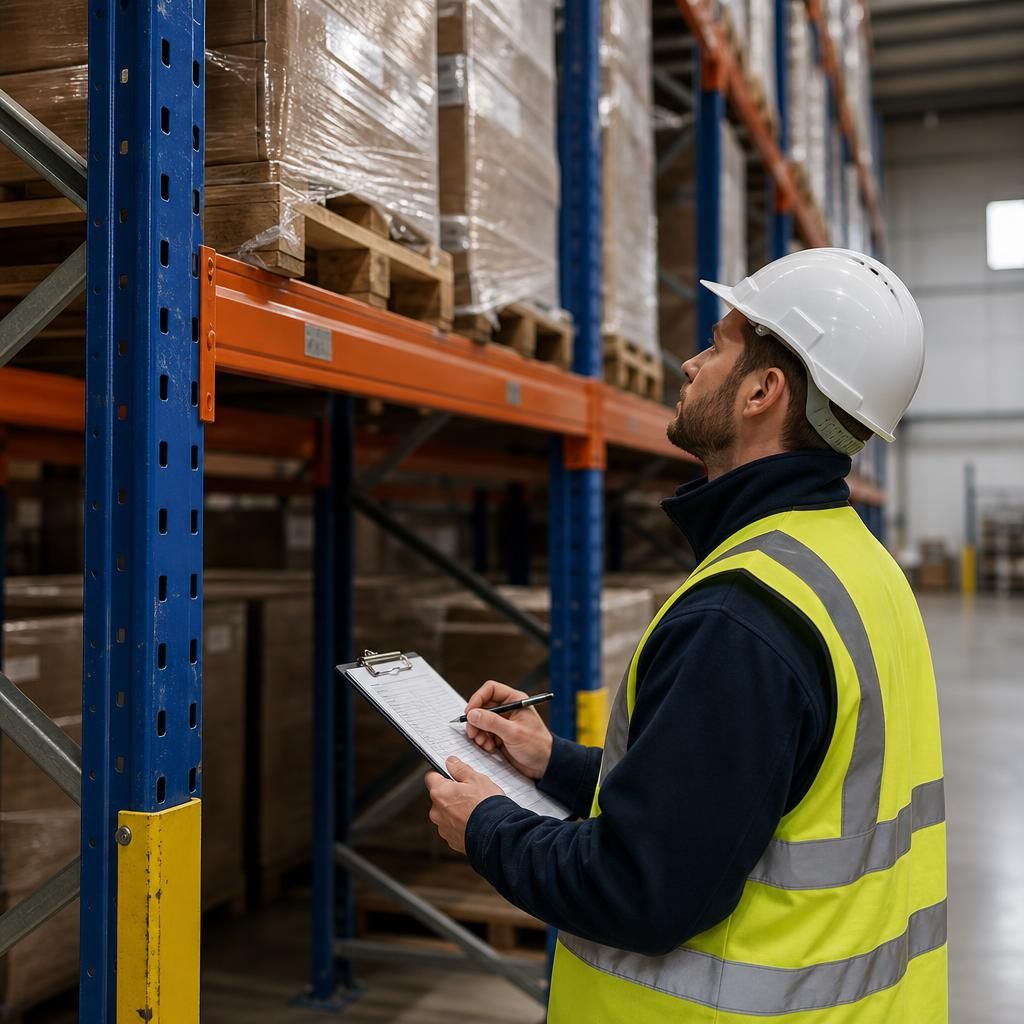
A formal inspection by a SEMA Approved Inspector should take place at least annually, but the appropriate interval depends on the warehouse racking’s risk profile. Forklift activity, impact exposure, loading practices, environmental conditions, system age and previous inspection findings may justify more frequent inspections.
Regular workplace checks are also essential between formal inspections. Trained staff should report damaged uprights, beams, bracing, protection, locking devices or load notices immediately. Any affected area should be assessed and, where necessary, isolated or unloaded until suitable remedial action has been completed.
Arrange Your Warehouse Racking Inspection
Arrange your warehouse racking inspection with Able Racking to confirm that your system remains safe, compliant and suitable for its current use. Contact our experienced team to discuss your inspection requirements and the appropriate review interval.