
What are the benefits of having a professional conduct my warehouse rack maintenance?
Professional warehouse rack maintenance provides a thorough, impartial assessment of your storage systems, identifying damage, deterioration and developing safety risks that may be missed during routine checks. It helps maintain compliance, supports safer warehouse operations, reduces unplanned repairs and can extend the service life of your warehouse racking.
Professional warehouse racking maintenance provides a systematic, impartial assessment of the condition, safety and performance of your storage system. A qualified specialist can identify damage, deterioration, loose or missing components and unsafe loading conditions that may be overlooked during routine checks, then recommend proportionate action to keep the warehouse safe and compliant.
The main benefits include:
- Improved safety: Experienced inspectors know where defects commonly occur, including damaged uprights, beams, bracing, safety pins, footplates, anchors and protection equipment. They can distinguish cosmetic damage from defects that may affect structural stability and require immediate action.
- More reliable compliance: Professional maintenance supports the responsibilities placed on warehouse operators under workplace health and safety requirements. Assessments can be carried out with reference to relevant manufacturer guidance, applicable British and European standards, and recognised industry practice, including the principles of BS EN 15635 where appropriate.
- Earlier identification of defects: Small faults can develop into more serious problems if they are not recorded and addressed. A professional inspection can identify impact damage, corrosion, overloading, unauthorised alterations, missing components and signs of movement before they lead to structural failure or an unplanned shutdown.
- Clearer repair priorities: Findings should be recorded in a detailed report that explains the defect, its location, its significance and the action required. This makes it easier to separate urgent risks from items that can be monitored or included in planned maintenance.
- Fewer unexpected repairs: Planned maintenance helps identify recurring damage and the operational causes behind it, such as vehicle impacts, poor load placement or unsuitable handling practices. Addressing these causes can reduce avoidable repair work and disruption.
- Longer service life: Keeping components correctly aligned, secured and protected from avoidable damage helps preserve the performance of the warehouse racking system. Regular attention to faults can also prevent damage spreading to adjacent sections.
- Better operational continuity: Promptly identifying unsafe areas allows suitable controls to be put in place, such as isolating a bay, removing a damaged component from service or arranging a repair. This is generally more manageable than responding to a sudden collapse, extensive damage or an emergency closure.
- Reliable documentation: Inspection reports, repair records and photographic evidence provide a useful maintenance history. These records help demonstrate that defects have been considered and that appropriate corrective action has been planned or completed.
A professional assessment is particularly valuable because maintenance is more than a visual search for obvious damage. The inspection should consider the condition of structural components, the suitability of loads, the effect of previous alterations, protection systems, floor conditions and any changes to the way the warehouse racking is being used. The inspector should also consider information available from the system supplier or manufacturer.
Professional maintenance does not replace the checks carried out by warehouse employees. Daily or shift-based checks remain important because operators are often the first to notice a new impact or change in condition. Instead, specialist maintenance complements those checks by providing a more detailed review from a competent and independent perspective. Any reported damage should be controlled promptly, and areas presenting a significant risk should not remain in use until they have been made safe.
It is also important to distinguish between an inspection and a repair. An inspection identifies and assesses defects; maintenance and repair work address the underlying problem. Depending on the finding, the correct action may be to replace a component, tighten or reinstate a connection, correct an unsafe configuration, improve protection, reduce a load or remove the affected section from service. Repairs should be completed by suitably competent operatives and should not conceal damage without resolving its cause.
Using a professional service gives you access to experienced operatives who can assess the system consistently, explain the findings in practical terms and help plan corrective work. For an existing customer, this means the condition of your warehouse racking can be reviewed alongside previous reports, repairs and known site risks, creating a more effective preventative maintenance plan rather than treating each defect in isolation.
Overall, professional warehouse racking maintenance helps protect people, support compliance, reduce operational disruption and control longer-term costs. It provides dependable evidence about the condition of the system and gives warehouse managers a clear basis for deciding what needs immediate attention, what should be repaired soon and what can be monitored through planned maintenance.
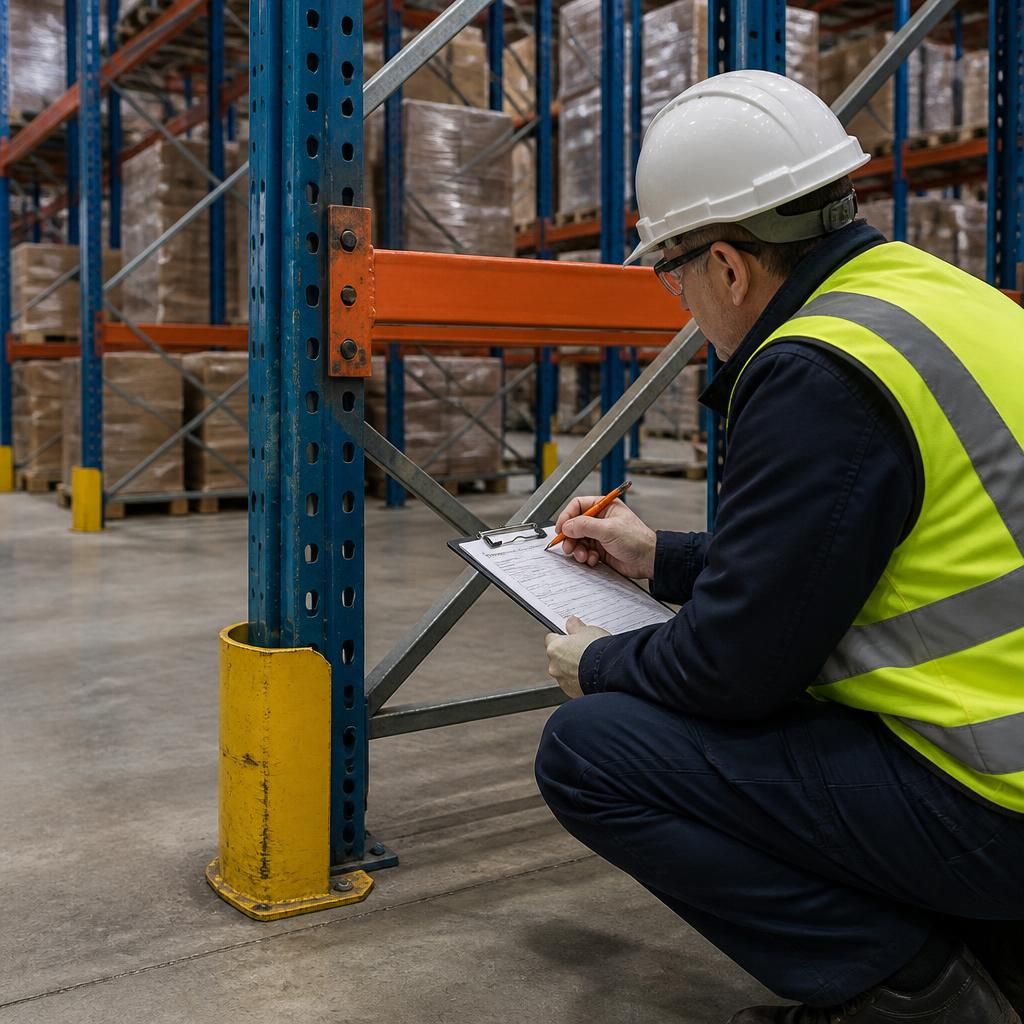
Professional warehouse racking maintenance gives you a documented assessment of defects, their risk and the action required. Rather than relying only on a visual check, a competent specialist examines structural components, connections, protection, loading arrangements and signs of impact or deterioration.
This makes repair decisions clearer. The report can distinguish between damage requiring immediate isolation, defects needing prompt repair and lower-risk issues suitable for planned maintenance. It also creates a reliable record that can be reviewed alongside previous inspections, repairs and changes to warehouse operations.
- Identifies defects that may be missed during routine employee checks.
- Supports proportionate corrective action and better maintenance planning.
- Helps reduce disruption by addressing developing problems before they become more serious.
- Provides useful evidence that safety concerns have been assessed and managed.
Arrange Your Professional Warehouse Rack Maintenance
Arrange professional warehouse rack maintenance with Able Racking to identify defects, prioritise corrective action and keep your storage system safe and compliant. Contact our experienced team to discuss your requirements and plan a suitable inspection or maintenance visit.