
What materials and techniques are used in warehouse racking repairs?
Warehouse racking repairs typically use manufacturer-approved replacement components, compatible structural steel sections, bolts, bracing and protective finishes selected for the damaged system and its load requirements. Techniques may include replacing bent or weakened parts, securing connections, realigning frames and beams, and installing engineered repair systems, followed by checks to confirm the repaired structure is safe and fit for use.
Warehouse racking repairs use compatible, manufacturer-approved components and controlled repair techniques to restore the strength, stability and alignment of the affected structure. Typical materials include replacement steel uprights, beams, bracing members, footplates, bolts, anchors, shims, guards and protective finishes. The correct choice depends on the type and extent of damage, the original system design, the intended load and the instructions provided by the system manufacturer or a suitably qualified engineer.
Repairs should not be based on appearance alone. A component that looks slightly bent, twisted or scratched may have lost structural capacity, while damage to a connection or frame can affect the stability of adjoining bays. Able Racking’s repair process therefore begins with a detailed inspection, identification of the affected components and confirmation of the appropriate repair method before work starts.
Common materials used in warehouse racking repairs
- Replacement uprights and frame sections: Uprights carry the vertical loads through the storage structure. A bent, buckled, torn or significantly distorted upright will normally require replacement rather than straightening.
- Replacement beams: Beams support pallets and transfer their loads into the frames. Damaged beams are generally removed and replaced with compatible sections that have the correct profile, length, connector type and load capacity.
- Bracing members: Horizontal and diagonal bracing helps maintain the geometry and stability of a frame. Bent, split or detached bracing is replaced with matching components and correctly secured connections.
- Bolts, nuts and connection components: New fixings may be required where bolts are bent, stretched, corroded, missing or damaged. Replacement fixings must match the system specification and be installed correctly.
- Baseplates, footplates and anchors: These transfer loads into the floor and help prevent movement. Repairs may involve replacing damaged baseplates, renewing anchors or correcting an insecure floor connection.
- Steel protection and impact protection: Upright guards, end-of-aisle protection and other barriers can reduce the likelihood of recurring impact damage. They are selected to suit the layout, traffic routes and equipment used in the warehouse.
- Shims and packing materials: Suitable steel shims or other approved packing may be used to correct minor level differences where permitted by the system design. Improvised materials should not be used because they may crush, move or alter the load path.
- Protective coatings: Replacement steel may have a painted, galvanised or otherwise specified finish. The finish should be suitable for the operating environment and should not conceal damage or interfere with connections.
Materials must be compatible with the existing installation. Components that appear similar may differ in steel grade, thickness, dimensions, connector design or load rating. Mixing parts from different systems without technical approval can create an unsafe connection, reduce capacity or prevent the repaired structure from behaving as intended.
Techniques used to repair warehouse racking
- Make the area safe: The affected bay or aisle is assessed for immediate risk and controlled so that people, vehicles and stored goods are protected. Loads may need to be removed before a closer examination or repair can take place.
- Assess the damage: The technician checks for bends, buckling, tears, cracks, corrosion, loose connections, displaced frames, damaged floor fixings and signs that impact has affected nearby components. Measurements and photographs can help establish the extent of the problem.
- Confirm the repair method: The proposed work is checked against the original design, load requirements, available manufacturer information and applicable safety guidance. Where the damage is complex or the original specification is unavailable, an engineer may need to determine the appropriate solution.
- Provide temporary support where required: A damaged structure may need to be stabilised before components are removed. Temporary support must be planned and installed so it does not introduce additional loading or obstruct a safe working area.
- Remove damaged components: Damaged beams, braces, uprights, connectors or protection equipment are carefully dismantled. Removing a component without considering the load carried by connected parts can cause movement or instability.
- Install replacement parts: New components are positioned, connected and secured in accordance with the system requirements. Connections must be fully engaged, fixings correctly fitted and any required locking or retaining features installed.
- Realign the structure: Frames and beams may need to be returned to the correct vertical, horizontal and plan alignment. This can involve controlled adjustment, replacement of distorted components, correction of floor connections or approved packing arrangements.
- Repair or renew floor fixings: Where anchors have loosened or the floor connection has been damaged, the fixing arrangement is checked and repaired using a suitable method. The condition and suitability of the concrete floor must also be considered.
- Restore protection: Damaged guards, barriers and other protective equipment are replaced or repositioned to provide effective protection at vulnerable locations and along vehicle routes.
- Inspect and release the area: The completed repair is checked for correct installation, alignment, connection security and any remaining damage. The area should only be returned to service when it has been confirmed as safe and suitable for its intended use.
Why damaged steel is not usually straightened
Heat, force or on-site welding may seem like convenient ways to restore a bent component, but these methods can change the properties of the steel, weaken protective coatings and leave hidden distortion or residual stress. Welding can also affect the original design assumptions and may not be authorised for the system. For these reasons, replacement or an approved engineered repair system is normally preferred to unapproved straightening or cutting.
Specialist engineered repair systems may be suitable for particular types of localised damage. These systems can use reinforced steel sections or plates designed to transfer loads around the damaged area. They must be selected, installed and checked in accordance with the system design; a generic plate or improvised reinforcement is not an adequate substitute.
Checks after a repair
Completion checks should confirm that the repaired warehouse racking is correctly aligned, all components and fixings are present, connections are secure, floor anchors are sound and protective equipment is correctly positioned. Load information should also be reviewed so that the repaired bay is not used beyond its stated capacity. Records of the damage, work completed and any restrictions provide a useful reference for future inspections and maintenance.
If damage extends beyond the original repair area, if the system has moved, or if its design and load information cannot be verified, the safest approach may be to isolate the affected section until a competent assessment has been completed. Promptly replacing damaged components with compatible parts and using controlled, documented techniques helps restore safe performance without compromising the wider installation.
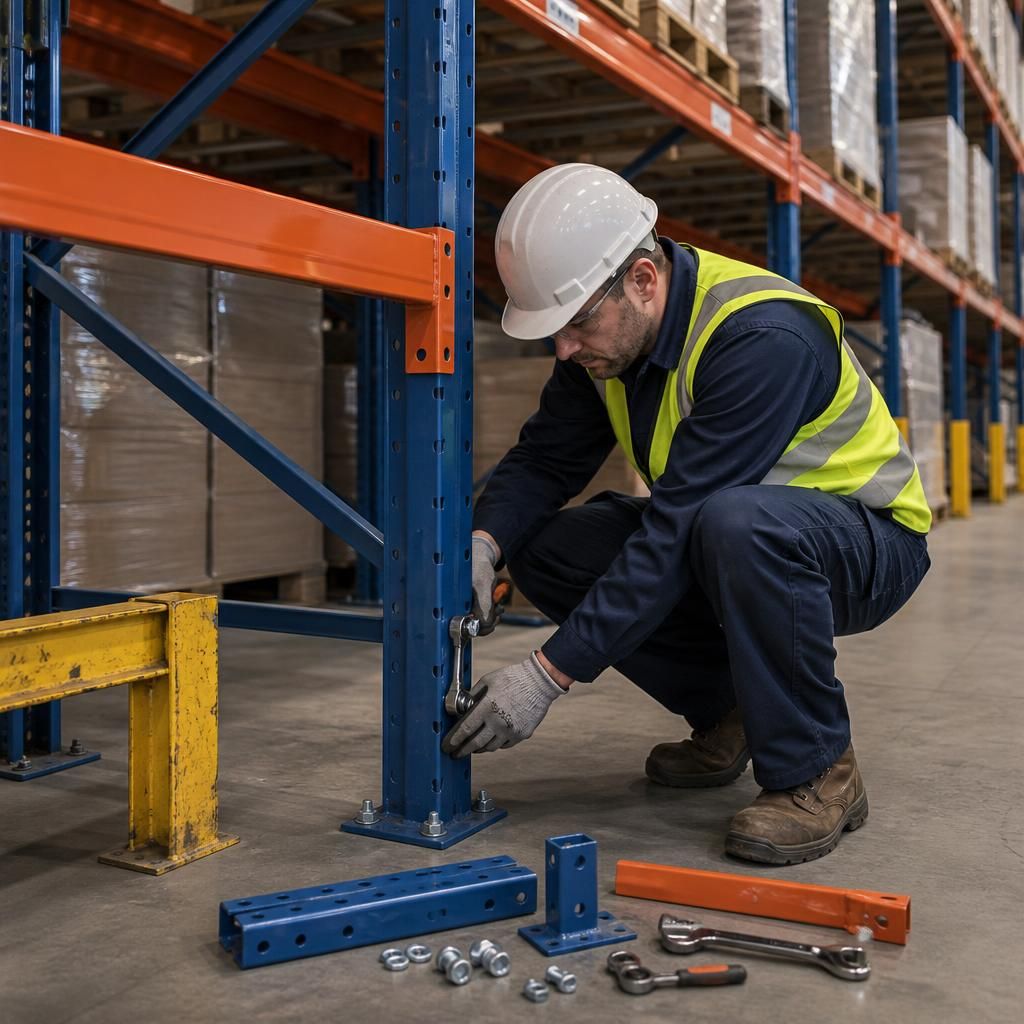
Replacement components for warehouse racking must match the original system’s dimensions, connection design, steel specification and load capacity. Parts that look similar may not transfer loads correctly or engage securely with existing frames and beams.
Before fitting a replacement upright, beam, brace, fixing or protection component, the damaged area should be assessed against available manufacturer information and the intended loading. Where the specification cannot be verified, the affected bay should remain isolated until a competent technician or engineer confirms a suitable repair solution. This avoids improvised modifications that could weaken the repaired warehouse racking.
Discuss your warehouse racking repair requirements
Contact Able Racking to discuss your warehouse racking repair requirements and arrange an assessment of the affected areas. Our experienced team can recommend suitable materials and repair techniques for your installation.