
What steps are involved in a comprehensive warehouse racking inspection process?
A comprehensive warehouse racking inspection involves reviewing site conditions and records, visually examining all components, identifying damage or unsafe alterations, assessing risks, and recording findings. The inspector then classifies defects, recommends immediate controls or repairs, and provides a clear report with actions and follow-up requirements.
A comprehensive warehouse racking inspection follows a structured process: the inspector reviews site information, examines the storage system and surrounding conditions, identifies damage or unsafe changes, assesses the risk, records the findings and recommends corrective action. The inspection should cover the complete installation, not just the most visibly accessible areas, and should result in a clear report that supports prompt repairs and ongoing compliance.
- Review the site information and inspection scope
Before starting, the inspector confirms the areas, storage systems and equipment included in the inspection. Available documents should be reviewed where relevant, including layout drawings, load notices, previous inspection reports, repair records, installation details and records of alterations. This helps establish whether the installation is being used as intended and highlights recurring defects or outstanding actions.
- Assess the warehouse environment and operating conditions
The inspection begins with the surrounding working conditions. The inspector considers vehicle routes, pedestrian access, aisle clearance, lighting, housekeeping, floor condition and the way loading equipment is operated near the warehouse racking. Changes in stock profiles, pallet sizes, load weights or handling methods may create risks even where the structure itself appears undamaged.
- Carry out a systematic visual examination
Every accessible part of the warehouse racking is examined in a consistent sequence. This normally includes uprights, frames, beams, connectors, bracing, baseplates, anchors, guards, decking, support components, safety devices and load notices. The inspection should cover front and rear faces where accessible, as well as ends, corners and areas that are easily hidden by stock.
- Identify damage, deterioration and unsafe alterations
The inspector looks for impact damage, bent or twisted members, cracked welds, displaced beams, loose or missing components, damaged anchors, corrosion and signs of overloading. They also check for unauthorised modifications, incompatible replacement parts, missing locking devices and changes that could affect the original design capacity. Damage should be considered alongside its position and likely effect on the stability of the whole installation.
- Check loads, protection and safe use
Load notices are checked against the loads being stored and the configuration of the warehouse racking. The inspector considers whether pallets are suitable, loads are stable, beams are correctly positioned and goods are not projecting into access routes. Upright guards, end protection and other protective measures are checked for suitability and condition, particularly in areas exposed to forklift or other handling-equipment impacts.
- Assess and classify the risks
Findings are assessed according to their seriousness, location and potential consequences. Conditions that could present an immediate danger should be reported without delay, with the affected area isolated, unloaded or otherwise controlled where necessary. Other defects should be prioritised according to the urgency of repair and monitored until they have been resolved. Risk classification should be based on the observed condition rather than assumptions about how long the damage has been present.
- Produce the report and agree follow-up actions
The final report should identify the inspected areas, record each defect clearly and include photographs or precise location references where useful. It should explain the risk, recommend practical corrective action and state whether an item requires immediate attention, planned repair or continued monitoring. Any restrictions on use should be made clear. Once repairs or other actions are completed, follow-up checks should confirm that the issue has been properly addressed and that the warehouse racking can be returned to safe service.
A useful inspection is more than a list of visible faults. It links each finding to the way the warehouse racking is designed and used, distinguishes structural damage from housekeeping or operational issues, and gives the responsible site team an auditable action plan. Inspection records should be retained with repair and alteration information so that future inspections can identify changes and confirm whether previous recommendations were completed.
Routine visual checks by trained warehouse staff can help identify new damage between formal inspections, but they do not replace a competent warehouse racking inspection. Any suspected serious damage should be reported immediately, and affected equipment should not continue in use until a suitable assessment has been made.
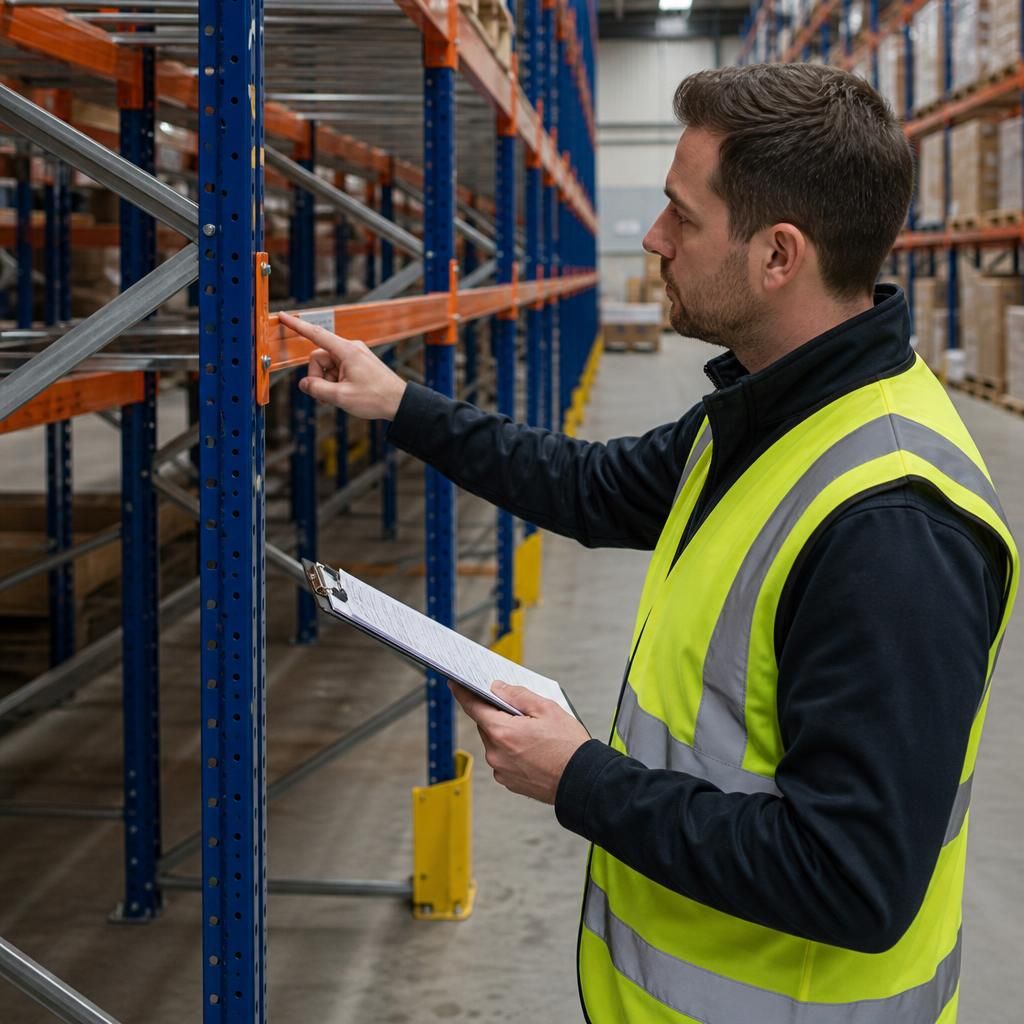
A comprehensive warehouse racking inspection should result in a clear, prioritised action plan, not simply a list of defects. Each finding should identify the precise location, describe the damage or unsafe condition, explain the potential risk and state the required control, repair or monitoring action.
Where a defect presents an immediate danger, the affected warehouse racking should be isolated or unloaded until it has been assessed and made safe. Less urgent issues should still be assigned a responsible person and target date. Keeping the report with repair records, photographs and follow-up checks provides an auditable record and helps confirm that identified risks have been properly resolved.
Book your comprehensive warehouse racking inspection
Book your comprehensive warehouse racking inspection with Able Racking to identify defects, assess risks and receive a clear action plan for maintaining safe, compliant storage systems.