
What qualifications and certifications should warehouse racking inspection specialists possess? Warehouse racking inspection specialists should hold relevant industry training, such as SEMA Approved Rack Inspector (SARI) certification, alongside practical experience in inspecting storage systems, identifying damage and assessing compliance with manufacturer guidance, HSE requirements and applicable standards.
Warehouse racking inspection specialists should hold relevant industry training, such as SEMA Approved Rack Inspector (SARI) certification, supported by practical experience inspecting storage systems. They should be competent in identifying damage, assessing risks and evaluating compliance with manufacturer guidance, HSE requirements and applicable warehouse racking standards.
Warehouse racking inspection specialists should have recognised inspection training, relevant practical experience and a sound understanding of warehouse racking design, damage assessment and risk control. In the UK, SEMA Approved Rack Inspector (SARI) training is a recognised qualification for carrying out detailed warehouse racking inspections, although competence should be assessed through qualifications, experience and the quality of the inspection process rather than by a certificate alone.
A suitably qualified inspector should be able to identify damage, assess its significance, determine whether storage equipment remains suitable for use and provide clear recommendations for corrective action. They should also understand the relationship between the storage system, its loads, the operating environment and the way warehouse personnel use it.
Recognised inspection training
SARI certification is one of the most relevant credentials for a specialist carrying out formal warehouse racking inspections. Training should cover the inspection of common storage systems, including pallet racking, cantilever racking and other industrial warehouse racking arrangements. It should also address:
- Identifying structural damage to frames, beams, bracing, protection and connections
- Recognising signs of overloading, impact and unauthorised alterations
- Assessing risks associated with damaged or incorrectly installed components
- Understanding load notices, design information and manufacturer guidance
- Classifying findings according to their urgency and potential safety impact
- Producing an inspection report that supports practical remedial action
Certification should be current and supported by appropriate refresher training or continuing professional development. Inspection methods, equipment designs, workplace risks and relevant guidance can change, so an inspector should maintain their technical knowledge rather than rely solely on an original qualification.
Practical warehouse racking experience
Classroom training is important, but it does not replace experience working with warehouse racking. An experienced inspector should be familiar with installation details, normal wear, impact damage, component compatibility and the issues that commonly arise during warehouse operations. This practical understanding helps them distinguish between minor cosmetic defects and damage that could affect the stability or capacity of a storage system.
Experience should include inspecting different layouts, manufacturers and types of warehouse racking in real operating conditions. The inspector should be comfortable working around forklifts, loading activities, pedestrian routes and restricted areas while following suitable site safety procedures.
Knowledge of standards and legal duties
A competent specialist should understand the standards and guidance relevant to warehouse racking safety inspections in the UK. This commonly includes the principles of BS EN 15635, which covers the use and maintenance of steel static storage systems, together with applicable HSE guidance, workplace risk assessment duties and the manufacturer’s instructions for the installed system.
The inspector should understand that a warehouse racking inspection is not simply a visual search for faults. It involves considering the condition of components, the way the system is loaded and used, the effectiveness of protection measures, the surrounding working environment and whether identified defects require immediate action.
Ability to assess and prioritise risk
Reliable inspectors must be able to make consistent, evidence-based decisions. Their reports should explain what has been found, where it is located, why it matters and what action is required. Findings may require immediate isolation or unloading, prompt repair or monitoring through normal preventative maintenance, depending on the severity and location of the defect.
An inspector should not approve unsafe warehouse racking simply because damage appears limited, nor should they recommend unnecessary replacement without explaining the technical reason. Clear photographs, accurate location references and practical recommendations help the responsible person make informed decisions and arrange repairs efficiently.
Understanding of inspection boundaries
Inspection specialists should recognise the limits of their role. They should not make assumptions about load capacity where design information is missing, certify repairs they have not assessed or treat an inspection report as a substitute for a structural design review. Where a system has been substantially altered, has suffered serious impact or lacks essential technical information, further assessment by an appropriately qualified designer or engineer may be necessary.
They should also understand the distinction between routine in-house checks and a formal expert inspection. Warehouse personnel can report visible damage during day-to-day operations, but a formal inspection requires the independent technical knowledge to evaluate defects and recommend proportionate controls.
Professional procedures and communication
Qualifications are most useful when supported by a disciplined inspection process. A professional specialist should:
- Confirm the scope and purpose of the inspection before attending site
- Review available layout drawings, load notices, previous reports and repair records
- Inspect accessible components systematically rather than relying on spot checks
- Record findings accurately using consistent terminology and location references
- Explain urgent actions clearly to the responsible site contact
- Provide a report that can be used to plan repairs and verify completion
- Protect inspection records and communicate any limitations affecting the assessment
The specialist should be able to explain technical findings in straightforward language to warehouse managers, facilities teams and responsible persons. Clear communication is particularly important where damaged warehouse racking needs to be isolated quickly or where repairs must be coordinated around ongoing operations.
What to check when appointing an inspector
Before appointing a warehouse racking inspection specialist, ask for evidence of relevant training, practical inspection experience and familiarity with the types of storage system installed on your site. It is also reasonable to check whether the provider has suitable public liability and professional indemnity insurance, documented health and safety procedures and a reliable method for reporting and closing out defects.
A provider should be willing to identify the named inspector, describe their competence and explain the inspection scope. The final report should be specific to your warehouse racking, rather than a generic checklist, and should distinguish urgent safety actions from routine maintenance recommendations.
For Able Racking customers, the most useful combination is recognised inspection training, experienced operatives, detailed reporting and practical follow-up support where repairs or preventative maintenance are needed. This approach helps ensure that warehouse racking inspections lead to clearly prioritised actions and continued safe use of the storage system.
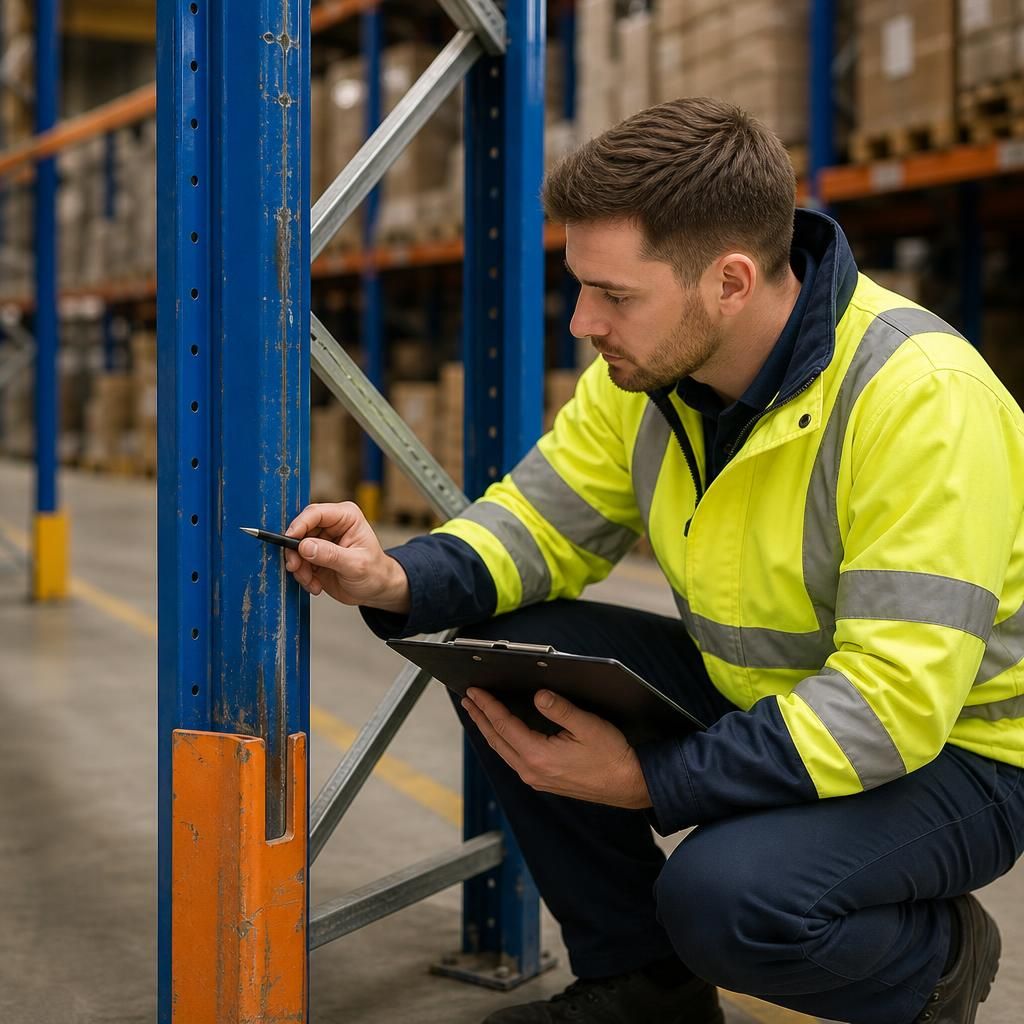
A warehouse racking inspection specialist should combine recognised training, practical experience and knowledge of applicable safety guidance. A certificate, such as SEMA Approved Rack Inspector training, is valuable evidence of technical competence, but it should be supported by experience assessing different warehouse racking systems in active working environments.
The specialist should be able to identify damage, assess its likely effect on safety and capacity, and prioritise actions clearly. Their report should record the location and condition of each issue, explain whether warehouse racking needs isolating or unloading, and provide practical recommendations for repair or further assessment. This combination of qualification, sound judgement and clear reporting makes inspection findings useful to the person responsible for warehouse safety.
Check your warehouse racking inspector’s qualifications
Contact Able Racking to confirm your warehouse racking inspector’s qualifications and arrange a suitably scoped inspection. Our experienced team can provide clear findings and practical recommendations for any necessary action.