
How does same-day used pallet racking installation minimise disruption for businesses?
Same-day used pallet racking installation minimises disruption by reducing the time your warehouse storage areas remain unavailable. A planned survey, prepared components and experienced installation team help restore capacity quickly while maintaining safe, compliant warehouse operations.
Same-day used pallet racking installation minimises disruption by shortening the period in which warehouse storage areas are unavailable. When the layout, access requirements and components have been checked in advance, an experienced installation team can work to a controlled sequence, complete the installation efficiently and return the area to operational use without unnecessary delay.
The main disruption usually comes from taking aisles, loading areas or storage bays out of service. A same-day approach limits this interruption, helping businesses maintain goods-inwards, order picking and dispatch activities wherever the site layout allows. It can be particularly useful when additional capacity is needed quickly, an existing bay has been damaged or a temporary storage arrangement needs to be replaced.
Planning before the installation
Speed depends on preparation rather than simply working faster on the day. The installation should be based on a clear understanding of the warehouse, the required storage capacity and the condition of the used pallet racking. Important checks include:
- Confirming the required dimensions, bay configuration, beam levels and load capacities.
- Checking that the available components are compatible and suitable for the intended layout.
- Reviewing the floor condition, working space, access routes and any restrictions affecting installation.
- Agreeing where materials, tools and removed components will be placed during the work.
- Identifying areas that must remain accessible for staff, vehicles, fire routes or emergency access.
- Confirming the planned installation sequence with the warehouse manager and other site contacts.
These checks reduce the risk of delays caused by missing parts, unsuitable components, unexpected access problems or changes to the agreed design. They also allow the installation team to arrive with the right equipment and a practical plan for working around live warehouse operations.
Using a controlled installation sequence
On the day, the work should be divided into clearly defined stages. The installation area is isolated as necessary, components are positioned safely, and the frames, beams and associated protection are assembled in accordance with the approved layout and manufacturer guidance. Completing one area before opening it for use helps prevent partially installed bays from obstructing other warehouse activities.
Where there is sufficient space, deliveries and installation work can be coordinated so that components do not block forklift routes, picking areas or loading points. A competent team will also maintain good housekeeping throughout the work, removing packaging and redundant materials rather than allowing them to become trip or collision hazards.
Reducing avoidable downtime
Same-day installation can reduce disruption in several practical ways:
- Less space is taken out of service: the affected area can be returned to use sooner than with a loosely planned installation.
- Fewer operational changes are required: staff may not need to relocate stock across the warehouse for an extended period.
- Lower handling impact: shorter closures can reduce additional movements, temporary storage and re-labelling.
- More predictable scheduling: a defined installation window makes it easier to coordinate labour, vehicles and warehouse activity.
- Quicker restoration of capacity: completed bays can be checked and made available as soon as they are confirmed safe for use.
This does not mean that every project can or should be completed in a single day. The timescale depends on the size and complexity of the installation, the condition and availability of the used components, site access, required repairs and the need to protect people while work is under way. It is safer to extend the work than to compromise inspection, assembly or quality checks.
Maintaining safety during fast installation
Minimising disruption must not reduce the level of control applied to the work. Used pallet racking should be assessed before installation to identify damage, excessive wear, distortion, corrosion or incompatible parts. Components that do not meet the required condition or specification should not be used simply to keep the project on schedule.
The installation area should be managed to prevent unauthorised access, with suitable controls for work at height, manual handling and vehicle movements. Frames must be positioned correctly, beams securely connected and protection fitted where required by the design and site risk assessment. The completed installation should then be inspected before stock is loaded.
That final check should confirm that the installed system matches the agreed layout, connections are secure, protection is in place and the intended load information is understood. Any required signage, handover information or recommendations should be provided to the responsible warehouse team. This process helps ensure that rapid installation does not create longer-term safety or reliability problems.
Coordinating the work with warehouse operations
Businesses can further reduce disruption by preparing their own teams before the installation begins. Stock should be moved away from the working area where necessary, access routes kept clear and relevant staff informed of temporary restrictions. If forklift operations continue nearby, traffic controls and clearly defined exclusion zones should be agreed in advance.
It is also useful to schedule the installation during a quieter operating period where possible. The same-day service can then be aligned with deliveries, picking cycles or planned maintenance, reducing conflict between the installation team and normal warehouse activity.
For existing customers, the most effective approach is to treat the installation as part of the wider warehouse safety process. A pre-installation assessment, careful component selection, competent fitting and post-installation inspection provide the speed needed to maintain continuity while preserving the standard expected from a professional warehouse racking service.
In short, same-day used pallet racking installation minimises disruption through preparation, efficient sequencing and prompt handover. It restores usable storage space quickly, but the work should only be completed within the timescale that allows every component, connection and protection measure to be properly assessed.
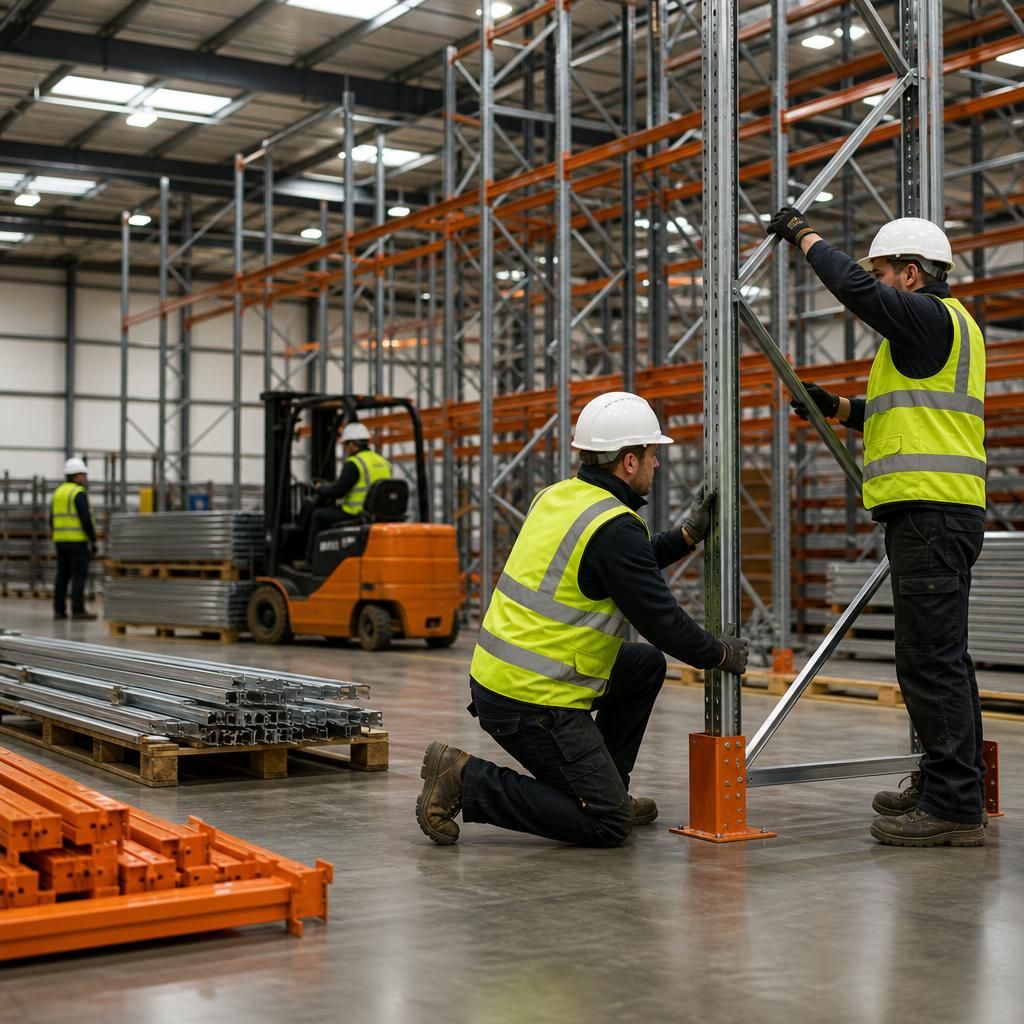
Pre-installation planning is the main factor in minimising disruption during same-day used pallet racking installation. Confirming the layout, component condition, access routes and required load capacities before work begins allows the installation team to arrive prepared and avoid delays caused by missing or unsuitable parts.
The warehouse team can support this process by clearing stock from the affected area, keeping forklift routes accessible and agreeing an exclusion zone in advance. Components can then be positioned safely, installed in a controlled sequence and checked before the completed bays are returned to service. This reduces unnecessary stock movements and helps maintain essential goods-inwards, picking and dispatch activities elsewhere in the warehouse.
Speed must not replace safety. Used pallet racking should be assessed for damage, distortion, corrosion and compatibility before it is installed, with the finished system inspected before loading. A planned handover confirms that connections, protection and load information are suitable for operational use.
Plan your same-day used pallet racking installation
Speak to Able Racking to plan your same-day used pallet racking installation, including the site assessment, component checks and installation sequence. Our team can help coordinate the work around your warehouse operations to minimise downtime while maintaining safety.