
What role does proper installation play in cantilever warehouse racking safety and compliance?
Proper installation is essential to keep cantilever warehouse racking stable, correctly aligned and compliant with its design specifications. Competent installers ensure the foundations, uprights, arms, bracing, fixings and load signage are correctly fitted, reducing the risk of collapse, damage and unsafe use.
Proper installation is fundamental to the safety and compliance of cantilever warehouse racking. A correctly installed system has stable foundations, accurately positioned uprights, securely fixed arms and bracing, suitable protection, and clear load information. These factors help the structure perform as designed and reduce the risk of instability, falling materials, impact damage and premature failure.
Installation must follow the approved design, manufacturer’s instructions and the conditions identified during the site assessment. Cantilever warehouse racking is designed for specific load capacities, arm configurations, bay dimensions and storage materials. Changing these details during installation or use can affect the system’s structural performance, so any alteration should be reviewed by a suitably competent person.
Key ways proper installation supports safety and compliance include:
- Creating a stable foundation: The floor must be assessed for its condition, level, load-bearing capacity and suitability for the proposed installation. Uneven or inadequate flooring can cause misalignment, excessive stress or movement within the structure.
- Securing the uprights correctly: Uprights need to be positioned accurately and fixed using the specified anchors and installation method. The fixings must be suitable for the floor construction and installed in accordance with the design requirements.
- Maintaining alignment and tolerances: Uprights, arms and braces should be plumb, level and correctly spaced. Accurate alignment ensures loads are transferred through the intended structural members rather than creating unintended forces.
- Fitting arms and restraints properly: Arms, end stops, locking devices and bracing must be installed in the correct locations and secured against displacement. Missing or incorrectly fitted components can allow stored goods to slide, shift or fall.
- Installing appropriate load signage: Capacity notices should be visible and reflect the installed configuration. They should identify relevant limitations, such as bay, arm or level capacities where applicable, so that operators can store materials within safe limits.
- Allowing safe operating clearances: The layout should provide sufficient space for handling equipment, access routes, emergency arrangements and safe loading. Clearances must account for the dimensions and movement of the materials being stored.
- Providing suitable protection: Where vehicles or handling equipment operate nearby, protection may be needed for vulnerable uprights and other structural components. Protection should not obstruct inspections or introduce new hazards.
A competent installation team will normally begin with a review of the intended use, stored loads, handling methods, building conditions and available drawings. The team should then confirm the system specification, inspect the installation area, establish safe working controls and use suitable lifting and access equipment. Components should be checked for damage before assembly, particularly where they have been transported or handled on site.
Installation work also needs to be managed safely. A suitable method statement and risk assessment should address lifting operations, work at height, exclusion zones, nearby activities, falling objects and the interaction between installers and warehouse operations. The installation area should be controlled until the structure is complete and has been checked.
Once assembly is finished, the completed cantilever warehouse racking should be inspected against the approved design and manufacturer’s requirements. Checks may include the position and condition of anchors, upright alignment, arm engagement, bracing, locking devices, end stops, protection and signage. Any deviation, damage or incomplete work should be rectified before the system is placed into service.
Proper installation does not remove the need for ongoing control. The user remains responsible for operating the system within its stated capacities, preventing unauthorised alterations and reporting damage. Routine visual checks and scheduled expert inspections are needed to identify impacts, overloading, displaced components, corrosion, loose fixings and other changes that may affect safety.
Installation records should be retained with the relevant design information, drawings, load data, inspection findings and handover documentation. These records provide evidence that the system was installed and checked in a controlled manner, while also helping future inspections and any approved changes to be managed consistently.
In practice, correct installation provides the starting point for safe and compliant operation. It ensures that the structure matches its design intent, gives warehouse teams clear information about its limitations and makes later maintenance and inspections more effective. If the system has been altered, relocated, struck, overloaded or installed without adequate documentation, it should be reviewed by a competent warehouse racking specialist before continued use.
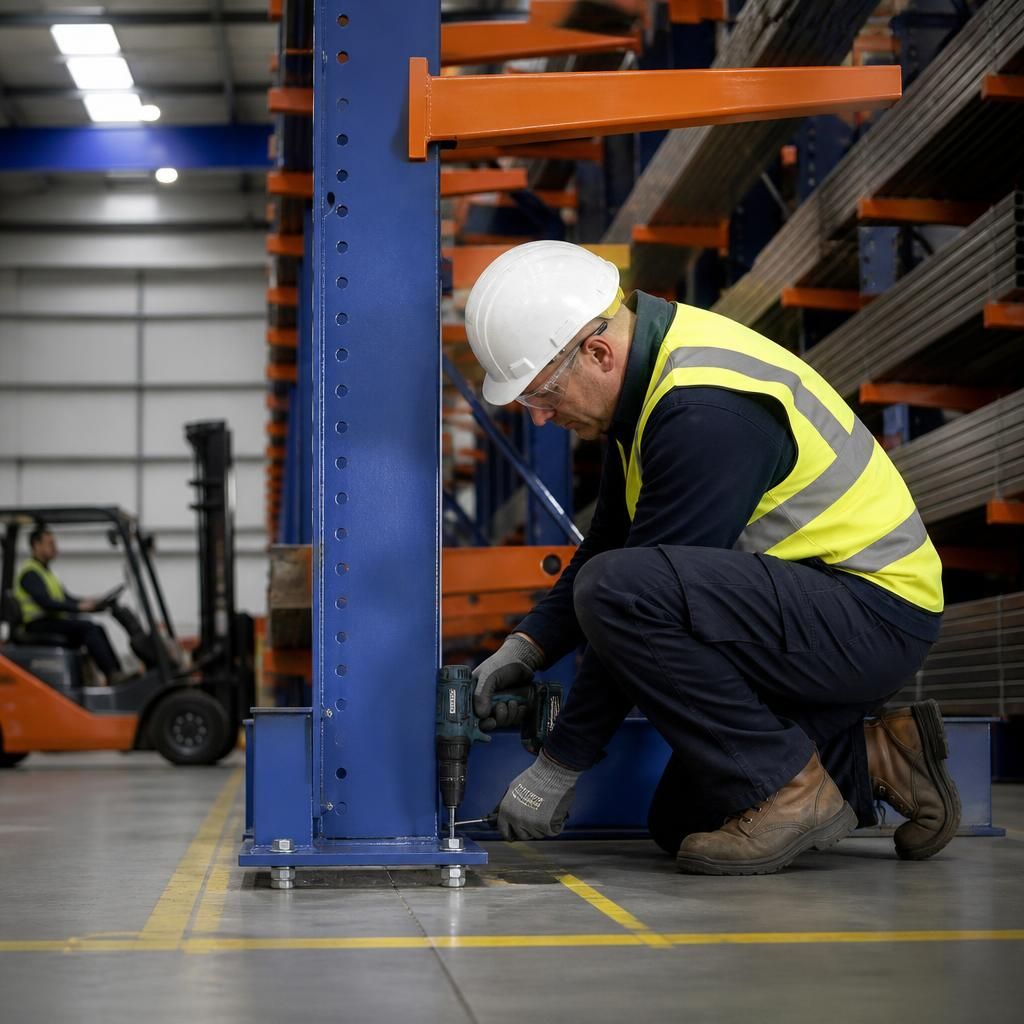
Correct anchoring is a critical part of installing cantilever warehouse racking safely because it transfers the structure’s loads into a suitable floor and helps prevent movement, tilting or instability. The floor must be assessed for level, condition and load-bearing capacity before installation begins.
Anchors should be appropriate for the floor construction and installed to the specified depth, position and fixing method. Uprights must then be checked for alignment, while arms, bracing, restraints and end stops are fitted securely. If the floor is damaged, uneven or unsuitable, the installation should not proceed until the issue has been assessed and an appropriate solution approved.
After assembly, the completed system should be checked against the approved design and manufacturer’s instructions before it is used. Any loose fixings, damaged components, incorrect spacing or alignment issues must be corrected, and the final load information should be displayed clearly for warehouse operators.
Book a Cantilever Warehouse Racking Installation Assessment
Book a cantilever warehouse racking installation assessment with Able Racking to confirm that your system is correctly anchored, aligned, protected and ready for safe use.