
What steps should be taken when warehouse racking issues are identified?
When a warehouse racking issue is identified, assess the immediate risk, isolate the affected area or unload it where necessary, and report the damage to the responsible person. Arrange a competent inspection and suitable repair or replacement before the warehouse racking is returned to service, recording the action taken for compliance and future checks.
When a warehouse racking issue is identified, the affected area should be made safe immediately, the damage reported, and the warehouse racking assessed by a competent person. Damaged warehouse racking should not be returned to service until the risk has been controlled and any necessary repair or replacement has been completed and recorded.
1. Control the immediate risk
Stop using the affected warehouse racking as soon as damage, instability or another safety concern is noticed. Depending on the condition, this may involve unloading the affected section, preventing access beneath or around it, or isolating the complete bay. Use suitable barriers, signage and local procedures so that warehouse operatives cannot accidentally place loads into the area.
Do not attempt to straighten, weld, drill or otherwise alter damaged warehouse racking on site. Removing a damaged component without understanding the effect on the complete structure can create additional instability. If there is a risk of collapse, impact from lifting equipment or falling goods, the area should remain isolated until it has been assessed.
2. Report and document the issue
Report the problem to the person responsible for warehouse racking safety, such as the warehouse manager, site supervisor or nominated responsible person. The initial record should state:
- Where the damaged warehouse racking is located, including the aisle, bay and level where applicable.
- What has been observed, such as a bent upright, damaged beam, missing safety component, loose connection or excessive deflection.
- Whether goods are stored in the affected area and whether the section has been unloaded or isolated.
- When the issue was found and who identified it.
- Any immediate action taken to protect people, stock and equipment.
Photographs can help an inspector understand the initial condition, but they should support rather than replace a physical assessment. Records should be retained with warehouse racking inspection reports and repair documentation so that repeated damage or recurring operational problems can be identified.
3. Arrange a competent assessment
A competent warehouse racking inspector or suitably experienced specialist should assess the damage before a decision is made about continued use. The assessment should consider more than the visible defect. It should examine the affected components, their connections, the surrounding structure, the floor and the loads being stored.
The inspector will typically consider whether:
- An upright, beam, bracing member, frame protector or connector has been distorted or displaced.
- Fixings, locking devices, safety pins or other protective components are missing, loose or incorrectly fitted.
- The warehouse racking is plumb, stable and properly anchored where the design requires anchoring.
- Loads are within the stated configuration and capacity, with suitable load notices displayed.
- Impact damage has affected adjacent bays or levels.
- There are signs of overloading, poor load placement, corrosion, deterioration or unauthorised modification.
- The warehouse racking has been installed and altered in accordance with the relevant design information and manufacturer’s requirements.
A competent person should decide whether the issue presents a low, moderate or serious risk and what controls are required. A visual judgement by an untrained employee is not enough to confirm that a damaged warehouse racking component remains safe.
4. Follow the inspection recommendation
The inspection outcome should be clear about whether the warehouse racking can remain in restricted use, requires monitoring, must be unloaded, or needs immediate repair or replacement. Where the risk is serious, the affected area should remain out of service until corrective work has been completed and verified.
Restrictions should be communicated to everyone who uses the area. For example, a bay may need to remain empty, have a reduced permitted load, or be protected from lifting equipment until permanent work is carried out. Any temporary control should be documented, labelled where appropriate and reviewed so that it is not treated as a permanent solution.
5. Use suitable repair or replacement methods
Repairs should be carried out by a suitably competent warehouse racking repair specialist using components and methods appropriate to the original design. The repair specification should account for the complete warehouse racking system, not just the visibly damaged part. In some cases, replacing a component is more appropriate than repairing it, particularly where its strength, geometry or protective finish has been compromised.
Replacement components should be compatible with the existing warehouse racking and installed in accordance with the manufacturer’s or designer’s instructions. Any changes to the layout, beam levels, load configuration or components should be reviewed so that the safe working load and stability remain suitable. Unauthorised substitutions, improvised brackets and on-site alterations can invalidate the original design assumptions.
6. Check the completed work
After repairs or replacement, the responsible person should confirm that the warehouse racking has been reassembled correctly, securely fixed and cleared of tools, loose parts and debris. The repaired section should be inspected before it is reloaded. Load notices and protection should also be checked, particularly if the repair has changed the configuration.
Where the damage was caused by a vehicle impact, poor loading practice or another operational issue, repairing the warehouse racking alone will not prevent a recurrence. Review aisle clearance, traffic routes, impact protection, operator training, load placement and housekeeping. Consider whether additional protection or a change to working procedures is necessary.
7. Update records and prevent recurrence
Close the issue only when the action taken has been verified and recorded. The file should normally include the original report, photographs where useful, the inspection findings, repair details, replacement parts, restrictions applied and confirmation that the warehouse racking was returned to service safely.
Use the findings to improve routine checks and warehouse racking safety training. Repeated damage in the same location may indicate a problem with vehicle movements, visibility, bay protection, load handling or the warehouse racking layout. Reviewing these patterns helps address the underlying cause instead of repeatedly repairing the same component.
Regular user checks and scheduled warehouse racking inspections should continue after the issue has been resolved. Employees should know how to recognise and report damage, and the nominated responsible person should ensure that reported defects are acted on without delay. This process supports ongoing compliance, protects people and stock, and helps keep warehouse racking safe and serviceable throughout its working life.
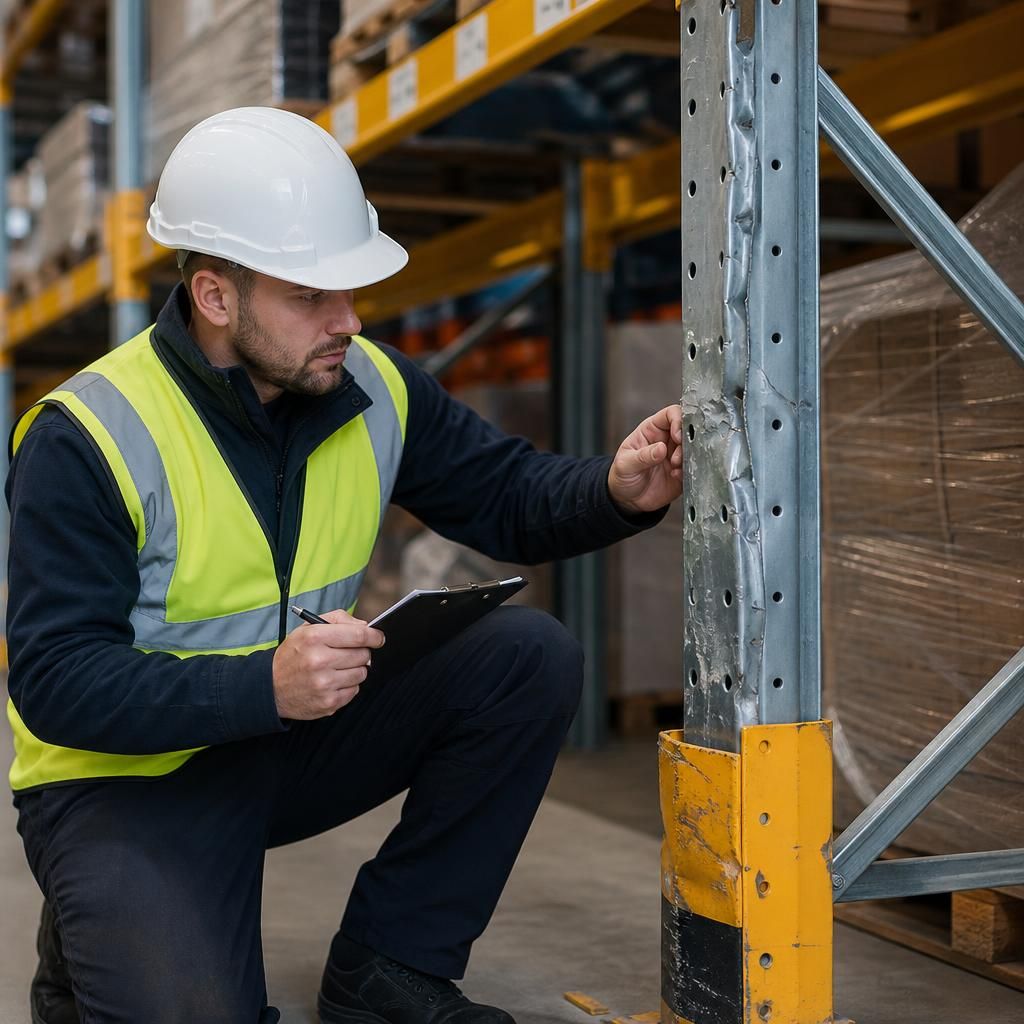
A competent assessment is the essential next step after a warehouse racking issue has been identified. A trained inspector must assess the affected bay and surrounding structure before deciding whether it can remain in use, needs restrictions, or must be taken out of service.
The assessment should consider visible damage, connections, anchors, protective components, load placement, capacity notices, floor condition and any impact to adjacent sections. Photographs and internal reports are useful evidence, but they cannot replace a physical inspection. Until the findings are confirmed and any required repair or replacement has been completed, the affected warehouse racking should remain isolated or unloaded as appropriate.
Arrange an Expert Warehouse Racking Assessment
If a warehouse racking issue has been identified, arrange an expert warehouse racking assessment before the affected area is returned to service. Able Racking can assess the damage and advise on suitable repairs, replacement or other safety measures.