
What are the benefits of using narrow aisle racking systems in a high-density warehouse environment?
Narrow aisle racking systems increase storage density by reducing the space required between aisles while retaining direct access to individual pallets. In a high-density warehouse, this can improve floor-space utilisation, stock visibility and retrieval efficiency when the system is correctly designed and operated.
Narrow aisle racking systems increase storage density by reducing the space required between aisles while retaining direct access to individual pallets. In a high-density warehouse, this can improve floor-space utilisation, stock visibility and retrieval efficiency when the system is correctly designed, installed and operated.
More storage capacity within the existing footprint
The principal benefit is the more efficient use of available floor space. Conventional aisle widths allow space for standard materials-handling equipment to turn and manoeuvre, whereas narrow aisle layouts are designed around equipment capable of operating safely in tighter spaces. Reducing unused travel space allows additional storage positions to be created without necessarily extending the building.
This can be particularly valuable where expansion is restricted, property costs are high or a business needs to increase stockholding without relocating. The available capacity still depends on factors such as clear height, pallet dimensions, load weights, fire protection requirements, columns, doors and required working clearances. A properly planned design assesses the whole building rather than simply reducing aisle widths.
Direct access to individual pallets
Unlike some dense storage arrangements that require pallets to be moved to reach stock behind them, narrow aisle racking normally provides direct access to each storage position. This supports more selective stock control and makes it easier to handle different product lines, batch references or customer orders.
Direct access can also reduce unnecessary handling. Operators can retrieve the required pallet without first unloading or repositioning other stock, helping to protect products and maintain a clearer inventory record. This is especially useful where stock rotation, traceability or frequent order picking is important.
Improved stock visibility and order fulfilment
A well-organised narrow aisle layout gives operators a clear location structure, with each pallet position assigned and accessible. Consistent labelling, logical zoning and an appropriate warehouse management system can make it easier to identify stock, replenish picking areas and complete orders accurately.
Shorter, more clearly defined travel routes may also support faster retrieval, although actual performance depends on the warehouse process, the type of handling equipment, operator training and the distance between storage areas and despatch points. Narrow aisle racking is not automatically faster; it delivers the greatest benefit when the layout and operating procedures match the movement of stock.
Better use of building height
Narrow aisle systems are often used alongside taller storage layouts, allowing businesses to make better use of vertical volume as well as floor area. Increasing height can provide substantial additional capacity where the building structure, floor slab, lighting, fire systems and handling equipment are suitable.
Height should never be increased without a technical assessment. The system must remain stable and compatible with the building, loads and equipment used. Clearances around beams, sprinklers, lights and roof structures also need to be maintained, and the maximum safe working loads must be clearly displayed and observed.
More predictable warehouse operations
Defined aisles and fixed storage locations support repeatable handling processes. This can help businesses plan replenishment, allocate labour and identify congestion points. When locations are kept orderly, operators spend less time searching for stock or working around incorrectly placed pallets.
The layout can also help separate vehicle routes, pedestrian areas, picking activities and loading operations. This does not remove the need for risk controls, but it can make hazards easier to identify and manage when the warehouse is designed as an integrated operation.
Potential for lower property and operating costs
By increasing capacity within an existing building, narrow aisle racking may reduce the need for additional storage premises. It can also reduce the amount of floor area allocated to aisles for a given storage requirement. However, any financial assessment should include the cost of suitable handling equipment, floor preparation, protection systems, installation, maintenance, training and periodic inspections.
Operating costs can also be affected by travel distances, battery charging arrangements, equipment suitability and the rate at which pallets are moved. A design that maximises storage positions but creates inefficient travel or difficult access may not provide the best overall result.
Important design and safety requirements
Narrow aisles leave less room for steering errors, load movement and unexpected obstructions. The storage system must therefore be designed around the exact handling equipment, pallet type, load dimensions and operating method. Reach trucks or other suitable equipment may require guidance, positioning controls or defined operating procedures to work safely in the available space.
- Confirm the proposed aisle width with the equipment manufacturer and system designer.
- Check that the floor is suitable, level and capable of supporting the imposed loads.
- Use appropriate end-of-aisle protection, frame protection and other impact controls.
- Keep aisles, access routes and emergency exits clear at all times.
- Train operators in the specific equipment and layout rather than relying only on general warehouse experience.
- Inspect the warehouse racking regularly and report damage, overloading or instability immediately.
Planned inspections are an important part of maintaining safe warehouse racking. Damage from vehicle impact, missing components, altered beam positions or overloaded bays can affect the system’s capacity and stability. Any significant defect should be assessed by a competent person, with affected areas unloaded or isolated where necessary until suitable corrective action is completed.
Is narrow aisle racking suitable for every high-density warehouse?
No. It may be less suitable where pallets are highly irregular, stock is accessed infrequently, rapid bulk movement is more important than selectivity, or the available handling equipment cannot operate safely in the proposed aisles. Businesses should also consider future changes to pallet sizes, product weights, turnover rates and equipment before committing to a layout.
The most effective approach is to compare the required capacity and access profile with the building constraints and operating processes. A professional survey can establish whether narrow aisle racking will provide a practical improvement, identify the necessary protection and equipment, and confirm how the installation can be maintained in line with relevant safety requirements and manufacturer guidance.
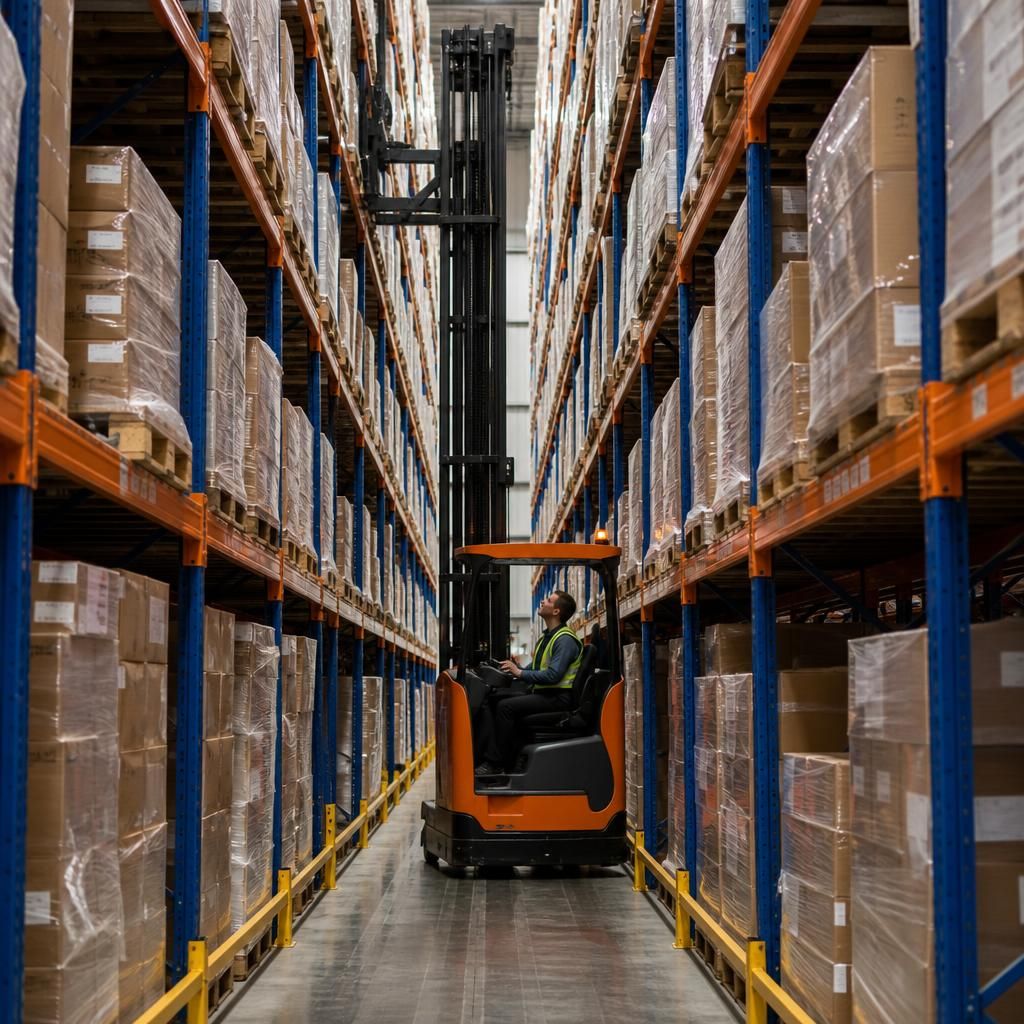
Narrow aisle racking systems increase storage capacity by reducing the space allocated to vehicle access while retaining direct access to individual pallet locations. This makes them suitable for high-density warehouses where expanding the building is not practical and selective stock access remains important.
The capacity gained depends on more than aisle width. A suitable design must consider building height, pallet dimensions, load weights, floor condition, handling equipment, fire protection and required clearances. The handling equipment must be capable of positioning loads accurately within the narrower aisles, while frame protection, clear signage and defined operating procedures help control the increased risk of impact.
When the layout is designed around the warehouse’s actual stock and handling processes, narrow aisle racking can improve space utilisation without sacrificing stock visibility or access. Regular inspections and prompt repairs are also essential, as damage or unauthorised alterations can affect the stability and safe working capacity of the system.
Discuss your narrow aisle racking requirements
Speak to Able Racking about your narrow aisle racking requirements and arrange expert advice on layout, equipment suitability, safety and ongoing compliance.