
What maintenance is required to ensure the longevity of Up & Over Pallet Gate Systems?
To extend the service life of Up & Over Pallet Gate Systems, arrange regular inspections and clean the gate, hinges, pivots, safety catches and counterbalance components to prevent debris-related wear. Lubricate moving parts where specified, check for damage, looseness or changes in operation, and have any defects repaired promptly by a competent specialist.
Regular inspection, cleaning, functional testing and prompt repair are the main requirements for extending the service life of an Up & Over Pallet Gate System. Maintenance should cover the gate structure, hinges or pivots, counterbalance mechanism, safety catches, protective components and the connections to the mezzanine floor. Work should follow the manufacturer’s instructions and be carried out by suitably competent personnel.
Inspect the gate and its supporting components
Examine the gate routinely for damage, distortion, cracks, corrosion or any change in alignment. Pay particular attention to areas that may be affected by pallet impacts, including the front and rear faces, side frames, guards and stop points. Check that fixings remain secure and that there is no movement at the connection between the gate system and the supporting mezzanine structure.
Look for loose, missing or damaged bolts, welds, brackets and retaining devices. A gate that appears serviceable but has developed movement, unusual noise or a change in travel may require a more detailed examination. Do not continue using it if its safe operation is uncertain.
Check hinges, pivots and moving parts
Hinges, pivot points, rollers and other moving parts should be checked for wear, stiffness, excessive play and contamination. Remove dust, packaging material, spilled product and other debris that could restrict movement or accelerate wear. Lubricate components only where the manufacturer permits it, using the specified product and application method. Over-lubrication can attract abrasive dirt, while using an unsuitable lubricant may damage certain components.
During each functional check, move the gate through its full operating range. It should travel smoothly, remain stable and return to the intended position without sticking, dropping or requiring unusual force. Any grinding, jerking or uneven movement should be investigated rather than corrected by continued use.
Maintain the counterbalance and safety mechanisms
Where fitted, inspect counterbalance springs, gas struts, cables, chains, weights and associated guards for wear, corrosion, damage or loss of tension. These components are critical to controlled movement and should not be adjusted, removed or replaced without following the approved procedure. A weakened counterbalance can make the gate unexpectedly heavy or cause it to move too quickly.
Test safety catches, locking arrangements, stops and interlocks to confirm that they engage fully and release only as intended. Check that protective guards remain in place and that warning labels or operating instructions are legible. Never bypass a safety device to keep loading operations moving.
Keep surfaces clean and suitable for inspection
Clean the gate and its mechanisms using methods appropriate to the finish and operating environment. Remove moisture, chemicals and accumulated dirt that could cause corrosion or conceal defects. Do not use cleaning methods that could force contamination into bearings, pivots or protected mechanisms. After cleaning, check the surfaces again for damage that may have been hidden by deposits.
Where corrosion is identified, assess whether it is superficial or has affected the strength or operation of the component. Significant corrosion, flaking coatings, pitting or section loss should be referred to a competent specialist before the gate is returned to service.
Carry out planned inspections and functional checks
Operators should make a brief check before use, confirming that the gate is unobstructed, correctly positioned and operating normally. More detailed inspections should be scheduled according to the gate design, frequency of use, working environment, impact risk and the findings of previous checks. The inspection process should include a functional test and, where appropriate, a closer examination by a competent person.
Keep clear records of inspections, defects, cleaning, lubrication, adjustments and repairs. Records should identify the gate, the date of the check, the findings, the person carrying out the work and any action required. This provides a useful maintenance history and helps identify recurring problems, such as repeated impacts or progressive wear.
Repair defects promptly and safely
If the gate is bent, unstable, difficult to operate, unable to close correctly or showing damage to a safety-critical component, stop using it and prevent access to the affected loading position. Report the defect and arrange an assessment by a competent specialist. Repairs should use suitable replacement components and should not rely on improvised welding, drilling, packing or modifications that have not been approved.
After repair, the gate should be functionally tested before being put back into service. The surrounding mezzanine area, fixings and interfaces should also be checked to confirm that the original defect has not affected the supporting structure.
Review use and operator awareness
Maintenance is more effective when operators use the gate correctly. Pallets should be positioned carefully, loads should not be pushed against the gate, and the gate should not be used as a handrail, access barrier or lifting point unless it has been specifically designed for that purpose. Staff should know how to report damage and understand when a gate must be taken out of service.
A documented maintenance programme combining routine user checks, planned competent inspections and prompt defect rectification will help preserve safe operation and extend the working life of an Up & Over Pallet Gate System.
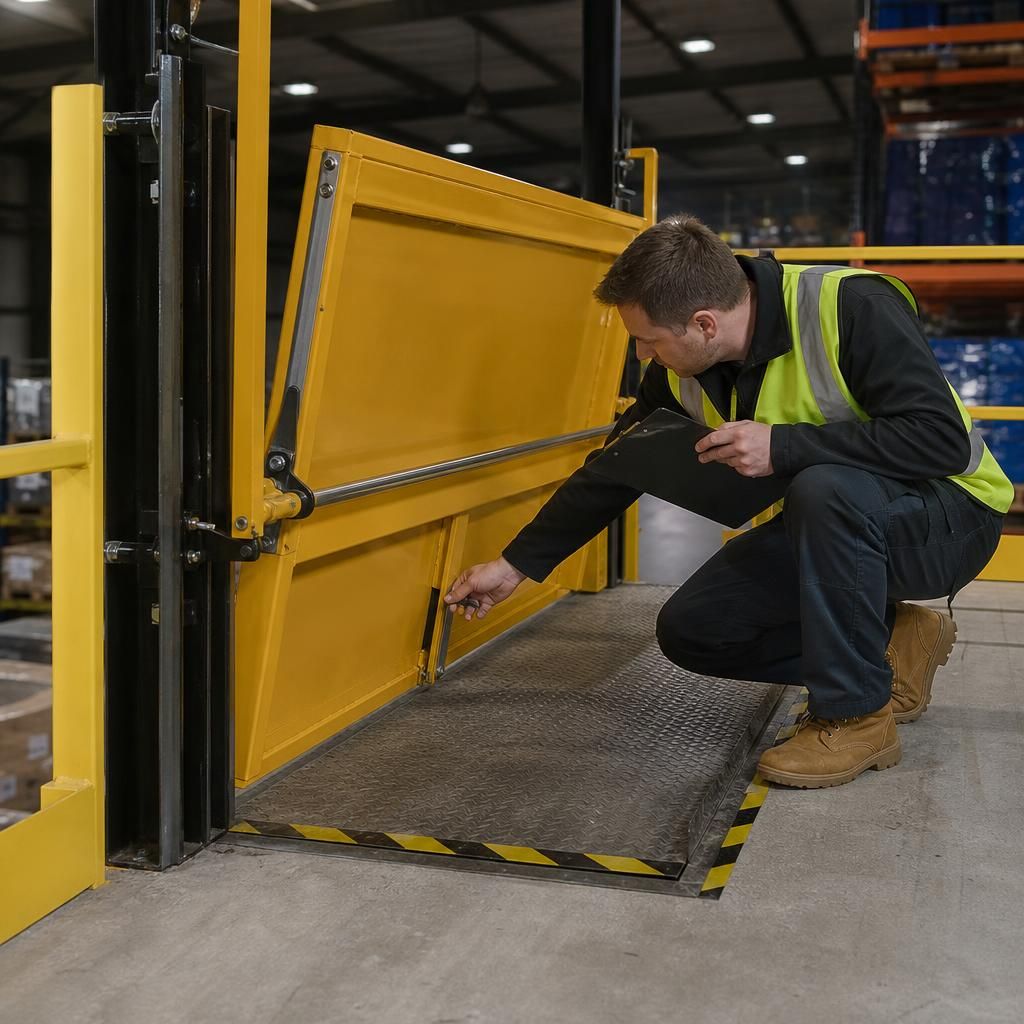
Planned functional checks are essential to maintaining an Up & Over Pallet Gate System. The gate should move smoothly through its full operating range, remain stable and engage its safety catches, stops and locking arrangements correctly. Any sticking, unusual noise, excessive movement or change in operating force should be investigated before the gate is used again.
Keep a maintenance record covering inspections, cleaning, lubrication, defects and repairs. If the gate, counterbalance mechanism, fixings or safety components are damaged, isolate the loading position and arrange assessment by a competent specialist. Repairs should follow the manufacturer’s instructions and be functionally tested before the gate returns to service.
Arrange an Up & Over Pallet Gate inspection
Arrange an Up & Over Pallet Gate inspection to identify wear, damage or operating defects before they affect safe loading operations. Our competent team can assess the gate, fixings, counterbalance and safety mechanisms, then advise on any required maintenance or repairs.