
What materials are commonly used in the construction of mezzanine sliding gates?
Mezzanine sliding gates are commonly constructed from powder-coated or galvanised steel, which provides strength, durability and resistance to corrosion. Aluminium may be used where lower weight is important, while steel mesh, solid panels and protective finishes can be selected to suit visibility, impact protection and the working environment.
Mezzanine sliding gates are most commonly made from structural steel, with the choice of finish, infill and operating components adapted to the working environment. Galvanised or powder-coated steel provides the strength and durability required for frequent industrial use, while aluminium can be considered where reducing the gate’s weight is a priority.
Structural steel
Steel is the usual primary material for the frame, posts, guide rails and other load-bearing parts of a mezzanine sliding gate. It offers high resistance to impact, repeated operation and general industrial wear. The steel section and construction method must be selected according to the gate’s dimensions, operating arrangement and the forces it may experience in service.
Galvanised steel
Galvanised steel has a protective zinc coating that helps prevent corrosion. It is particularly suitable for warehouses and other areas where condensation, humidity or occasional exposure to moisture could affect untreated steel. Galvanising is often chosen for practical durability, although the condition of cut edges, drilled areas and damaged surfaces should still be checked during inspections.
Powder-coated steel
Powder coating applies a durable, coloured finish to steel components. As well as providing additional protection against corrosion, it gives the gate a clean, consistent appearance and can make key safety features easier to identify. Any coating should be suitable for the environment, and damaged areas should be repaired in accordance with the manufacturer’s guidance to prevent deterioration beneath the finish.
Steel mesh
Mesh panels are commonly used where visibility through the closed gate is important. They allow operators to see the area beyond the gate while providing a physical barrier against people, products and equipment passing through an open edge. Mesh size, wire or panel strength, and the way the infill is secured must be appropriate for the hazards present.
Solid steel panels
Solid panels may be selected where greater containment, screening or protection from falling materials is required. They provide less visibility than mesh, so the design may need additional controls such as warning markings, viewing sections or operational procedures. Solid infill can also add weight, which affects the choice of track, rollers and manual or powered operating mechanism.
Aluminium
Aluminium is lighter than steel and may be suitable for some gate frames, infill panels or non-load-bearing components. Its lower weight can make manual movement easier and reduce demands on certain operating parts. However, aluminium is not automatically suitable for every industrial application: the design must account for its strength, stiffness, connection details and potential exposure to impact.
Tracks, rollers and fittings
The moving gate normally incorporates steel or other suitably rated materials for its tracks, rollers, guides, stops, hinges and fixings. These parts are essential to safe operation and should be compatible with the gate’s weight, travel path and frequency of use. Stainless steel or corrosion-resistant fittings may be appropriate in damp or corrosive environments, provided they are compatible with the surrounding materials.
Choosing the appropriate material combination
Material selection should consider more than the frame alone. The gate’s location, exposure to moisture, likely impact, required visibility, cleaning regime, operating frequency and fire or workplace safety requirements can all affect the specification. A heavier steel gate may provide increased robustness, while a lighter construction may be preferable where frequent manual operation is required.
Before installation, the proposed gate should be checked against the supporting structure and the intended use. The complete assembly, including its frame, infill, track, rollers, stops and safety features, needs to work as one system. Regular inspections should look for corrosion, coating damage, distortion, loose fixings, worn rollers and obstruction of the sliding path. Prompt attention to these issues helps preserve reliable operation and the protective function of the gate.
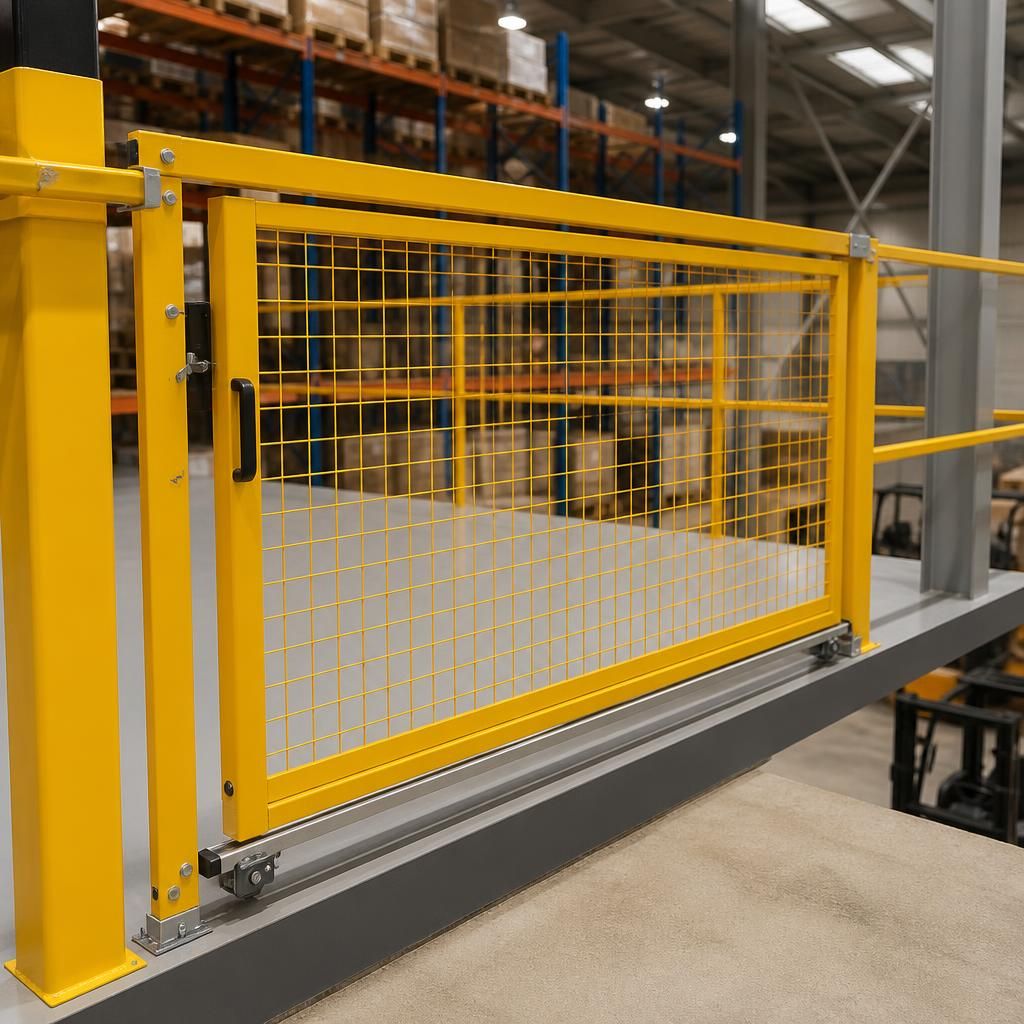
Steel is the most common material for mezzanine sliding gates because it provides the strength and impact resistance needed in busy industrial areas. The frame, guide rails and supporting posts are typically manufactured from structural steel, while mesh or solid steel panels are selected according to the required visibility and level of protection.
A galvanised finish helps resist corrosion in humid or exposed environments, whereas powder-coated steel provides a durable protective finish and allows safety features to be clearly identified. Aluminium may be suitable for selected components where reducing the gate’s weight is important, but its strength, stiffness and resistance to impact must be assessed as part of the complete gate design.
Discuss the right materials for your mezzanine sliding gate
Speak to Able Racking about the most suitable materials for your mezzanine sliding gate, taking account of the working environment, impact risks, visibility and operating requirements. Our experienced team can help review the specification and recommend a practical, durable gate solution.