
What qualifications or credentials should a warehouse racking inspector possess?
A warehouse racking inspector should have recognised training in storage equipment safety, a sound understanding of relevant British and European standards, and substantial practical experience inspecting warehouse racking systems. They should also be able to demonstrate technical competence, appropriate liability insurance, clear inspection records and the ability to identify, assess and report defects accurately, with specialist credentials such as SEMA-approved training providing additional assurance.
A competent warehouse racking inspector should hold recognised training in storage equipment safety, understand the relevant British and European standards, and have practical experience assessing warehouse racking systems. In the UK, there is not one universal statutory licence that every inspector must hold. Competence is demonstrated through suitable technical training, relevant experience, a clear inspection method and the ability to identify, assess and report defects accurately.
Recognised technical training is an important starting point. A suitably trained inspector should understand the construction, intended use and common failure modes of warehouse racking, including frames, beams, bracing, protection, load notices, connections and floor fixings. Specialist training such as SEMA-approved racking inspection training can provide useful evidence that the inspector has studied established inspection principles and industry guidance. Training should be relevant to the types of storage equipment being inspected rather than limited to general workplace safety.
The inspector should also be familiar with the standards and guidance that apply to the installation, use and inspection of storage equipment. Depending on the system and the scope of the visit, this may include:
- BS EN 15635, which covers the application and maintenance of steel static storage systems and provides a recognised framework for safe use and inspection.
- HSE guidance, including principles relating to workplace transport, safe storage, risk assessment and the maintenance of work equipment.
- PUWER principles, where the storage equipment falls within the relevant scope, particularly regarding suitability, maintenance and safe use.
- Manufacturer information and original design documentation, which help the inspector compare the installed system with its intended configuration and load capacity.
Knowing a standard is not enough on its own. A competent inspector must be able to apply the guidance to the conditions found at the site, taking account of loading practices, vehicle movements, impact damage, changes to the layout, unauthorised alterations, floor condition and the way staff use the system. They should understand that a defect must be assessed in context rather than recorded as an isolated visual observation.
Practical inspection experience is equally important. An experienced inspector will know how to examine accessible components methodically, recognise distortion and damage, identify missing or unsuitable parts, check protective measures and distinguish between cosmetic marks and defects that could affect structural performance. They should be comfortable working in active warehouse environments and understand how to carry out an inspection without creating additional risks for employees, vehicles or stored goods.
Ask whether the inspector has experience with the particular type of warehouse racking at your premises. Relevant experience may include inspections of adjustable pallet systems, drive-in systems, cantilever systems, push-back systems, mobile systems, carton live storage or other specialist arrangements. Experience should also cover different operating environments, as the risks in a high-traffic distribution facility may differ from those in a lower-use storage area.
Assessment and reporting skills should form part of the inspector’s competence. A professional inspection report should normally:
- Identify the areas and equipment inspected, including any inaccessible areas or exclusions.
- Record the location and nature of each observed defect.
- Classify the seriousness of damage in a consistent and understandable way.
- Explain any immediate controls or remedial action required.
- Include clear photographs or other evidence where this helps identify the issue.
- Highlight matters such as missing load notices, altered configurations, overloading, poor housekeeping or unsuitable working practices.
- Provide a clear record that can be reviewed after repairs or follow-up inspections.
The inspector should be able to explain the findings to the person responsible for warehouse safety, not simply issue a checklist. Where a defect may present an immediate risk, the inspector should communicate this promptly and recommend appropriate controls, such as isolating a damaged area, removing loads or arranging temporary protection until competent repairs are completed.
Independence and professional judgement also matter. The person carrying out the inspection should be able to assess the equipment objectively and should not overlook defects because of commercial pressure or assumptions about how the system was installed. If the inspector is also involved in repairs or installation, the business should still receive a transparent report that separates the inspection findings from any proposed remedial work.
It is reasonable to request evidence of the inspector’s training, relevant experience, professional indemnity or public liability insurance, and the company’s inspection procedures. You can also ask whether inspectors receive continuing professional development and how they keep their knowledge of standards, manufacturers’ requirements and inspection methods current. Training records should relate to the individuals who will attend your site, rather than only to the wider organisation.
The inspector should understand the limits of a visual safety inspection. An inspection does not automatically confirm the original design capacity, certify structural calculations or replace an engineer’s assessment where serious damage, an unusual configuration or an undocumented alteration is found. A competent inspector will identify when specialist engineering advice, manufacturer information or a more detailed investigation is needed.
Before appointing an inspector, provide details of the equipment, site conditions and any known incidents or changes. Confirm what the inspection will cover, how defects will be categorised, how urgent findings will be communicated and whether a follow-up visit is included. Choosing a suitably trained and experienced inspector, supported by clear records and appropriate insurance, gives your business a reliable basis for managing warehouse racking safety and arranging proportionate remedial action.
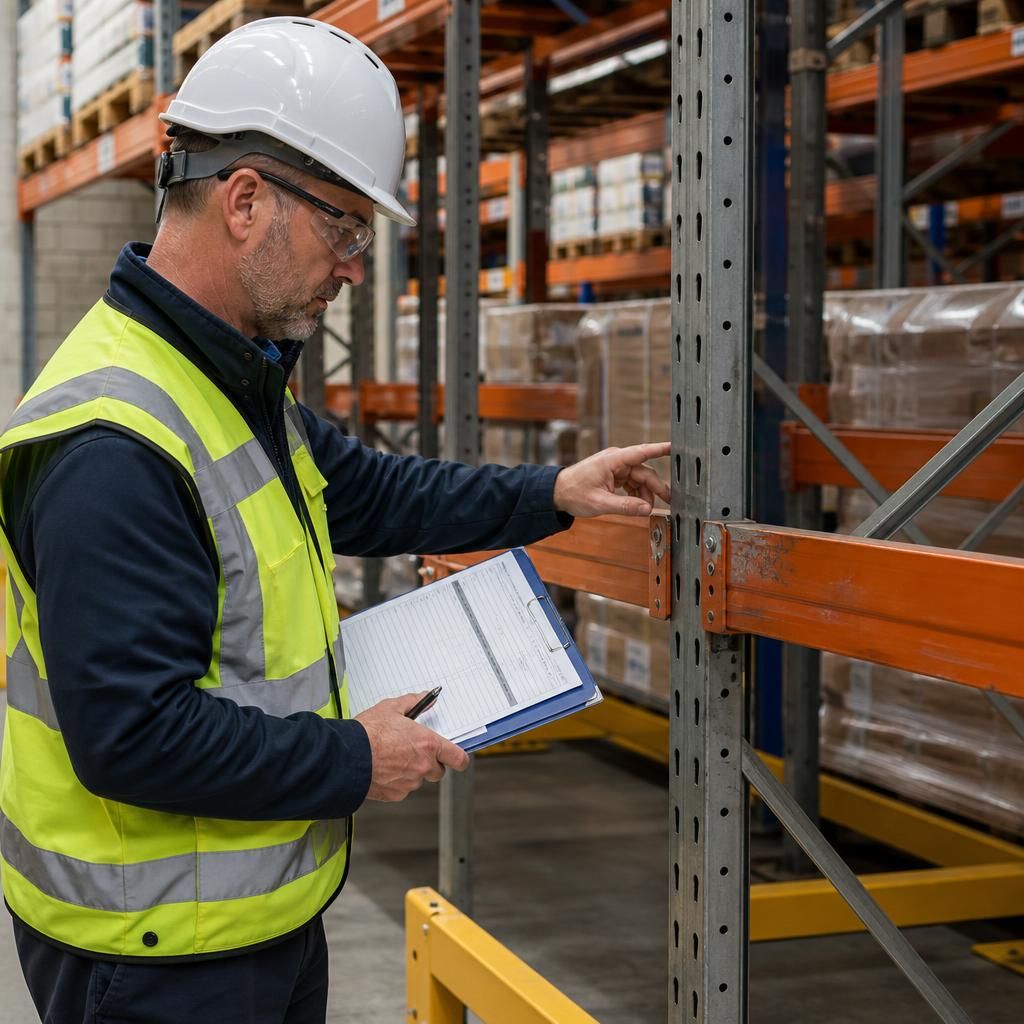
The most useful qualification is evidence that the inspector is trained to assess warehouse racking systems against recognised safety guidance, rather than a generic workplace safety certificate alone. Training such as SEMA-approved inspection training can demonstrate knowledge of common defects, damage assessment, inspection methods and appropriate reporting.
Credentials should be supported by practical experience with the type of warehouse racking installed at your site. Before appointing an inspector, ask for:
- Details of relevant technical training and any continuing professional development.
- Experience inspecting comparable warehouse racking systems and operating environments.
- A sample inspection report showing defect descriptions, photographs, classifications and recommended controls.
- Evidence of suitable public liability or professional indemnity insurance.
- The company’s inspection procedure and confirmation of how urgent findings are communicated.
A competent inspector will also recognise the limits of a visual inspection and recommend engineering or manufacturer advice where damage, altered configurations or undocumented load capacities require further assessment.
Arrange your warehouse racking inspection with a qualified inspector
Arrange your warehouse racking inspection with Able Racking’s qualified inspectors, who can assess your system, identify defects and provide a clear report. Contact our experienced team to discuss your inspection requirements and any follow-up action needed.