
What should businesses prepare before a pallet rack risk assessment?
Before a pallet rack risk assessment, prepare the warehouse racking layout, inspection and repair records, load information, risk assessments and safe access to every storage area. Inform relevant staff, identify known damage or changes, and ensure the inspector can speak with operatives who use the system and review any safety concerns.
Before a pallet rack risk assessment, prepare accurate warehouse racking information, relevant safety records, safe access to every storage area and the staff needed to explain how the system is used. The assessment is more effective when the inspector can compare the installed system with its intended design, review previous findings and observe normal storage and handling activities.
Prepare the warehouse racking information
- Provide an up-to-date warehouse racking layout showing aisles, bays, loading areas, emergency routes and any restricted zones.
- Identify the type and configuration of the system, including bay positions, beam levels, upright arrangements, protection equipment and any changes made since installation.
- Make available the original design details, drawings, manufacturer information and safe working load notices where these are held.
- Record any additions, alterations, relocations or changes in load type. A system may no longer match its original design if components have been moved or replaced.
Load information is particularly important. The inspector should be able to establish what the system is intended to support, including pallet dimensions, load weights, load distribution and the way pallets are positioned on beams. If load notices are missing, damaged or inconsistent with the current arrangement, flag this before the assessment so it can be investigated.
Gather inspection, repair and maintenance records
Collect previous pallet rack inspection reports, risk assessments, repair records and evidence that earlier recommendations were addressed. Include records of reported impacts, damaged components, temporary controls and any areas that have been taken out of service. These documents help identify recurring problems and allow the inspector to check whether previously identified risks remain controlled.
Also provide details of routine visual checks carried out by warehouse staff. These records should show what is checked, who completes the checks, when issues were identified and what action followed. If a concern is still awaiting repair, mark the affected location clearly and explain the interim control in place.
Make every area safely accessible
All bays, levels and components within the agreed scope should be visible and accessible. Before the visit:
- Clear unnecessary stock, packaging and obstructions from inspection routes.
- Ensure aisles and access points are not blocked by vehicles, pallets or waste.
- Arrange suitable access equipment where elevated components cannot be inspected from floor level.
- Make sure stored goods do not conceal uprights, beams, bracing, floor fixings or protection equipment.
- Identify areas where work at height, vehicle movements or restricted access require additional controls.
Do not move loads or enter operational areas in an unsafe way simply to prepare for the assessment. The inspection should be coordinated with the site’s normal traffic management arrangements, including pedestrian segregation, vehicle controls and any permit requirements.
Inform the people who use the system
Tell warehouse managers, supervisors, forklift truck operators, maintenance staff and other relevant employees when the assessment will take place. Their practical knowledge can reveal issues that are not obvious during a document review, such as repeated vehicle contact, difficult loading positions, unstable pallets, restricted visibility or areas where stock is regularly stored outside its intended location.
Arrange for an appropriate site representative to accompany the inspector and provide access to records, storage areas and responsible personnel. Staff should understand that the purpose is to identify and control risks, not to assign blame. Honest information about impacts, near misses and operating difficulties produces a more useful assessment.
Report known damage and changes in advance
Make a list of known concerns, even where they appear minor. This may include bent uprights, damaged beams, missing locking devices, displaced components, loose floor fixings, damaged guards, altered beam levels, overhanging loads or missing load notices. Include the location, date discovered and any action already taken.
Known damage should be controlled without waiting for the assessment. Depending on its severity, this may involve isolating the affected bay, removing the load, restricting access or arranging competent repair. Damaged components should not be straightened, welded or substituted without an appropriate technical decision, as an unsuitable repair can affect the system’s design performance.
Review how the warehouse operates
Prepare information about the activities that place demands on the warehouse racking. The inspector may need to understand:
- How pallets are loaded, unloaded and positioned.
- Which types of handling equipment operate in the aisles.
- Whether vehicle routes, pedestrian routes or work processes have changed.
- Whether stock profiles, pallet sizes or load weights have changed.
- How damaged pallets, returned goods and irregular loads are managed.
- How staff report impacts, defects and unsafe conditions.
Where the current use differs from the original design or operating assumptions, make this clear. Changes in vehicle type, aisle arrangement, storage height or load characteristics can introduce risks that are not identified by looking at the components alone.
Confirm the assessment scope and site controls
Before the visit, confirm which warehouse racking areas, ancillary components and related activities are included. Agree the arrangements for site induction, personal protective equipment, escorting, photography, access equipment and temporary disruption to operations. If several buildings, shifts or storage zones are involved, provide a clear scope so no area is unintentionally missed.
The assessment should take place under controlled conditions. If normal operations must continue, agree how the inspector will work safely around moving vehicles and personnel. Where a detailed examination requires an area to be empty or temporarily isolated, plan this with the warehouse team in advance rather than improvising on the day.
Complete a final pre-assessment check
A short internal check can confirm that the site is ready. Verify that the layout and records are available, load information is current, known defects are documented, inspection routes are clear and relevant staff have been briefed. Ensure that any immediate danger has already been controlled and that the inspector will have access to the people who understand the system’s daily use.
Good preparation does not replace the assessment. It gives the inspector reliable evidence, improves access to concealed or difficult areas and helps ensure that recommendations reflect the warehouse racking as it is actually operated. After the assessment, record the findings, prioritise actions according to risk and retain evidence that repairs, restrictions or other corrective measures have been completed.
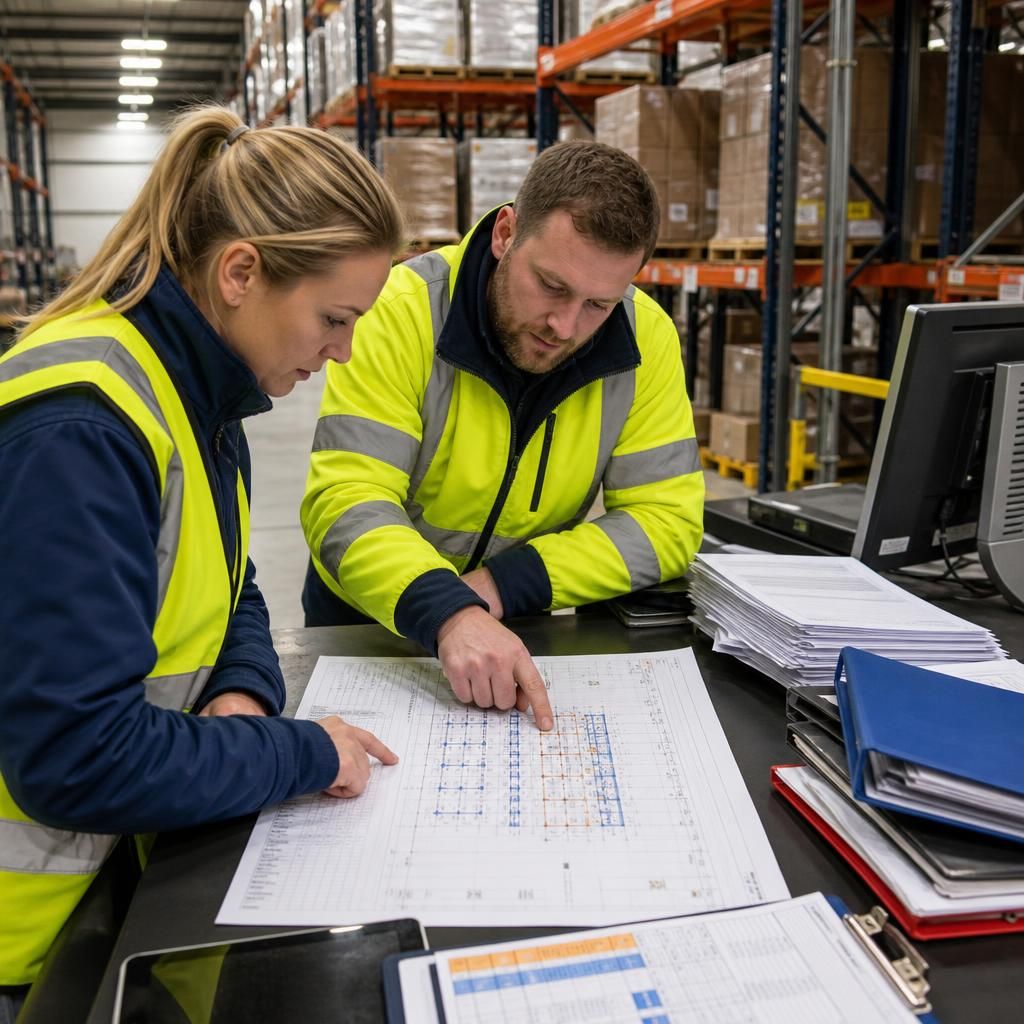
Providing an up-to-date warehouse racking layout and previous inspection records before a pallet rack risk assessment helps the inspector assess the system against its intended design and identify recurring issues. Include bay positions, beam levels, load information, protection equipment, known damage, repairs and any alterations made since installation.
Also ensure that inspection routes are clear and every relevant bay, upright, beam, brace and floor fixing can be viewed safely. Brief supervisors and forklift truck operators beforehand so they can explain impacts, loading difficulties, unstable pallets or storage practices that may not be evident from the records alone.
Arrange your pallet rack risk assessment
Arrange your pallet rack risk assessment with Able Racking and ensure your warehouse racking is inspected against its design, current use and relevant safety requirements. Contact our experienced team to confirm the scope, access arrangements and a suitable assessment date.