
What steps are taken during a pallet rack inspection?
During a pallet rack inspection, a qualified inspector checks the structure, components, load notices, protection and surrounding conditions for damage, instability or non-compliance. Findings are recorded in a detailed report, with risks categorised and repair or remedial actions recommended where necessary.
A pallet rack inspection is a systematic examination of warehouse racking, its components, loads and surrounding conditions. A competent inspector checks whether the installation remains structurally sound, correctly configured and suitable for the way it is being used, then records any damage, unsafe practice or compliance issue in a formal report.
The inspection normally follows a consistent process so that no important part of the storage system is overlooked. The exact scope depends on the type of installation, its operating environment and any changes made since the previous inspection.
- Confirm the inspection scope and site conditions. Before starting, the inspector reviews the areas to be examined and identifies relevant changes to the warehouse racking, such as alterations to beam levels, new equipment, changes in load types or modifications to access routes. They also consider whether the storage system is in normal operation and whether any areas require controlled access during the inspection.
- Review available information. Drawings, load notices, previous inspection reports, repair records and details of any reported incidents or alterations can help establish the intended design and loading arrangement. This information is compared with the installation as found on site. Missing or outdated documentation is recorded because it can make it harder to verify safe use.
- Inspect the overall layout. The inspector checks that aisles, working areas and access routes are clear and that the warehouse racking is positioned as intended. They look for encroachment into traffic routes, restricted visibility, obstructions, unsuitable storage practices and signs that the system has been moved or reconfigured. The relationship between the storage system, handling equipment and pedestrian routes is also considered.
- Examine the main structural components. Uprights, frames, bracing, beams, connectors, baseplates and other load-bearing parts are checked for impact damage, distortion, cracking, corrosion, loose or missing components and signs of movement. Particular attention is given to bent uprights, damaged bracing and beam connections, as these can affect the stability and capacity of the installation.
- Check protection and ancillary components. Column guards, end-of-aisle protection, barriers, guide rails, safety pins, wire decking and other protective components are inspected for damage, displacement or absence. These items should be suitable for their purpose and securely fitted. Protection that has been damaged by handling equipment may no longer provide the intended level of defence, even if the main frame appears undamaged.
- Assess the floor, fixings and stability. The inspector checks whether baseplates and floor fixings are present, secure and in suitable condition. They look for movement, settlement, damaged concrete and other signs that could affect alignment or stability. Where frames or beams appear out of position, further investigation may be needed rather than simply returning components to an apparently straight position.
- Verify load information and configuration. Load notices should be visible, legible and consistent with the installed arrangement. The inspector compares the stated capacities and configuration with the beam levels, bay layout and stored loads. They also look for overloading, uneven distribution, unsupported loads, loads projecting into aisles and goods stored in a way that could fall or interfere with safe operation.
- Look for signs of use-related damage. Damage is assessed in context, including where it is located, which component is affected and whether the damage is isolated or recurring. Fresh impact marks, repeated contact with frames, missing safety pins and damaged protection may indicate an underlying issue with traffic management, operator behaviour or the suitability of the layout. Photographs and precise location references are used to support the findings.
- Consider the surrounding environment. Conditions around the warehouse racking can affect its safe performance. The inspection may include checks for corrosion, leaks, fire protection issues, poor housekeeping, inadequate lighting, obstructions and activities that could expose the structure to impact or contamination. The inspector also considers whether stored goods or nearby equipment create additional risks.
- Discuss urgent findings with the responsible person. If a defect presents an immediate risk, it should be reported promptly rather than left until the written report is issued. Depending on the severity and location of the problem, the affected area may need to be unloaded, isolated or taken out of service until suitable remedial action is completed. The inspector should explain the reason for the restriction and identify what needs to happen next.
- Categorise and record the findings. Each issue is documented with its location, component, observed condition and recommended action. Findings are generally prioritised according to their risk and urgency, distinguishing matters requiring immediate action from those requiring planned repair or monitoring. A clear record helps the responsible person decide which areas must be controlled first and provides evidence that concerns have been addressed.
- Issue the inspection report. The completed report should identify the areas inspected, the date and scope of the visit, notable conditions, photographs where useful, defects found and recommended corrective measures. It should be sufficiently detailed for the warehouse team, maintenance contractor or repair specialist to locate each issue without relying on guesswork. Any limitations, inaccessible areas or information that could not be verified should also be stated.
- Agree remedial action and follow-up. An inspection identifies condition and risk; it does not automatically make damaged warehouse racking safe. Repairs, replacement components, unloading, reconfiguration or further engineering assessment may be required. Once remedial work is complete, the affected area should be checked to confirm that the reported issue has been resolved and that the system is suitable to return to normal use.
A thorough inspection therefore covers more than a quick visual check of the upright frames. It combines examination of the structure, verification of load and configuration information, assessment of protective measures and review of how the system is being used. The findings should result in practical actions, not simply a pass-or-fail statement.
Warehouse staff should report new impacts, unusual movement, missing components, visible distortion or changes to the storage arrangement as soon as they are noticed. These reports do not replace a formal inspection, but they help ensure that emerging problems are assessed before they become more serious. Keeping previous reports, repair evidence and updated load information available also makes future inspections more accurate and useful.
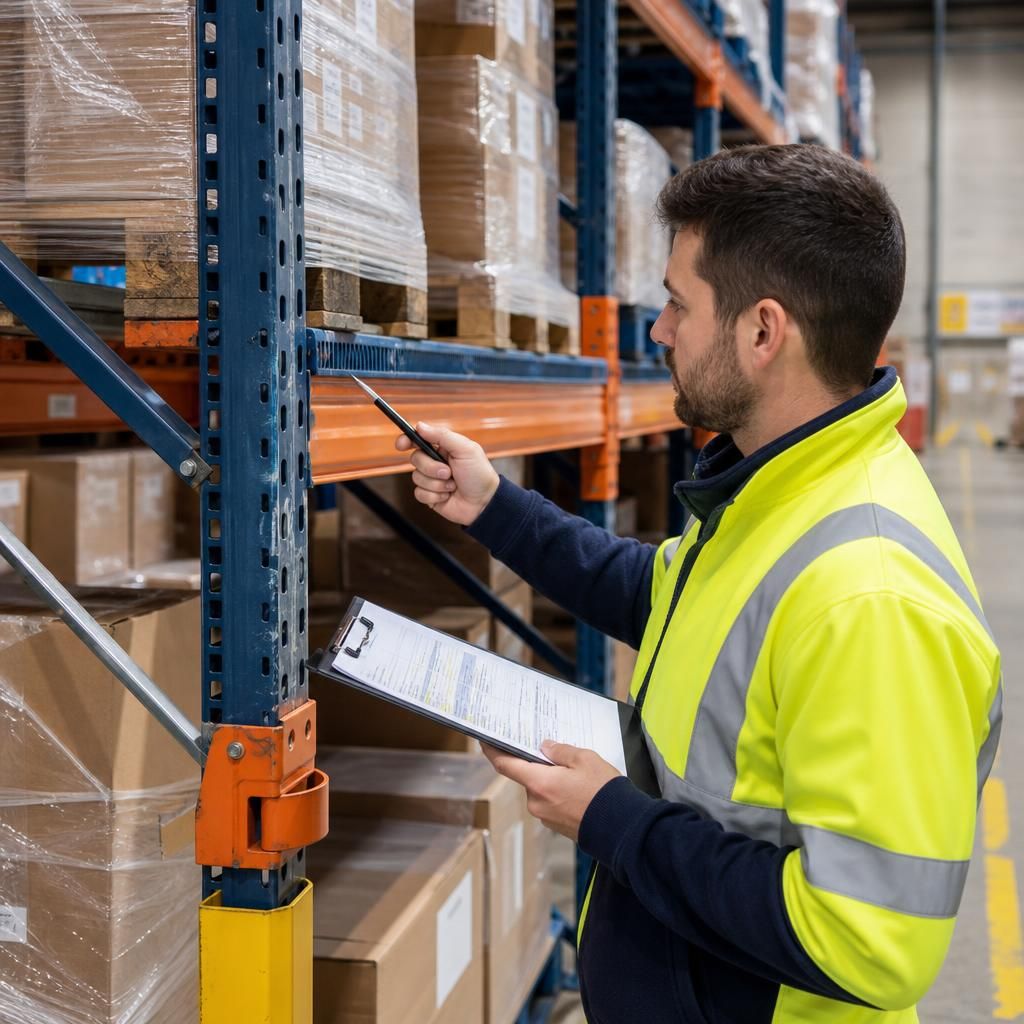
A pallet rack inspection records the condition and location of each significant defect so the responsible person can take the correct action. The inspector documents issues such as damaged uprights, displaced beams, missing safety pins, insecure fixings, overloaded bays or inadequate protection, using photographs and clear location references where helpful.
Findings are prioritised according to their risk. An immediate concern may require the affected bay to be unloaded, isolated or taken out of service until repairs or further assessment are completed. Less urgent issues can be scheduled for planned remedial work or monitored. The final report should also identify any inaccessible areas, information that could not be verified and the action needed to confirm that warehouse racking is safe to return to normal use.
Arrange Your Pallet Rack Inspection
Contact Able Racking to arrange a pallet rack inspection and receive a clear report on the condition, risks and required remedial actions across your warehouse racking.