
How do installation services affect warehouse racking costs? Professional installation affects warehouse racking costs through labour, site preparation, layout accuracy and compliance checks, while reducing the risk of damage, unsafe assembly and costly remedial work.
Professional installation affects warehouse racking costs through labour, site preparation, layout accuracy and compliance checks. Although it adds an upfront service cost, skilled installation helps prevent damage, unsafe assembly and expensive remedial work, supporting reliable long-term performance.
Professional installation affects warehouse racking costs by adding a defined labour and project-management charge, while helping control the wider cost of the installation. The service normally covers preparation, setting out, assembly, securing, inspection and handover. Although this creates a higher initial cost than an informal or self-installed approach, it can reduce the likelihood of damaged components, incorrect assembly, unsafe loading conditions and expensive remedial work.
Labour is the most visible installation cost. The price reflects the size and complexity of the warehouse racking system, the number of components, access conditions and the time required to assemble and secure the structure correctly. Installation may also require lifting equipment, specialist tools, traffic management or additional operatives where the work takes place in an active warehouse.
A professional quotation should distinguish between the cost of the warehouse racking equipment and the cost of installing it. This makes it easier to compare proposals and identify what is included. Installation-related costs may cover:
- Site attendance, delivery coordination and unloading requirements.
- Setting out the warehouse racking positions in accordance with the agreed layout.
- Assembly of frames, beams, bracing, safety components and accessories.
- Anchoring and securing the system to the floor where required by the design.
- Use of access equipment and other installation equipment.
- Checks for alignment, stability, component condition and correct assembly.
- Removal of packaging and practical handover information.
Warehouse layout has a direct effect on installation time and cost. A straightforward layout with clear access and suitable floor conditions is generally less demanding than a congested site with restricted aisles, uneven surfaces or nearby operational activity. Changes to the proposed layout after installation has started can also increase costs because components may need to be dismantled, relocated or replaced.
Before work begins, the installer should confirm the available dimensions, aisle widths, working clearances, floor condition, access routes and any restrictions caused by doors, columns, lighting, sprinklers or other services. Resolving these issues during planning is usually more cost-effective than adapting the warehouse racking after delivery.
Site preparation can add to the installation price. The warehouse may need to be cleared, marked out or made safe before the installation team arrives. If the floor is unsuitable for the proposed system, remedial work may be needed before components can be securely installed. Additional costs may also arise where the work must be completed outside normal operating hours or in separate visits to avoid disrupting warehouse operations.
Installation services also affect the cost of compliance and risk control. Warehouse racking must be assembled in accordance with the manufacturer’s instructions, the approved design and relevant workplace safety requirements. Correct positioning, anchoring, beam engagement, bracing and protection are important because a visually complete system may still be unsafe if it has been assembled incorrectly.
A competent installation team can identify practical issues during assembly, such as damaged components, missing fixings, unsuitable floor conditions or conflicts with the planned layout. Addressing these issues before the system is put into service helps prevent later disruption. It also provides a clearer record of how the warehouse racking was installed, which can assist with future inspections, alterations and maintenance.
Choosing professional installation can reduce whole-life costs. Poor assembly may lead to impact damage, instability, premature wear, load-rating concerns or the need to dismantle and rebuild sections. These problems can involve additional labour, replacement components, operational delays and unplanned safety work. The initial installation charge should therefore be considered alongside the potential cost of correcting an unsuitable or incomplete installation.
This does not mean that the lowest installation price is always the best value. When comparing quotations, check whether the scope includes the complete installation, floor fixings, access equipment, site preparation, waste removal, inspection and handover. Ask whether any assumptions or exclusions could lead to additional charges. A quotation that appears cheaper may not include essential tasks that another provider has included as standard.
The condition and type of the warehouse racking equipment can also influence installation costs. New equipment is often supplied with a defined specification and compatible components. Used equipment may require more time for identification, sorting and condition checks, particularly if components are mixed, modified or missing. Any reused warehouse racking should be assessed for suitability before installation rather than treated as interchangeable solely because the parts appear similar.
Installation costs may be lower where the warehouse racking system is small, accessible and supplied as a simple configuration. More involved installations can require additional planning and supervision, especially where the system is tall, heavily loaded, integrated with other storage equipment or being installed while the warehouse remains operational. The correct approach is to price the work against the actual site conditions rather than apply a general installation allowance.
Once installation is complete, the warehouse racking should be checked before use. The handover should confirm that the system has been assembled as intended and that any outstanding points have been recorded. Load notices and relevant safety information should be available to warehouse staff, and the completed system should be included in the site’s ongoing inspection and maintenance arrangements.
For an accurate cost assessment, provide the installer with the warehouse dimensions, proposed layout, equipment specification, floor information, access restrictions and preferred working times. Include details of any existing warehouse racking that will remain in place or connect with the new installation. Clear information at quotation stage reduces assumptions, improves cost control and makes it easier to plan a safe, efficient installation.
In summary, professional installation increases the upfront warehouse racking cost through labour, equipment and preparation, but it can provide better value by supporting correct assembly, compliance, durability and predictable future maintenance. The most reliable comparison is based on the full installed cost and the scope of work, not the equipment price alone.
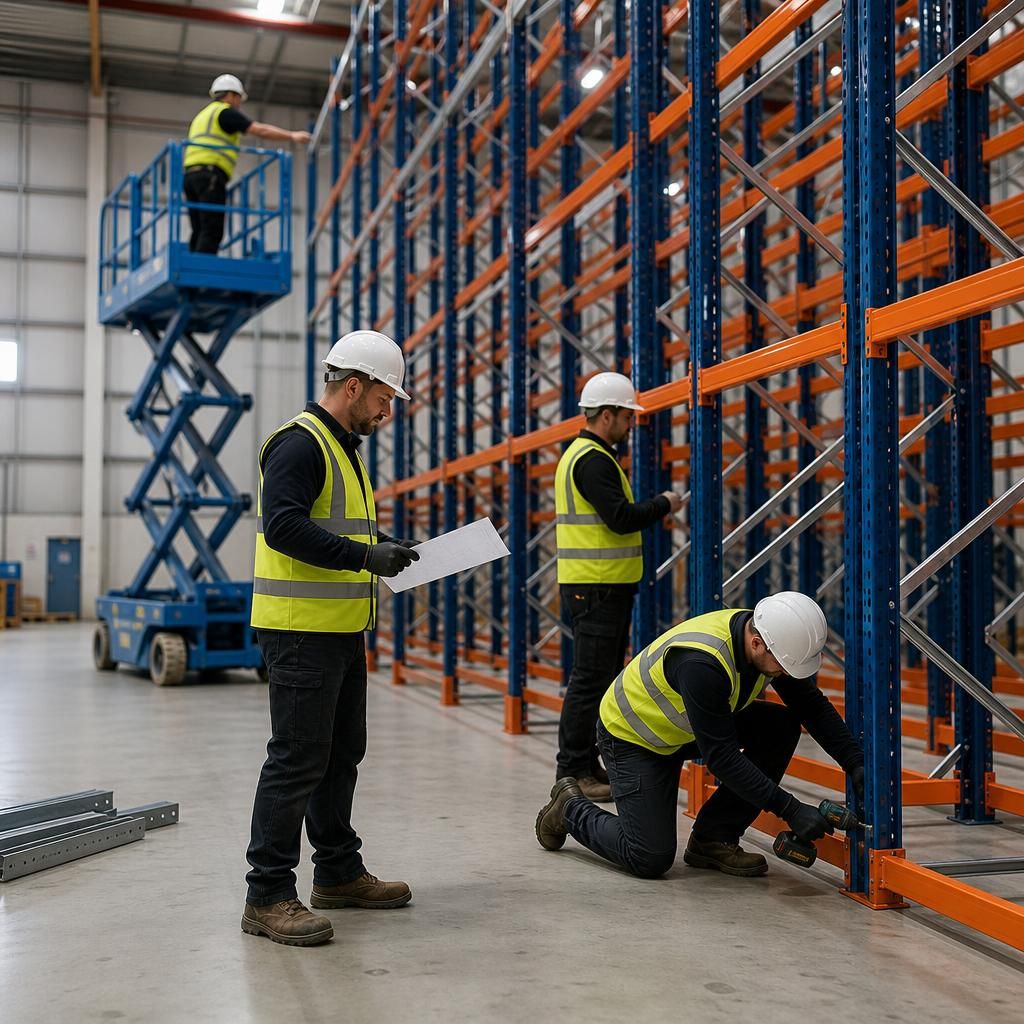
Professional installation affects the total cost of warehouse racking by adding labour, access equipment, site preparation and completion checks to the equipment price. Comparing the full installed cost gives a more accurate view of value than comparing the component price alone.
A clear quotation should state whether it includes:
- Delivery coordination, unloading and setting out
- Assembly, anchoring and fitting of safety components
- Access equipment, specialist tools and traffic management
- Checks for alignment, stability, fixings and correct assembly
- Packaging removal, handover information and any required documentation
Using an experienced installation team can also help control longer-term costs. Correct assembly reduces the risk of damaged components, unsuitable loading conditions, dismantling and remedial work. Before accepting a quotation, confirm any exclusions, particularly site preparation, out-of-hours working, floor repairs and changes to the agreed warehouse racking layout.
Get a Clear Warehouse Racking Installation Quote
Contact Able Racking for a clear warehouse racking installation quotation based on your layout, equipment specification and site conditions. We can explain what is included, identify potential additional costs and help you plan a safe, efficient installation.