
How does improper loading affect cantilever warehouse racking stability and safety?
Improper loading can overload cantilever warehouse racking components, create uneven weight distribution and shift the centre of gravity, reducing stability and increasing the risk of deflection, damage or collapse. Loads must be within the system’s rated capacity, positioned evenly and securely on the arms, with routine inspections identifying any signs of overloading or impact damage.
Improper loading can reduce cantilever warehouse racking stability by overloading the arms, creating uneven weight distribution and shifting the system’s centre of gravity. This can cause excessive deflection, damage to structural components, movement of stored goods or, in severe cases, partial or complete collapse. Safe loading depends on using the system within its rated capacity, positioning materials correctly and preventing loads from becoming unstable during storage or retrieval.
Loading capacity must be treated as a design limit. The safe working load for a cantilever warehouse racking system is determined by factors including the frame design, arm length, upright spacing, number of storage levels, anchorage, load dimensions and the type of material being stored. The stated capacity is not a general guide; it applies to a particular configuration and loading arrangement. Changing the arm positions, adding components or storing heavier materials can invalidate the original capacity information unless the system has been assessed and approved for the change.
Overloading may not cause immediate visible failure. It can gradually increase stress in the arms, uprights, bracing, base connections and floor fixings. Repeated loading and unloading can then worsen distortion or loosen connections. A component that appears serviceable may already have reduced capacity if it has been permanently bent, buckled, cracked or damaged by an impact.
Uneven loading is a separate risk from excessive loading. A total load may be within the stated capacity but still be unsafe if it is concentrated at one end of an arm, placed too far forward or distributed inconsistently between storage levels. Cantilever systems are designed around defined load positions. A concentrated load can increase bending forces and cause an arm to deflect or twist, while uneven loading across a frame can introduce lateral movement and place additional stress on bracing and connections.
Long, flexible or bundled materials require particular care. Timber, steel sections, pipes, boards and similar products can roll, slide or bow when they are not fully supported. If the load projects beyond the intended support area, its weight can create a greater turning force on the arm and upright. Materials that are not secured may also move during forklift operation, manual handling or vibration, increasing the likelihood of impact and instability.
The centre of gravity must remain within a stable loading arrangement. Placing heavy goods at height or towards the front of an arm raises the centre of gravity and increases the forces acting on the structure. It can also make the stored material more likely to fall when disturbed. Heavier goods should generally be stored at lower levels where the system design permits, with lighter or less dense materials placed above them. This must still follow the manufacturer’s loading instructions, because the permissible arrangement depends on the system’s engineered capacity.
Incorrect loading can affect stability in several ways:
- Arm deflection: an overloaded or poorly positioned load can cause an arm to bend downwards or twist. Permanent deformation is a warning that the component may no longer perform as designed.
- Upright stress: uneven or forward-loaded materials increase bending forces in the upright and may distort the frame.
- Connection damage: excessive loading can affect arm-to-upright connections, bolts, welds, base plates and bracing.
- Floor and anchorage problems: increased forces may place additional demand on floor fixings or reveal weaknesses in the supporting slab.
- Falling materials: sliding, rolling or unsecured goods can injure people, damage equipment and cause further impact to the storage system.
- Progressive instability: damage to one frame or arm can alter load paths and place greater stress on adjacent components.
Forklift and handling activity can amplify the consequences of poor loading. A load that is already projecting, unstable or incorrectly supported is more likely to be struck during placement or removal. Impacts can bend arms, dislodge guards, damage bracing or affect floor fixings. Operators should approach squarely, avoid pushing materials into position and use suitable attachments and procedures for the load being handled. Loads should not be dragged across arms or dropped onto them.
Safe loading starts with clear information at the point of use. Load notices should identify the system configuration, permissible capacities and any important restrictions. Staff responsible for loading should understand which materials can be stored, how they must be supported and what signs require the system to be taken out of service. Capacity information should be reviewed whenever the layout, stored goods, handling equipment or system components change.
A practical loading control process should include:
- Confirming the load’s weight, dimensions, length and handling characteristics before storage.
- Checking that the proposed storage position and load arrangement match the manufacturer’s or designer’s instructions.
- Distributing goods evenly across the intended supports and preventing point loading where the system is not designed for it.
- Keeping loads within the supported area and using suitable restraints, end stops or other approved accessories where required.
- Placing heavier materials in positions that maintain the system’s designed centre of gravity and stability.
- Checking the arms, uprights, bracing, connections, base plates and floor area before and after any significant impact.
- Reporting overloaded, displaced or damaged components immediately and preventing further use until they have been assessed.
Routine inspections are essential because loading errors and impact damage can occur between planned maintenance visits. A responsible person should carry out regular visual checks in line with the site’s risk assessment and inspection arrangements. Look for bent or twisted arms, displaced components, damaged welds, loose or missing fixings, distorted uprights, leaning frames, damaged bracing, movement at the base and stored materials that are rolling, sliding or projecting incorrectly.
Where damage or overloading is suspected, the affected area should be controlled immediately. Do not simply remove the visible load and return the system to service without assessment; unloading can change the forces within the structure and may expose weakened components. Isolate the location, prevent access where necessary and arrange an inspection by a competent person. Repairs, replacement components and alterations should be approved for the specific system rather than improvised on site.
Loading arrangements should also be reviewed after changes to stock profiles, storage locations, handling equipment or working practices. A system originally designed for evenly distributed bundles may not be suitable for dense individual items or loads with different dimensions. Where operational requirements have changed, a competent designer or specialist should confirm whether the existing configuration remains adequate.
Following the manufacturer’s instructions, maintaining visible capacity information, training operators and completing documented inspections all help prevent loading-related failures. These controls support the requirements of good warehouse safety practice, including the principles set out in HSE guidance and applicable warehouse storage standards. They also provide evidence that the system is being managed responsibly and that defects are addressed before they become more serious.
In summary, improper loading affects cantilever warehouse racking by increasing structural stress, changing the centre of gravity and making stored materials more likely to move or fall. Keeping loads within the approved capacity, distributing them as designed, protecting the system from handling impacts and acting promptly on defects are the main measures for preserving stability, protecting people and maintaining compliance.
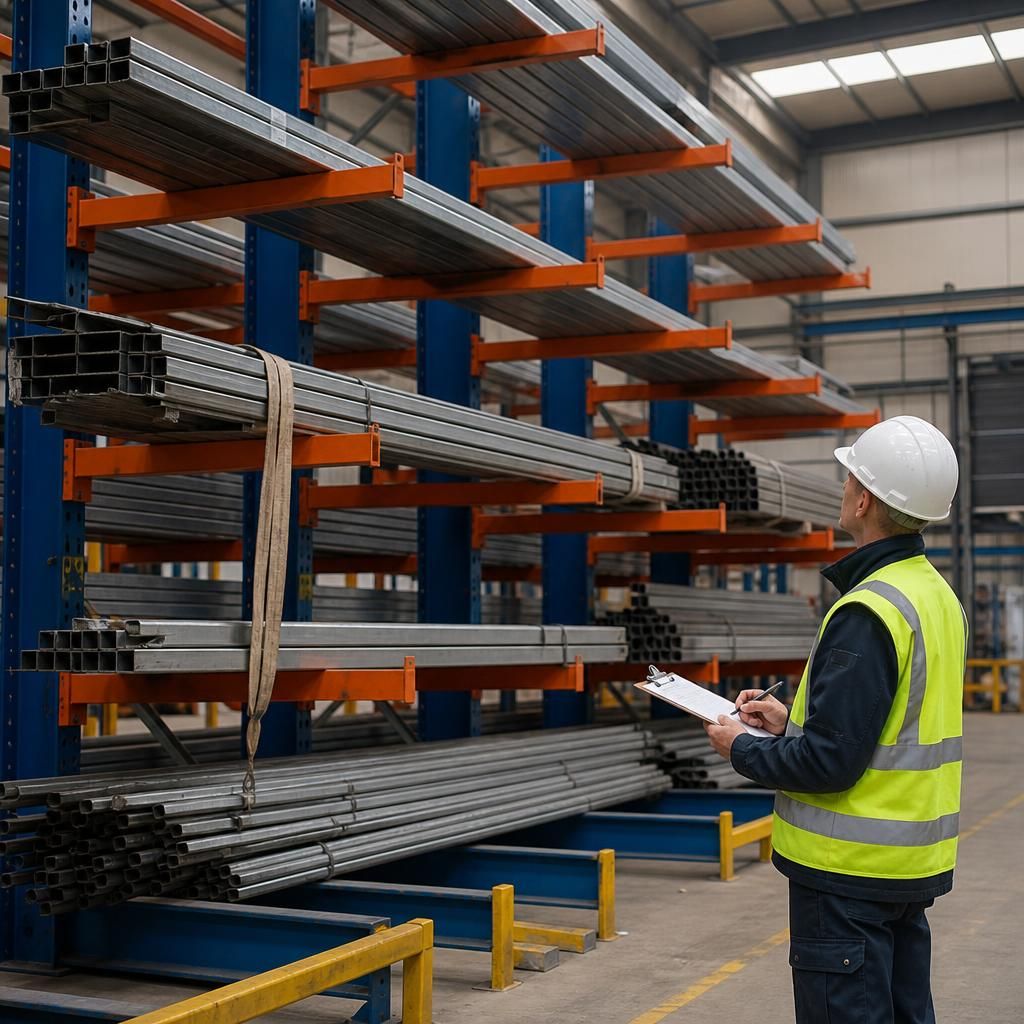
Uneven loading can make a cantilever warehouse racking system unstable even when the total weight remains within its stated capacity. Concentrating material at the front or one end of an arm increases bending and twisting forces, while placing heavy goods at height raises the centre of gravity. Loads should be positioned across the intended support area, kept secure and stored in accordance with the system manufacturer’s instructions.
During routine checks, look for deflected or twisted arms, leaning uprights, displaced goods, loose connections and materials that are rolling or projecting beyond the supported area. Isolate any affected location and arrange assessment by a competent person before it is used again.
Arrange a Cantilever Warehouse Racking Loading Assessment
Arrange a cantilever warehouse racking loading assessment with Able Racking to verify load arrangements, capacity information and any signs of damage or instability. Contact our expert team to identify risks and agree suitable corrective action.