
Is selective pallet racking suitable for operations with high turnover rates?
Yes, selective pallet racking is well suited to high-turnover operations because it provides direct access to every stored pallet, supporting rapid picking, replenishment and stock rotation. Its adjustable layout also makes it practical for warehouses handling varied products, changing inventory levels and frequent order movements.
Selective pallet racking is well suited to high-turnover warehouse operations because it provides direct access to every stored pallet. This supports rapid picking, replenishment and stock rotation without requiring other pallets to be moved first. Its adjustable beam levels also allow the layout to accommodate changing product ranges, pallet sizes and inventory volumes.
Why it supports fast stock movement
High-turnover operations depend on efficient access rather than simply maximising storage density. Selective pallet racking places pallets in individual locations, allowing operatives to retrieve the required stock directly using the appropriate handling equipment. This can reduce double-handling, simplify picking routes and help maintain a consistent flow from goods-in to despatch.
The system is particularly useful where the warehouse holds many stock keeping units and each product needs its own accessible location. It is also practical where orders contain mixed products, or where individual pallets are picked frequently throughout the working day.
Stock rotation and inventory control
Direct access makes it easier to apply stock rotation procedures such as first in, first out. Where products have expiry dates, batch controls or limited shelf lives, locations can be organised so that the correct pallet is selected during picking. Selective pallet racking does not automatically enforce rotation, however. Effective results depend on accurate location labelling, warehouse management procedures and disciplined replenishment.
For products requiring first expired, first out handling, operatives should be able to identify batch information and expiry dates quickly. The layout, signage and stock control system should work together so that accessible locations do not lead to the wrong pallet being selected.
Flexibility for changing demand
High-turnover warehouses often experience fluctuations in demand, seasonal peaks and changes in product lines. Selective pallet racking can be adapted by repositioning beams to suit different load heights, subject to the system design and the manufacturer’s requirements. This allows storage locations to be reviewed as product dimensions and order profiles change.
Fast-moving products can be positioned in the most accessible locations, while slower-moving or less frequently requested stock can be placed in areas that do not interrupt the main picking flow. Reviewing slotting regularly can improve travel distances and reduce congestion around popular locations.
Important operational considerations
Although selective pallet racking offers excellent accessibility, it may not provide the highest pallet density when compared with more compact storage arrangements. A warehouse should therefore balance access speed against available floor space, inventory profile and handling requirements. If a large proportion of the stock consists of identical pallets, a denser system may be considered for those specific products, while selective pallet racking remains suitable for mixed or frequently picked stock.
The aisle arrangement must also match the handling equipment in use. Aisle widths, lift heights, turning areas and traffic routes should be assessed during design and whenever the operation changes. Poorly planned routes can reduce the efficiency gained from direct pallet access and increase the likelihood of contact damage.
Safety and performance requirements
High activity levels increase the importance of a well-managed inspection and maintenance programme. Uprights, beams, bracing, protection, locking devices and floor fixings should be checked for damage, displacement or deterioration. Any impact damage should be reported promptly, and affected areas should be isolated where necessary until they have been assessed and made safe.
Loads must remain within the designed capacity of each location, with pallets in suitable condition and positioned correctly on the beams or supports. Load notices should reflect the actual configuration, and changes to beam levels or components should be reviewed by a competent person before use. Operatives should also receive appropriate training in safe loading, unloading, vehicle operation and the reporting of defects.
When it is most suitable
Selective pallet racking is a strong option for high-turnover operations that require access to a broad range of products, frequent pallet movements and straightforward stock rotation. It is especially effective where product variety and picking speed are more important than achieving the greatest possible storage density.
The correct solution depends on the warehouse footprint, pallet dimensions, load weights, order patterns, handling equipment and stock control method. A review of these factors can confirm the required configuration and identify opportunities to improve location planning, safety and workflow without compromising access.
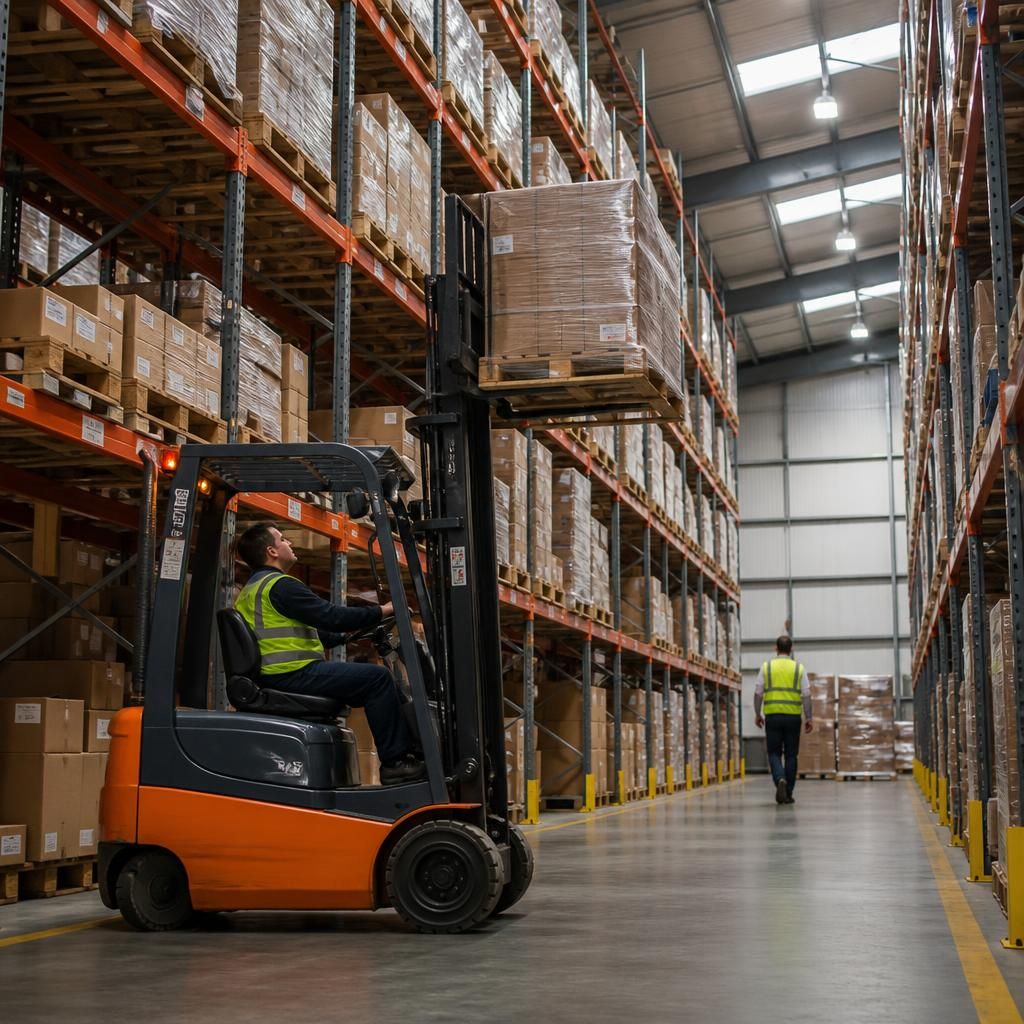
Selective pallet racking supports high-turnover operations by giving operatives direct access to each pallet, without moving other stock first. This can speed up picking and replenishment while making it easier to organise frequently requested products near the most efficient handling routes.
Regularly reviewing product locations is important as demand changes. Fast-moving stock can be positioned in the most accessible bays, while clear labelling and disciplined stock rotation help operatives select the correct batch or expiry date. The layout should also suit the handling equipment, aisle requirements and load capacities used in the warehouse.
Review your selective pallet racking for high-turnover operations
Arrange a professional review of your selective pallet racking to confirm that its layout, load capacities and inspection programme continue to support high-turnover operations safely and efficiently.