
What maintenance procedures are essential for ensuring the longevity of mezzanine lift systems?
Essential maintenance for mezzanine lift systems includes scheduled inspections, cleaning, lubrication, functional testing and prompt repair of worn or faulty components. Keep service records, follow the manufacturer’s instructions and arrange examinations by a competent engineer to identify safety issues before they cause breakdowns or disrupt operations.
Essential maintenance for mezzanine lift systems combines planned inspections, cleaning, lubrication, functional testing and prompt repair of defects. The maintenance schedule should follow the manufacturer’s instructions, the system’s risk assessment and the findings of competent-person examinations. This approach helps preserve lifting performance, protect operators and prevent avoidable downtime.
Use a documented planned maintenance schedule
Every lift should have a written maintenance plan that identifies the equipment, its duty, the components requiring attention and the person responsible for each task. The schedule should distinguish between routine checks by trained site staff, planned servicing by a qualified technician and statutory or thorough examinations by a competent person.
Maintenance intervals should not be chosen solely by calendar date. They may need to reflect usage, load patterns, operating environment, duty cycle and the manufacturer’s recommendations. A lift used frequently in a dusty, damp or corrosive area may need more frequent attention than one used occasionally in a clean, controlled environment.
Carry out routine visual and operational checks
Before use, trained operators should look for visible damage, unusual noise, fluid leaks, loose guards, damaged cables or chains, obstructed travel areas and signs that doors or gates are not closing correctly. They should also check that controls, indicators and emergency stop devices appear to function as intended.
Any unusual movement, vibration, smell, noise or loss of lifting performance should be reported immediately. A suspected defect should not be managed by repeatedly resetting the equipment or continuing to use it. Where safety may be affected, isolate the lift, prevent access and arrange an assessment by a suitably qualified person.
Inspect the structure and access points
Maintenance should cover the lift enclosure, platform, landing gates, guarding, handrails, toe boards, access doors and connection points. Technicians should check for distortion, cracking, corrosion, loose fixings and damage caused by impact from vehicles or handled goods. The lift shaft and travel route must remain clear, and no unauthorised alterations should be made to the supporting structure or guarding.
Landing gates and interlocked doors require particular attention. They should close fully, remain secure and prevent the lift from operating when an access point is open. Interlocks must never be bypassed, wedged open or treated as optional features.
Service mechanical and hydraulic components
Depending on the design, servicing may include examination of guide systems, rollers, bearings, chains, wire ropes, pulleys, brakes, drive units, cylinders, hoses and hydraulic connections. Components should be checked for wear, stretching, corrosion, misalignment, overheating and leakage. Lubrication should be applied only where specified, using the correct lubricant and quantity. Excess lubricant can attract dirt or contaminate braking and friction surfaces.
Hydraulic systems should be checked for declining pressure, damaged hoses, leaking seals and contaminated fluid. Mechanical lifting systems should be examined for abnormal wear, alignment problems and signs of overloading. Replacement components must be suitable for the specific lift and fitted in accordance with the manufacturer’s instructions; improvised repairs can create a serious safety risk.
Check electrical and control equipment
Electrical maintenance should include the control panel, isolators, wiring, switches, sensors, limit devices, emergency stops and visual indicators. Enclosures should remain properly secured, and cables should be protected from abrasion, crushing, heat and moisture. Fault codes should be investigated rather than cleared without identifying the underlying cause.
Limit switches and other protective devices are safety-critical. A competent technician should verify that they stop the lift at the correct points and prevent unsafe movement. Electrical work, testing and modifications should be undertaken by suitably qualified personnel with the equipment safely isolated.
Clean the lift and keep its surroundings controlled
Dust, packaging, spilled liquids and debris can interfere with gates, sensors, guides, wheels and floor-level equipment. Cleaning should be included in the maintenance routine, with suitable methods that do not damage electrical parts, seals, finishes or safety labels. The lift route, landing areas and surrounding floor should be kept free from stored materials and trip hazards.
Where the lift operates in a cold, humid, dusty or chemically aggressive environment, the inspection should consider the effect of those conditions on corrosion, electrical equipment, lubrication and visibility of warning markings.
Test safety functions after servicing
After maintenance or repair, the lift should be tested in a controlled manner before it returns to normal operation. Testing may include movement in both directions, stopping accuracy, landing alignment, door and gate interlocks, emergency stop controls, overload protection, limit devices, alarms and emergency lowering arrangements, where fitted.
Load testing or other specialist examinations must be carried out by a competent person using an appropriate method. The equipment should not be returned to service until defects have been rectified and the responsible person is satisfied that the protective systems operate correctly.
Arrange statutory examinations and retain records
Where the lift is lifting equipment, the owner or employer must establish which requirements apply under UK legislation, including the Lifting Operations and Lifting Equipment Regulations and the Provision and Use of Work Equipment Regulations. A thorough examination by a competent person is separate from routine servicing and does not replace planned maintenance. The examination frequency and scope should be based on the relevant legal requirements, manufacturer guidance and risk assessment.
Keep service reports, examination certificates, defect records, repair details, test results and component replacement information together. Records should show the date, equipment identification, work completed, findings, outstanding actions and the person who authorised a return to service. Clear records help demonstrate control of the equipment and make recurring faults easier to identify.
Manage repairs and changes correctly
Repairs should be prioritised according to risk. A fault affecting braking, load support, access protection, emergency stopping or interlocking should normally result in the lift being taken out of service until it has been assessed and made safe. Temporary measures should be formally controlled and should never defeat a safety function.
Any alteration to the lift, its controls, rated capacity, platform arrangement or surrounding structure should be reviewed for its effect on safety and compliance. Updated instructions, warning signs, training and examination arrangements may be needed after a change.
Train operators and review maintenance findings
Operators should know the lift’s rated capacity, permitted use, loading procedure, emergency arrangements and defect-reporting process. They should not carry out technical repairs unless specifically trained and authorised. Refresher instruction is appropriate when the equipment changes, operating conditions alter or repeated misuse is identified.
Maintenance records should be reviewed for recurring leaks, misalignment, impact damage, control faults or premature wear. Repeated defects may indicate overloading, poor loading technique, unsuitable operating conditions or an underlying design issue. Correcting the cause, rather than replacing the same component repeatedly, is central to extending service life.
A well-managed maintenance regime therefore combines operator checks, planned servicing, competent-person examinations, controlled repairs and accurate records. Following the manufacturer’s instructions and acting promptly on defects will help keep the lift reliable, compliant and safe to use throughout its working life.
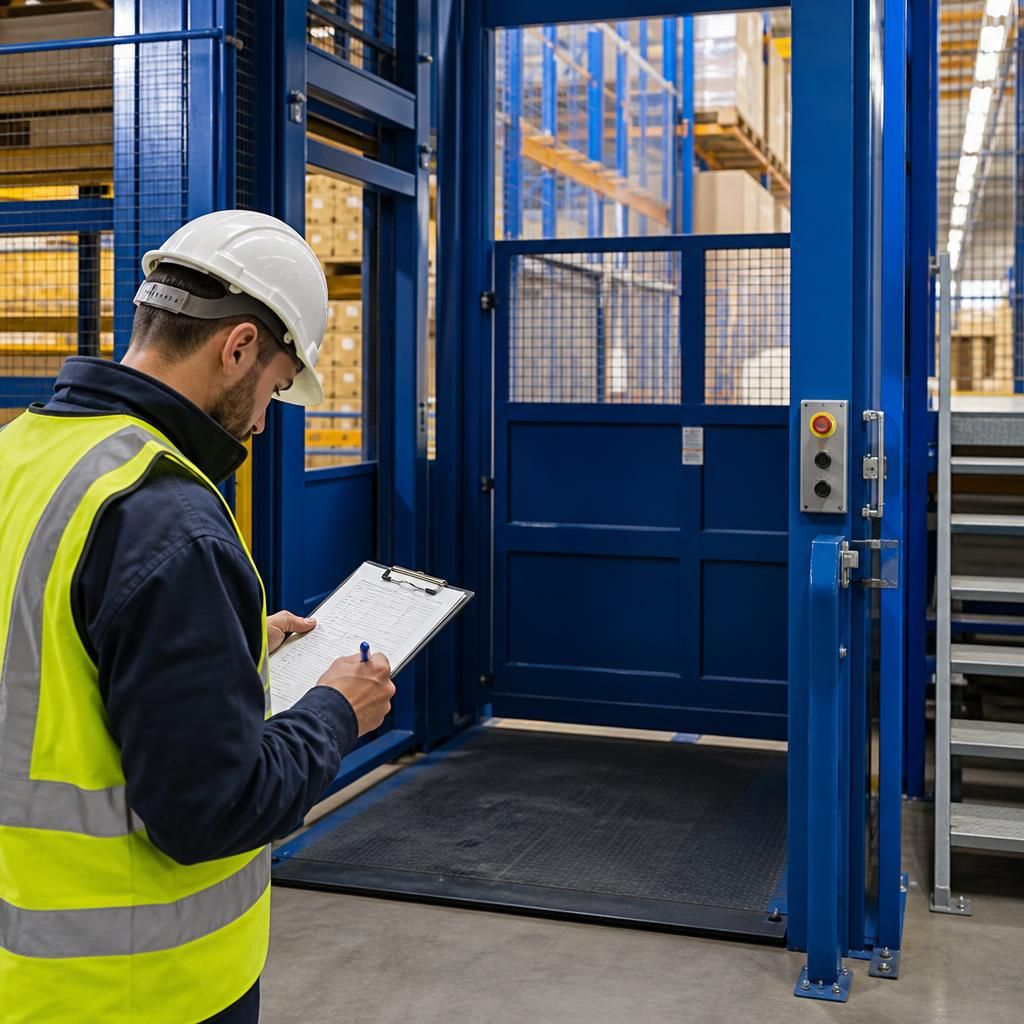
Documented inspections and prompt repairs are central to extending the service life of a mezzanine lift system. Trained operators should complete routine visual and operational checks, while a qualified technician inspects mechanical, hydraulic, electrical and control components at planned intervals. Any unusual noise, vibration, leakage, misalignment or loss of lifting performance should be reported immediately and assessed before the lift is used again.
After servicing, test the lift’s gates, interlocks, emergency stop, limit devices, alarms and stopping accuracy in a controlled manner. Keep service reports, examination certificates, defect records and repair details together so recurring faults can be identified and the equipment’s maintenance history remains clear.
Arrange expert maintenance for your mezzanine lift system
Arrange expert maintenance for your mezzanine lift system with our experienced team, including planned servicing, safety checks and prompt attention to defects. Contact Able Racking to discuss your maintenance requirements and keep your equipment safe, compliant and reliable.