
How do I ensure my portable mezzanine complies with safety regulations?
Ensure your portable mezzanine complies by having its design, load capacity, access, guarding, stairs, fire protection and intended use assessed by a competent person against applicable UK health and safety requirements. Arrange documented inspections, address defects promptly, provide suitable operator training and retain the design, examination and maintenance records for review.
A portable mezzanine complies with UK safety regulations when its design, installation, use and ongoing condition have been assessed by a competent person and supported by suitable documentation. The assessment should confirm that the structure is appropriate for its intended location, loads, access arrangements, work activities and fire strategy. Compliance is not established by the platform itself; it depends on how the portable mezzanine is selected, installed, operated, inspected and maintained.
Before using the structure, obtain the manufacturer’s technical information, structural calculations, installation instructions and stated safe working loads. These documents should identify the permitted uniformly distributed load, point loads, wheel loads and any restrictions on activities or equipment. Do not assume that a platform designed for people and light storage can support pallet trucks, machinery or concentrated loads. If the portable mezzanine is moved, altered or used for a different purpose, its suitability should be reassessed before work resumes.
A competent person should review the following areas as part of the compliance process:
- Structural suitability: confirm that the frame, deck, connections, base plates and supporting surface are suitable for the imposed loads and the operating environment.
- Stability: check that the structure cannot slide, overturn or become unstable during normal use, movement, loading or contact with workplace vehicles. Any anchoring, bracing or floor-fixing requirements must be followed.
- Load control: display the safe working load clearly at access points and loading areas. Loads should be distributed as instructed, with no overloading, unauthorised storage or accumulation of materials.
- Access: provide suitable stairs, landings and handrails for regular access. Ladders should only be used where appropriate for the task and risk assessment.
- Edge protection: protect exposed edges with suitable guardrails, intermediate protection and toe boards where there is a risk of people or objects falling.
- Loading points: protect any opening used to transfer goods. Gates or other barriers should prevent people from stepping into an unprotected edge and should be operated safely without creating additional fall risks.
- Workplace conditions: maintain adequate lighting, clear walkways and sufficient headroom, while controlling collision risks from vehicles, lifting equipment, doors and nearby operations.
Work at height must be managed in accordance with the Work at Height Regulations. The employer should avoid work at height where reasonably practicable, then select suitable measures to prevent falls and minimise the consequences of a fall. A risk assessment should cover access, loading, unloading, cleaning, maintenance, retrieving items and foreseeable misuse. It should also consider who may use the platform, including visitors, contractors and people requiring additional support.
The portable mezzanine should be installed by people who are suitably competent and in accordance with the supplier’s instructions. The installation process should include checks on the floor condition, levels, clearances, fixings, bracing, guardrails, stairs, gates and deck panels. Do not make site modifications such as drilling, cutting, welding, relocating components or adding equipment without approval from the designer or manufacturer. Even a minor alteration can affect structural capacity or the operation of safety barriers.
Fire safety must be considered alongside structural safety. The responsible person should review the portable mezzanine within the premises’ fire risk assessment, taking account of escape routes, travel distances, access for emergency response, combustible goods, ignition sources and the effect of the structure on existing fire precautions. Do not obstruct escape routes, fire doors, alarm equipment, sprinklers or other emergency facilities. Where the structure changes the building layout or its intended use, advice may be required on building control, planning and fire safety requirements.
Where the portable mezzanine is used with work equipment, the equipment and its controls must be suitable, maintained and operated safely under the Provision and Use of Work Equipment Regulations. Any lifting operation or lifting accessory associated with loading the platform should be assessed separately under the applicable lifting equipment requirements. A competent person can identify which regulations apply to the specific operation rather than treating every platform installation in the same way.
Inspection arrangements should be proportionate to the risks and the manufacturer’s instructions. Complete a documented check before first use and after installation, relocation, alteration, exceptional loading, impact, fire, flooding or another event that could affect stability or condition. Schedule further inspections at intervals based on the intensity of use, environment, age, construction and consequences of failure. Routine user checks should look for damaged components, loose connections, movement, corrosion, defective decking, missing toe boards, damaged guardrails and problems with stairs or gates.
Inspection records should identify the portable mezzanine, its location, inspection date, findings, required actions, responsible person and completion date. Defects that could affect safety should result in the affected area being taken out of use until it has been assessed and made safe. Repairs should use approved components and methods. A repair should not simply restore appearance; it must address the underlying cause and confirm that the structure remains suitable for its rated loads.
Provide information, instruction and training to anyone who uses or supervises work on the platform. Training should cover the safe working load, permitted activities, access arrangements, loading points, prohibited modifications, emergency procedures and the reporting of defects. Operators should understand that guardrails and gates must not be removed, bypassed or left open, and that goods must not be stored where they obstruct access or emergency routes.
Keep a compliance file containing the design information, manufacturer’s instructions, installation records, risk assessments, fire safety review, inspection reports, repair records and training evidence. The file should be updated when the portable mezzanine is moved, modified or assigned a new use. It should also be available to the person responsible for the premises and to inspectors or contractors who need reliable information before carrying out work.
The most effective approach is to arrange a pre-use compliance assessment, establish written operating controls and set an inspection programme before the platform enters service. Able Racking’s experienced safety team can help review the installation, identify defects and clarify the records required for safe warehouse operations. Any recommendation should be based on the specific portable mezzanine, its surroundings and the work being carried out, rather than on a generic checklist alone.
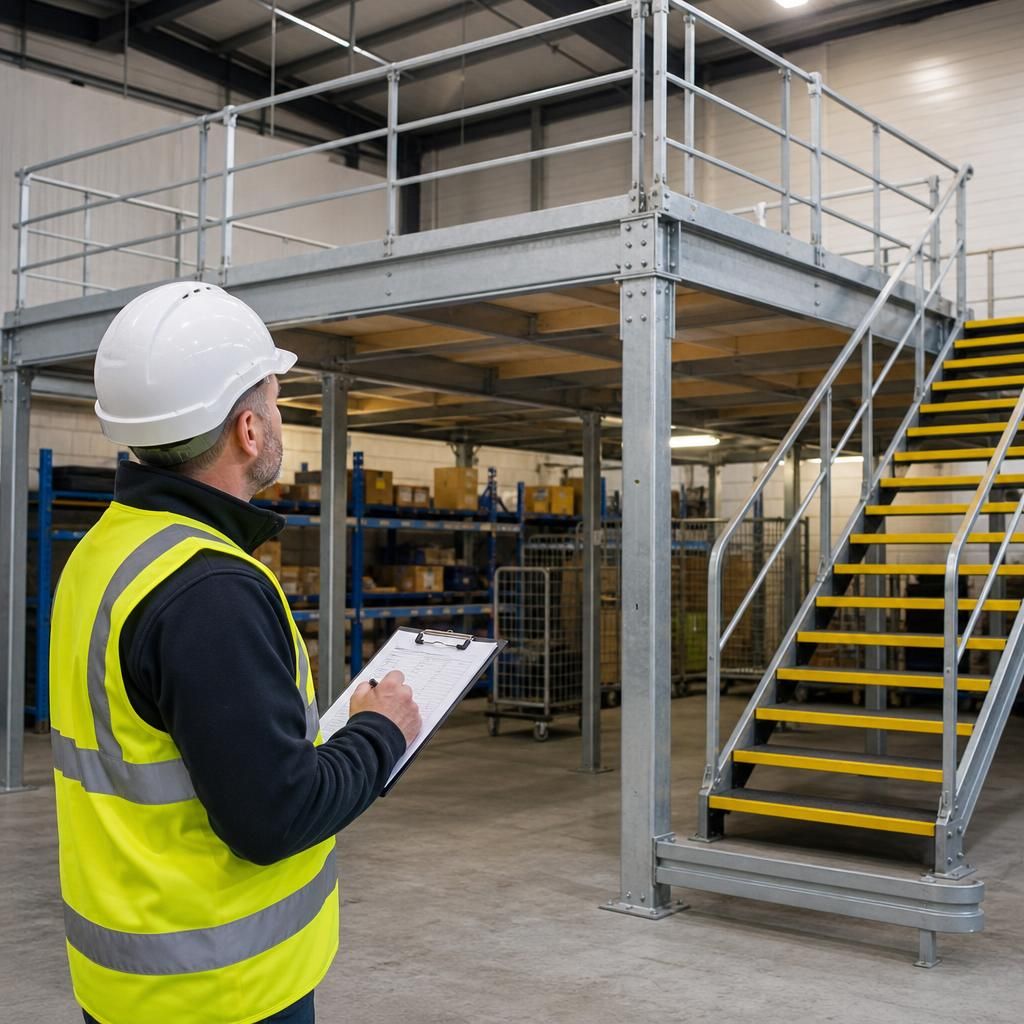
A portable mezzanine complies with safety regulations only when its design, installation, use and condition have been assessed and documented by a competent person. A pre-use inspection should confirm the structure, deck, connections, access stairs, guardrails, toe boards, loading gates and supporting floor are suitable for the intended work.
Keep the manufacturer’s instructions, structural information, safe working load, installation records and risk assessments with the inspection report. The structure should also be checked after relocation, alteration, impact or exceptional loading. If a defect could affect stability or fall protection, take the affected area out of service until an approved repair has been completed and its safety has been confirmed.
Arrange a Portable Mezzanine Compliance Assessment
Arrange a portable mezzanine compliance assessment to confirm that its structure, access, guarding, loading arrangements and supporting floor are suitable for your intended use. Contact our experienced team to review the installation, identify any defects and establish the inspection records and controls needed for safe operation.