
What are the prerequisites for enrolling in the Pallet Racking Installer Training course?
No formal qualification is usually required to enrol in the Pallet Racking Installer Training course, although practical warehouse, construction or installation experience is beneficial. Participants should be able to understand safety instructions, identify workplace hazards, use basic tools safely and take part in practical installation activities; any specific site or employer requirements should be confirmed before booking.
There is usually no formal qualification required to enrol on a Pallet Racking Installer Training course. The most important prerequisites are the ability to understand and follow health and safety instructions, work safely with hand tools, recognise workplace hazards and participate in practical installation activities. Previous warehouse, construction, engineering or installation experience is beneficial but is not normally essential for an entry-level course.
Before booking, candidates should normally be able to:
- Read and understand written safety instructions, method statements and basic installation information.
- Communicate clearly with colleagues, supervisors and other people working on site.
- Identify common hazards, including unstable components, falling objects, manual-handling risks and vehicle movements.
- Use basic hand tools safely, or demonstrate a willingness to learn their correct use.
- Take part in practical activities involving measuring, positioning, aligning and securing warehouse racking components.
- Follow instructions accurately and stop work when a condition appears unsafe or unclear.
Previous experience is helpful, but not a substitute for training. Candidates who have worked in warehouse operations, storage-system installation, construction, maintenance or general site work may already be familiar with personal protective equipment, exclusion zones, manual handling and permit-to-work arrangements. However, the course is intended to develop the specific knowledge and practical methods needed to install warehouse racking safely and in accordance with the relevant design information and manufacturer’s instructions.
Physical suitability should also be considered. Practical training can involve standing, walking, lifting and positioning components, using tools and working at different levels in accordance with the course arrangements. Candidates should disclose any health condition, injury or restriction that could affect safe participation before attending. This allows the training provider to discuss reasonable adjustments, alternative arrangements or whether additional controls are required. A medical certificate is not generally a standard entry requirement, but particular employers or sites may impose their own occupational-health conditions.
Basic safety awareness is essential. A candidate does not need to be an experienced installer, but must be prepared to work within defined procedures rather than rely on assumptions or improvised techniques. Safe installation depends on checking component condition, confirming the layout, maintaining stability during assembly, using suitable equipment and reporting defects or uncertainty promptly. Training is not appropriate for anyone unwilling or unable to follow these controls.
Site and employer requirements may apply in addition to the course entry criteria. Depending on where the practical training takes place, candidates may need to provide suitable work clothing and safety footwear, comply with site induction rules or hold separate authorisations for specific equipment. Operator training for forklifts, access equipment or other powered machinery is usually separate from pallet racking installer training and should not be assumed to be included.
Employers should confirm that the selected course matches the candidate’s role and experience. A new installer may require closer supervision and further workplace familiarisation after completing the course, while an experienced operative may need training to update existing knowledge or address a particular installation method. The course certificate demonstrates completion of the training; it does not remove the employer’s responsibility to assess competence, provide supervision where necessary and ensure work is properly planned.
Before enrolment, confirm the provider’s requirements for prior experience, language or literacy support, PPE, physical participation, identification and any required site documentation. If a candidate is unsure whether their background is suitable, a discussion with the training team can establish whether the course is appropriate and identify any support needed before the practical session.
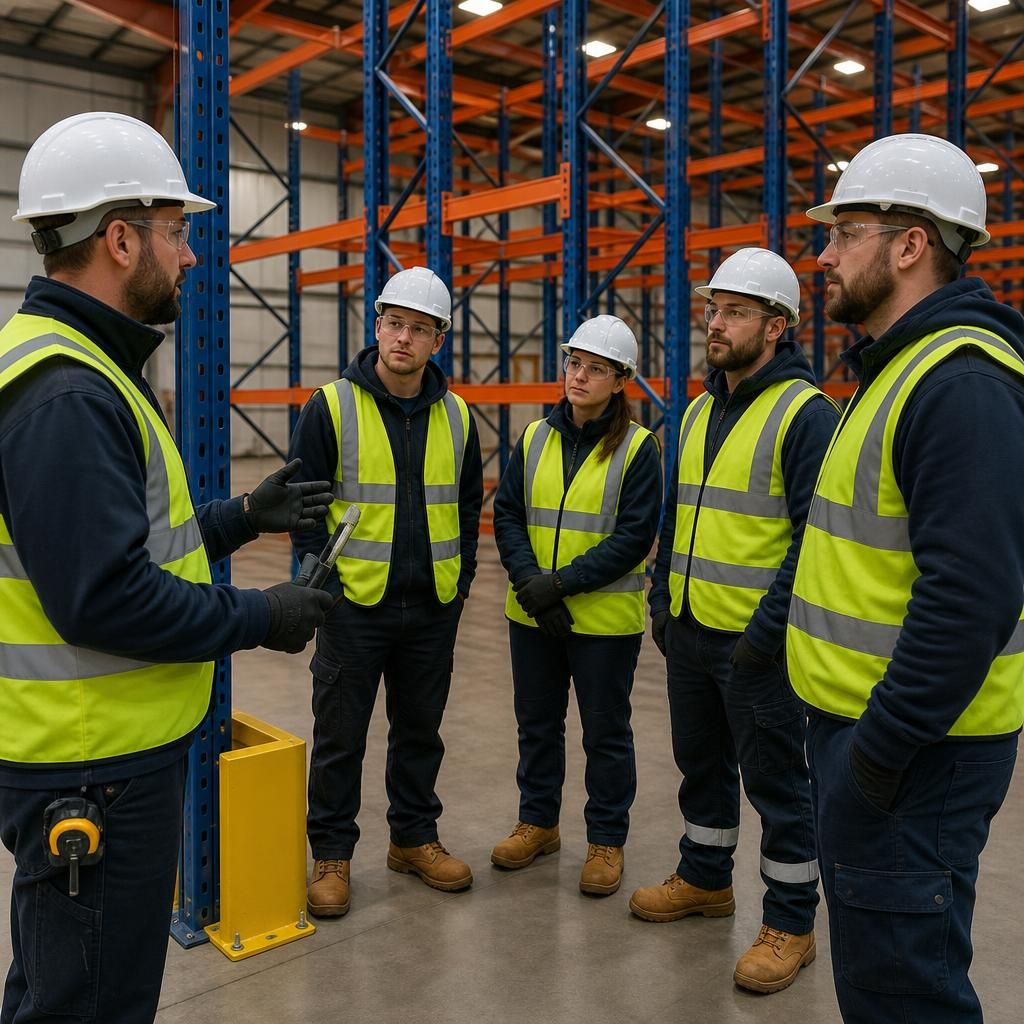
The main prerequisites for enrolling in the Pallet Racking Installer Training course are the ability to understand safety instructions, follow site procedures and participate safely in practical installation work. Previous warehouse, construction or installation experience is useful, but is not normally required for an entry-level course.
Candidates should be prepared to use basic hand tools, identify hazards such as falling components and vehicle movements, communicate with colleagues and stop work if conditions are unsafe. Practical sessions may involve standing, lifting, measuring, positioning and securing warehouse racking components, so any health condition or restriction that could affect participation should be discussed with the training provider before booking. Site-specific PPE, induction or equipment authorisation requirements may also apply.
Confirm Your Pallet Racking Installer Training Requirements
Confirm the entry requirements, practical arrangements and any site-specific conditions for the Pallet Racking Installer Training course with the Able Racking team before booking. We can help establish whether the course is suitable for your role and identify any support or documentation needed.