
How often should routine warehouse rack maintenance be conducted?
Routine warehouse rack maintenance should be planned at intervals based on system usage, loading conditions, the working environment and the manufacturer’s guidance, with additional checks after impact, damage or changes to the layout. Maintenance should be coordinated with regular inspections so defects are repaired promptly and the storage system remains safe, compliant and efficient.
Routine warehouse racking maintenance should be carried out at planned intervals determined by the condition, use and operating environment of the system. For many warehouses, this means completing ongoing operator checks, reviewing condition during scheduled warehouse racking inspections and arranging formal maintenance whenever damage, deterioration or a change in use is identified. The manufacturer’s instructions, the original design specification and the recommendations of a competent warehouse racking specialist should also be followed.
There is no single maintenance interval that is suitable for every warehouse racking system. A lightly used installation in a clean, controlled environment may require less frequent planned maintenance than a busy warehouse where forklifts operate continuously, loads are frequently changed or the system is exposed to moisture, impact and poor housekeeping. The maintenance schedule should therefore be based on a documented risk assessment rather than a convenient calendar date alone.
A practical maintenance programme normally includes the following activities:
- Ongoing operator checks: Warehouse staff should report impact, bent components, missing safety devices, loose fixings, displaced loads and other defects as soon as they are noticed. These checks should take place as part of normal working procedures, particularly in areas subject to frequent forklift activity.
- Planned condition reviews: Supervisors or nominated competent employees should review the condition of the warehouse racking regularly and confirm that reported issues have been dealt with. The frequency should reflect the level of risk and the history of damage in each area.
- Formal warehouse racking inspections: A competent person should inspect the installation at an appropriate interval set by the risk assessment and applicable guidance. This provides a structured assessment of frames, beams, bracing, connections, protection, safety accessories, loads and the surrounding operating conditions.
- Preventative maintenance: Components such as fixings, beam locks, guards and protective devices should be checked and maintained before deterioration becomes a safety issue. Any work must be compatible with the original design and manufacturer’s requirements.
- Immediate post-incident checks: The affected area should be assessed after a collision, dropped load, overload, structural alteration, flooding, fire or other event that could have affected the warehouse racking. Damaged sections should be unloaded and isolated where necessary until they have been assessed.
Maintenance should be brought forward when there is evidence of repeated impact, corrosion, deterioration, overloading, unauthorised alterations or changes to the stored goods and handling equipment. A warehouse racking system that has been modified, relocated or reconfigured should be reviewed before it is put back into normal use. Changes can affect load capacities, clearances, stability and the suitability of existing protection.
During planned maintenance, the competent person should check for issues including:
- bent or distorted uprights, beams, bracing or supports;
- loose, missing or damaged bolts, pins, beam locks and other connections;
- damaged floor fixings or signs that an upright has moved;
- corrosion, cracking, excessive wear or other material deterioration;
- missing or damaged guards, end barriers and safety accessories;
- loads that exceed the stated capacity or are unsuitable for the configuration;
- missing, inaccurate or unreadable capacity notices and identification labels; and
- changes to aisles, clearances, floors, lighting or vehicle routes that could increase the risk of damage.
The inspection findings should be recorded in a warehouse racking maintenance log, together with the location of each defect, its risk classification, the action required, the person responsible and the date of completion. Repairs should be prioritised according to risk. A serious defect may require the affected bay or section to be unloaded and taken out of service immediately, while lower-risk issues should still be given a clear completion date and monitored until resolved.
Repairs must be carried out by suitably competent operatives using correct replacement components. Straightening, welding, drilling or substituting parts without approval can alter the structural performance of the system and may invalidate its design assumptions. Where the damage is significant or the correct repair is uncertain, obtain a professional assessment before the warehouse racking is returned to service.
As a minimum, review the maintenance frequency whenever there is a significant change in warehouse activity, a pattern of recurring damage, a change in load or vehicle type, or an alteration to the storage layout. Keeping the schedule under review ensures that routine maintenance remains proportionate to the actual risks rather than relying on an interval that no longer reflects how the warehouse operates.
For an existing customer, the most reliable approach is to combine daily reporting by warehouse staff, planned internal checks, formal warehouse racking inspections and prompt corrective work. This creates a continuous maintenance process that protects employees, supports compliance with applicable safety duties and helps preserve the performance and service life of the storage system.
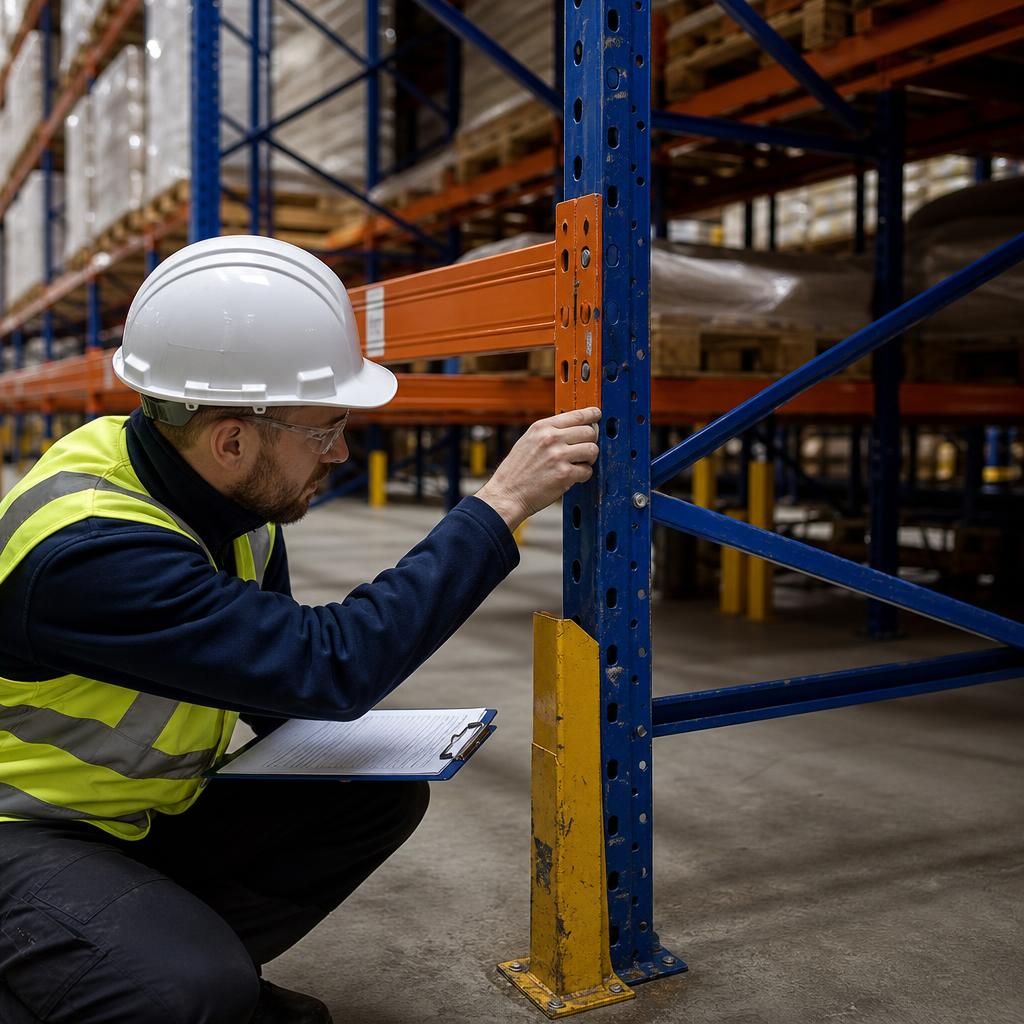
Warehouse rack maintenance should be scheduled according to the system’s condition, workload and operating environment rather than a fixed interval alone. Busy areas exposed to frequent forklift movements, changing loads, moisture or repeated impacts may require more frequent planned maintenance than lightly used areas.
Review the schedule after any collision, overload, layout change, equipment change or recurring defect. The affected warehouse racking should be assessed promptly, with damaged sections unloaded or isolated where necessary until competent operatives confirm that repairs are suitable and the system is safe to use.
Arrange Your Warehouse Racking Maintenance Review
Arrange a warehouse racking maintenance review with Able Racking to assess current condition, identify priority repairs and confirm that your maintenance schedule reflects how the system is used.