
Are warehouse racking repairs necessary if the damage seems minor?
Yes. Even minor damage to warehouse racking can affect its structural performance, so it should be reported, assessed by a competent person and repaired or replaced where necessary before the affected section is used again.
Yes. Even apparently minor damage to warehouse racking should be reported, assessed by a competent person and repaired or replaced where necessary before the affected area is returned to normal use. A small bend, crack, loose connection or displaced component can reduce the system’s ability to carry loads safely, particularly if the damage has affected a frame, beam, brace, footplate or connection.
Warehouse racking is designed to perform as a system. Its capacity depends on the condition and alignment of several connected components, as well as the floor, fixings, load arrangement and protection measures. Damage that looks cosmetic may indicate that the steel has yielded, that a connection has moved or that an impact has weakened the surrounding structure. It may also worsen if forklifts, handling equipment or stored loads continue to apply force to the affected area.
Minor damage should therefore be treated as a safety issue rather than judged by appearance alone. A competent inspector will consider:
- the location, type and extent of the damage;
- whether the affected component is load-bearing or provides stability;
- any distortion, twisting, cracking, splitting or loss of protective coating;
- the condition of fixings, anchors, bracing, beam connectors and footplates;
- whether the warehouse racking remains plumb, level and correctly aligned;
- the loads currently stored and the intended safe working capacity; and
- whether nearby components or floor fixings have also been affected.
Until the assessment has been completed, the affected location should be made safe. This may involve preventing access, stopping loading or unloading, removing loads under controlled conditions, and clearly identifying the area. Employees should not attempt to straighten, weld, drill, bolt or otherwise modify damaged warehouse racking without an appropriate technical assessment. An unapproved alteration can conceal the original problem, introduce new stresses or invalidate the manufacturer’s design assumptions.
The outcome will usually depend on the severity and position of the damage. Some defects may be suitable for an approved repair using compatible replacement components and an established repair method. Other damage may require the complete replacement of a component or section. Where the original specification, load capacity or condition cannot be confirmed, replacement is often the safer and more practical option. A repair should not simply make the component look straight; it must restore the required structural performance and leave the system suitable for its intended use.
Impact damage deserves particular attention because a minor collision can affect more than the visibly marked area. Force may have travelled through a beam connector, upright, brace or floor fixing. A proper inspection should check the surrounding structure and identify the cause, such as poor traffic separation, inadequate end protection, restricted visibility or unsuitable operating practices. Addressing that cause helps prevent the same defect from recurring after the repair.
After repair or replacement, the affected warehouse racking should be checked before it is brought back into service. The inspection should confirm that the correct components and fixings have been used, the structure is properly aligned and secured, load notices remain accurate, and any temporary controls can be removed safely. The work and assessment should also be recorded so there is a clear maintenance history and an auditable basis for future inspections.
Prompt attention to minor damage helps protect workers, maintain the intended capacity of the storage system and reduce the risk of a more disruptive failure. It can also prevent a relatively straightforward repair from developing into wider component replacement, stock damage or operational interruption. If you are unsure whether a defect is genuinely minor, keep the affected location out of use and arrange an inspection by a suitably competent Able Racking operative.
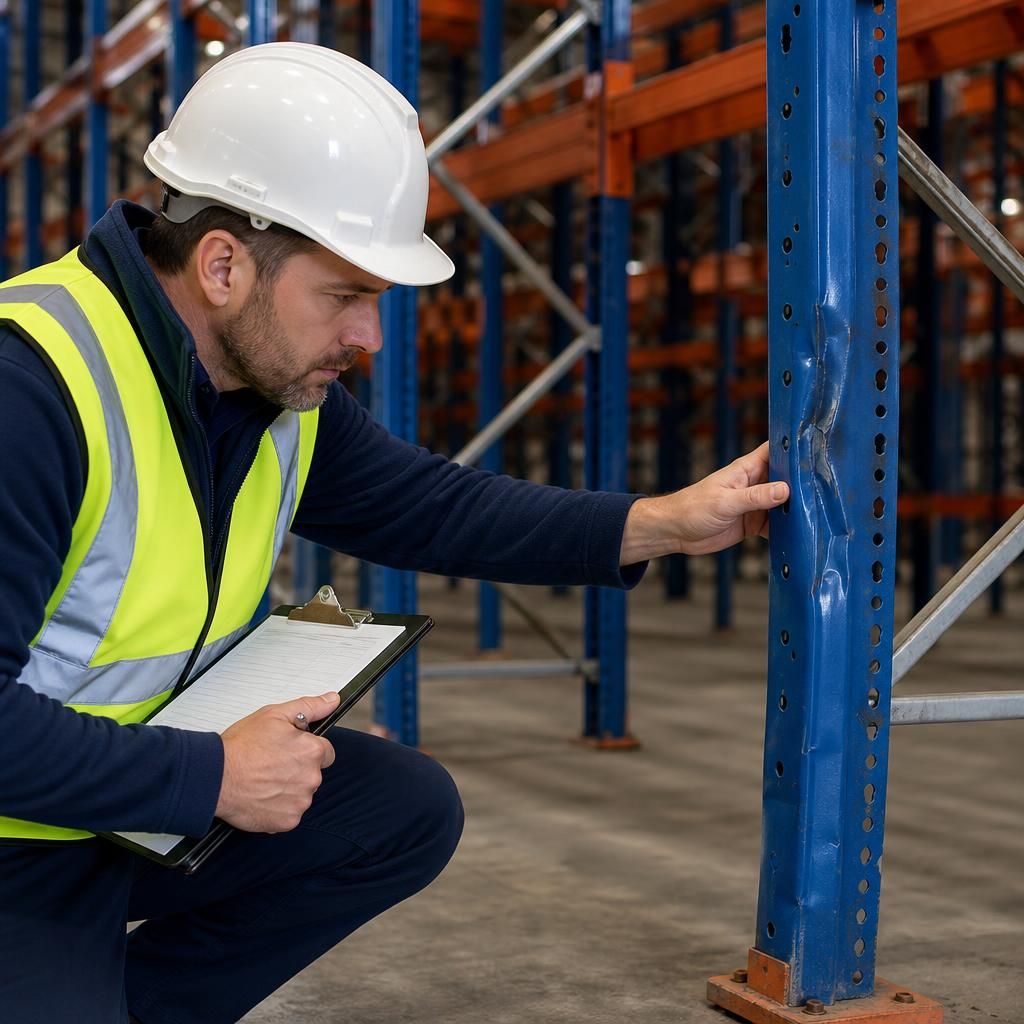
Minor-looking damage to warehouse racking is not automatically safe. A small bend, loosened connection or damaged footplate can affect the alignment, stability or load capacity of the surrounding structure, even when the defect appears cosmetic.
Keep the affected location out of use until a competent person has assessed it. The inspection should consider the damaged component, nearby beams and braces, fixings, stored loads and any signs that the impact has altered the frame. Do not straighten, drill, weld or bolt the component without an approved repair method, as an improvised alteration may create further weaknesses.
Where necessary, Able Racking can advise whether an approved repair, component replacement or wider remedial work is appropriate. The repaired area should be checked before it returns to service, with the work recorded to support future safety inspections and maintenance planning.
Arrange a warehouse racking damage assessment
If minor damage is suspected, arrange a warehouse racking damage assessment before the affected area is used again. Able Racking can assess the condition and advise whether an approved repair, component replacement or further remedial work is required.