
How do warehouse rack repairs contribute to long-term operational safety and efficiency?
Warehouse rack repairs restore damaged components before they compromise load stability, employee safety or storage capacity. By addressing defects promptly and maintaining systems in line with current safety requirements, repairs help prevent operational disruption, extend service life and support efficient warehouse operations.
Warehouse rack repairs contribute to long-term operational safety and efficiency by restoring damaged components before they affect structural stability, load capacity or the safe movement of people and equipment. Prompt, correctly specified repairs reduce the risk of progressive damage, help maintain compliance with applicable safety guidance and extend the useful service life of the warehouse racking system.
Damage is not always limited to the visibly affected area. An impact to an upright, frame, beam or protection component can alter the way loads are transferred through the system. If it is left untreated, repeated forklift contact, vibration, overloading or uneven loading may worsen the defect. A professional repair assessment therefore considers both the damaged component and the surrounding warehouse racking, rather than treating the visible mark in isolation.
Repairs protect structural safety
Warehouse racking is designed to carry specified loads when its components are correctly installed, connected and protected from impact. Bent uprights, displaced beams, damaged bracing, missing locking pins and distorted protectors can all affect that design condition. Repairing or replacing unsuitable components helps restore the intended geometry and connection strength, reducing the likelihood of instability or falling loads.
Effective repair work normally follows a controlled process:
- The damaged area is identified and assessed by a competent technician.
- Unsafe sections are isolated, unloaded or temporarily restricted where necessary.
- The correct repair method and compatible materials are selected for the warehouse racking system.
- Repairs or replacements are completed in accordance with the manufacturer’s requirements and relevant industry guidance.
- The completed work is checked, documented and communicated to the people responsible for operating the warehouse.
Where damage is severe or the original design information is unavailable, replacement may be safer and more appropriate than attempting to straighten or reinforce a component. Repairs should never conceal damage without addressing its structural cause.
Repairs help maintain compliance
Regular inspection and timely corrective action support the responsibilities placed on employers and warehouse operators under UK workplace health and safety requirements. Guidance such as HSE recommendations and the principles set out in BS EN 15635 provide a framework for maintaining storage equipment, identifying risks and taking suitable action. The precise repair requirement depends on the system design, the type and severity of damage, the loads involved and the manufacturer’s instructions.
Repair records are an important part of this process. They provide an auditable history of identified defects, actions taken and any restrictions applied while work was outstanding. Keeping these records alongside inspection reports, load information and installation details makes it easier to demonstrate that warehouse racking is being actively managed rather than repaired only after a serious incident.
Repairs prevent avoidable disruption
Ignoring damage can lead to wider operational consequences. A damaged section may need to be taken out of service at short notice, reducing available storage locations and requiring stock to be moved. In more serious cases, damage can contribute to a collapse, product loss, equipment damage, injury or prolonged interruption to warehouse activity.
Planned repairs allow the work to be coordinated around deliveries, picking schedules and access requirements. Isolating only the affected area, where this is safe and technically suitable, can help keep unaffected parts of the warehouse operating. The decision must always be based on a competent assessment; maintaining access or throughput must not take priority over controlling a structural risk.
Repairs improve day-to-day efficiency
Sound warehouse racking supports predictable storage and handling operations. When beams are correctly positioned, frames remain aligned and protection is effective, forklift operators can work with clearer access and fewer restrictions. This helps reduce unnecessary stock movements, temporary storage arrangements and delays caused by damaged or unavailable locations.
Repair work also provides an opportunity to identify operational causes. Repeated impact may indicate inadequate end protection, poor traffic separation, insufficient aisle clearance, unsuitable handling practices or a need for refresher training. Addressing these contributing factors is essential because repairing the component alone may not prevent the same damage from returning.
Practical preventative measures can include:
- Improving upright and end-of-aisle protection where impact is recurring.
- Reviewing traffic routes, visibility and pedestrian segregation.
- Checking that loads are within the stated capacity and correctly positioned.
- Replacing missing or damaged load notices and safety signage.
- Briefing warehouse teams on reporting damage and removing unsafe areas from use.
- Investigating repeated defects during periodic warehouse racking inspections.
Repairs extend service life and control costs
Timely intervention can prevent a local defect from developing into damage affecting several connected components. It may also avoid the need for larger-scale dismantling, stock relocation or emergency work. The most cost-effective decision is not always the cheapest immediate repair: a durable solution that is compatible with the original design and suitable for the operating environment is more likely to provide reliable long-term value.
Following a repair, the affected area should remain subject to the same inspection, reporting and maintenance arrangements as the rest of the warehouse racking. Any new load limitations, temporary controls or changes to operating procedures should be clearly communicated to warehouse staff and reflected in the relevant records.
For Able Racking customers, the practical objective is to return damaged warehouse racking to a safe, serviceable condition while reducing the chance of repeat defects. Combining competent assessment, appropriate repair techniques, documented completion and preventative advice helps protect people, stock and equipment, while supporting consistent warehouse performance over the long term.
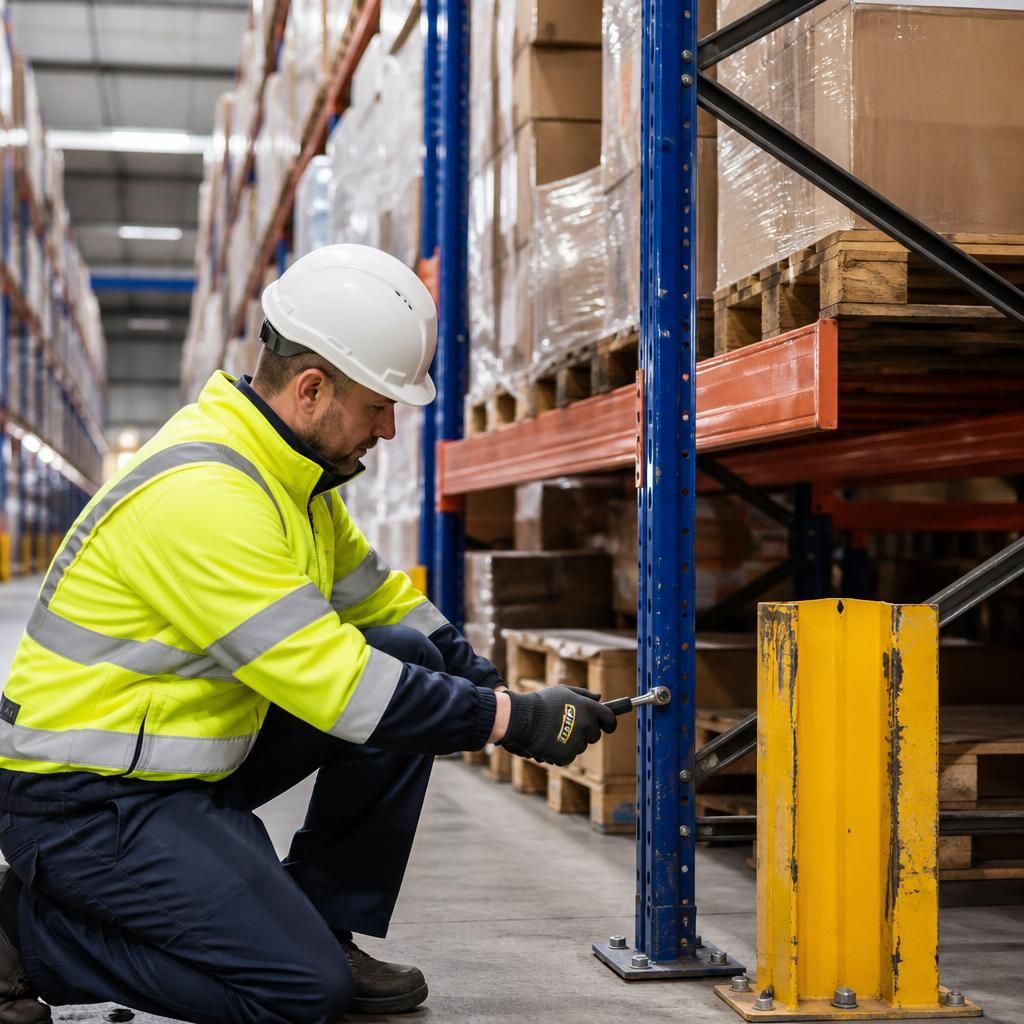
Warehouse rack repairs support long-term safety and efficiency by restoring damaged components before they affect load stability, access or the safe movement of people and equipment. Prompt action helps prevent a local defect from becoming a wider structural or operational problem.
A competent assessment should consider the surrounding warehouse racking, not just the visibly damaged part. Uprights, beams, bracing, locking devices and protection components may be affected by impact, overloading or repeated vibration. Where repair is suitable, the work should use compatible materials and follow the system manufacturer’s requirements and relevant safety guidance. Severely damaged components may require replacement rather than straightening or reinforcement.
Repair records, updated load information and clear communication with warehouse staff help maintain control after the work is completed. Reviewing the cause of damage—such as poor traffic separation, inadequate protection or incorrect load placement—also reduces the chance of repeat defects and helps keep storage operations predictable.
Arrange an Expert Warehouse Rack Repair Assessment
Arrange an expert warehouse rack repair assessment with Able Racking to identify damage, confirm the appropriate repair or replacement and help keep your storage system safe and operational.