
Why is regular warehouse racking inspection crucial for operational efficiency and safety?
Regular warehouse racking inspections identify damage, instability, overloading and other hazards before they lead to product loss, injury or system failure. Prompt corrective action helps maintain compliance, protect employees, prevent costly disruption and keep warehouse operations safe and efficient.
Regular warehouse racking inspection is crucial because it identifies damage, instability, overloading and unsafe changes before they cause injury, stock loss or operational disruption. A properly maintained system supports safe access, reliable storage capacity and efficient warehouse movement, while an unmanaged defect can develop into a serious structural failure.
Inspection should form part of a planned safety process rather than being treated as a check after an incident. It normally combines routine visual checks by trained warehouse staff with formal inspections by a competent person. Staff should report faults as soon as they are noticed, while the competent inspector assesses the condition of the complete installation, records findings and recommends appropriate action.
How inspections improve warehouse safety
- They identify physical damage: bent uprights, damaged beams, distorted bracing, displaced components and impact damage can reduce the system’s load-bearing performance. Early identification allows affected areas to be unloaded, isolated or repaired before the damage becomes more extensive.
- They detect overloading: load notices, beam capacities and storage arrangements need to remain suitable for the loads being stored. Inspections can identify missing or incorrect load information, overloaded levels, unevenly distributed stock and changes that place greater stress on the structure.
- They reveal instability: missing anchors, loose fixings, inadequate protection and changes to the floor or building can affect stability. An inspection checks whether the installation remains secure and whether it continues to reflect the approved design and operating conditions.
- They reduce the risk of falling goods: poorly positioned pallets, damaged pallets, inadequate support and unsuitable storage practices may allow goods to fall into working areas. Identifying these issues protects employees, visitors and stock.
- They support safe traffic management: collision damage often occurs where vehicles operate close to storage equipment. Inspections can highlight recurring impact points and the need for improved barriers, aisle controls, training or working practices.
How inspections protect operational efficiency
Safety and efficiency are closely connected. A damaged bay that is left in service may require an unplanned closure, emergency unloading or wider restrictions if its condition deteriorates. Planned inspection and maintenance allow corrective work to be scheduled around operational requirements, reducing avoidable downtime and helping the warehouse maintain usable storage capacity.
Inspections also help prevent small defects from becoming more expensive repairs. A minor impact, loose connection or missing component can often be addressed promptly. If it is ignored, nearby components may become affected, stock may need to be relocated and access to part of the warehouse may be restricted. Clear inspection records make it easier to prioritise work according to risk and arrange repairs before disruption occurs.
Maintaining the condition of the installation can also improve picking and replenishment. Straight, secure components, clearly displayed load information and properly positioned goods make storage locations easier to use correctly. This reduces avoidable handling errors and helps employees work with greater consistency.
What a thorough inspection should cover
- uprights, frames, bracing and baseplates
- beams, connectors, locking devices and other structural components
- anchors, fixings, guards and protective equipment
- signs of impact, corrosion, distortion, cracking or missing parts
- load notices and whether stored loads remain within the stated capacities
- pallet condition, placement, overhang and support
- clearances, aisle conditions and the relationship between storage equipment and vehicle routes
- evidence of unauthorised alterations, unsuitable repairs or changes in use
- previous inspection findings and whether recommended actions have been completed
The inspector should classify findings according to their seriousness and provide practical instructions. A serious risk may require immediate unloading and isolation of the affected area. Less urgent defects should still be assigned an owner and completion date so that they do not remain unresolved. Repairs should be carried out by suitably competent personnel using appropriate components; bending damaged structural members back into position or making unapproved alterations can create further risk.
Inspection frequency and responsibility
The frequency of checks should reflect the warehouse environment, traffic levels, type of loads, history of damage and any changes to the operation. Routine user checks should be completed as part of normal site procedures, with concerns reported immediately. HSE guidance recommends regular systematic inspection, and recognised warehouse safety practice generally includes a formal expert inspection at intervals not exceeding twelve months. A shorter interval may be appropriate where risk is higher or the installation has experienced repeated impacts.
Employers should ensure that inspections are carried out by a competent person with suitable knowledge of warehouse storage equipment, damage assessment and relevant safety requirements. The business remains responsible for acting on findings, controlling access to unsafe areas and keeping suitable records. An inspection alone does not make a system safe if recommended corrective action is delayed.
Why inspection records matter
Accurate records provide evidence of what was examined, when it was examined, which defects were found and how they were controlled. They also help identify repeated damage, recurring problem areas and changes in the warehouse that may require a revised risk assessment. Photographs, location references and clear descriptions are particularly useful when arranging repairs or checking that work has been completed.
Regular warehouse racking inspection therefore contributes to more than legal and safety compliance. It supports dependable storage, protects employees and stock, reduces unplanned interruption and helps the installation perform as intended throughout its service life. Combining routine staff awareness, competent formal inspections and prompt remedial work provides the most effective way to keep warehouse operations safe and efficient.
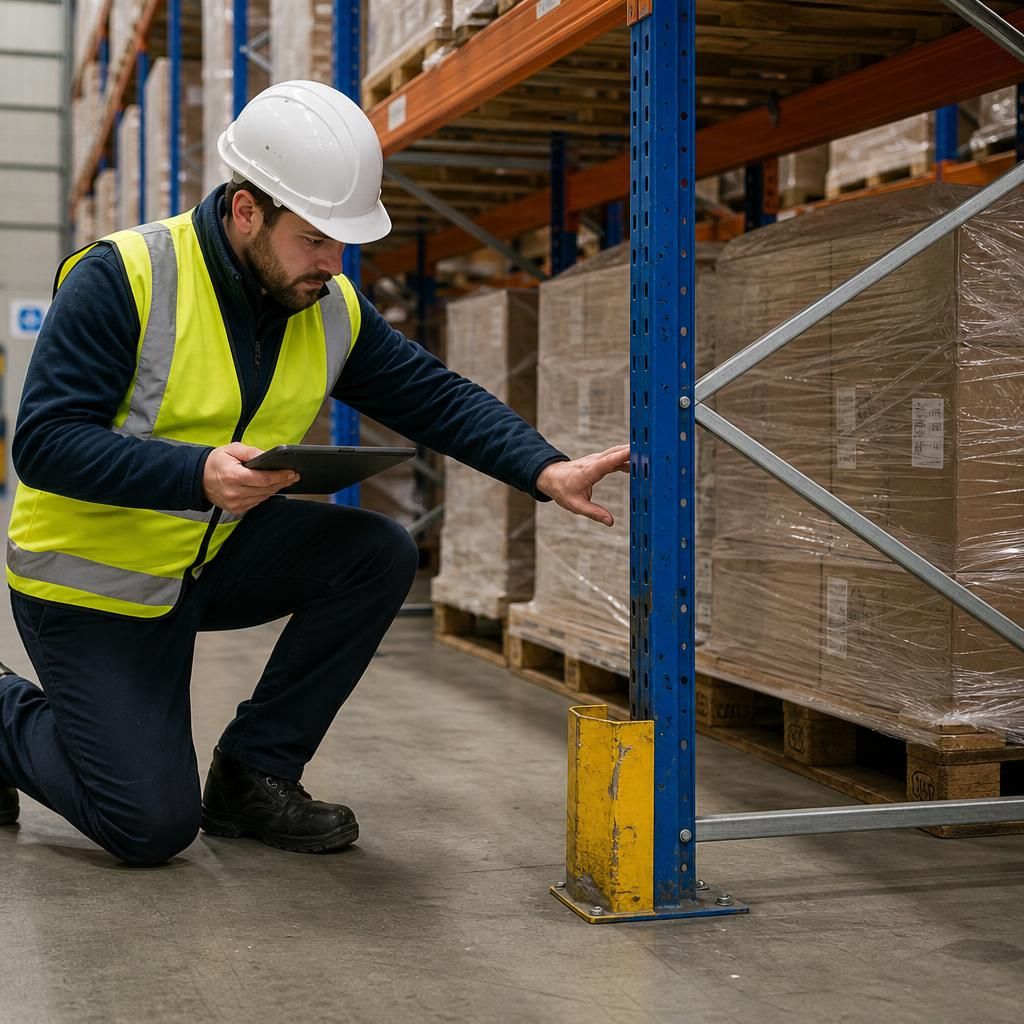
Regular warehouse racking inspection identifies defects before they develop into structural failure, unsafe storage or unplanned operational disruption. Inspectors assess damage, stability, load capacity, fixings, protection and storage practices so that risks can be controlled while the affected area remains manageable.
Early action is particularly important after vehicle impact, changes to stored loads or alterations to the warehouse layout. A damaged upright, loose connection or missing component may initially affect only one location, but leaving it in service can increase the risk of further damage and restrict access to surrounding bays. Prompt unloading, isolation and repair help preserve usable storage capacity and allow remedial work to be planned around operational requirements.
Inspection records also support efficient maintenance. Clear photographs, location details and risk classifications help the responsible team prioritise repairs, confirm that actions have been completed and identify recurring impact points. Combining routine checks by trained staff with formal assessment by a competent inspector helps keep warehouse operations safe, compliant and dependable.
Arrange your warehouse racking inspection
Arrange your warehouse racking inspection with Able Racking to identify defects, confirm compliance and plan any necessary remedial work before problems disrupt your operation.