
How often should warehouse racking inspections be conducted?
Warehouse racking should receive regular visual checks, with a documented inspection by a technically competent person at intervals no greater than 12 months. Higher-risk environments, previous damage, heavy use or significant changes may require more frequent inspections based on a suitable risk assessment.
Warehouse racking should receive routine visual checks throughout normal operations and a documented inspection by a technically competent person at intervals of no more than 12 months. The exact frequency should be determined by a suitable risk assessment: busy warehouses, systems exposed to impact, or storage areas with a history of damage may require formal inspections more frequently.
What UK guidance requires
UK warehouse safety guidance, including the HSE’s HSG76 Warehousing and storage, recommends a structured inspection system for warehouse racking. This normally includes regular visual checks by trained employees, together with a more detailed inspection by a technically competent person at intervals based on the risks and never exceeding 12 months.
The 12-month interval should not be treated as a default that suits every warehouse. It is the maximum interval for the formal inspection, not a substitute for ongoing checks. Warehouse operators remain responsible for identifying damage, unsafe conditions and changes that could affect the stability or safe use of the warehouse racking between formal inspections.
How often should checks take place?
- During routine operations: Employees should remain alert to visible damage, displaced loads, missing components and unsafe working practices. Any concern should be reported immediately.
- At regular planned intervals: A documented visual inspection should be completed by a designated, suitably trained person. Many workplaces use weekly checks, although the appropriate interval depends on traffic levels, handling equipment, the type of goods stored and the likelihood of impact.
- At least every 12 months: A technically competent person should complete a formal warehouse racking inspection and produce a written report identifying defects, risks and recommended actions.
- After an incident or change: An additional inspection may be needed after an impact, serious damage, system alteration, relocation, overloading, changes to stored goods or any other event that could affect safety.
When are more frequent inspections appropriate?
A shorter interval should be considered where warehouse racking is exposed to frequent forklift or pallet truck movements, repeated loading and unloading, high throughput, narrow operating aisles, poor visibility or challenging environmental conditions. More frequent checks are also sensible where previous inspections have identified recurring defects, repairs have been required, or operators have reported repeated impacts.
The condition and design of the warehouse racking are also relevant. Older systems, mixed components, non-standard alterations and systems used outside their original configuration may need closer monitoring. A risk assessment should consider the likelihood of damage, the possible consequences of failure and how quickly a defect could be detected and controlled.
What should happen between formal inspections?
Warehouse staff should know how to recognise and report common issues, including bent uprights or beams, damaged protectors, missing locking devices, displaced components, leaning frames, overloaded locations and unsafe loads. Reported damage should be assessed promptly. Depending on its severity, the affected area may need to be unloaded, isolated and repaired before it is returned to service.
Inspection findings should be recorded clearly, including the location of each defect, its severity, the corrective action required, the responsible person and the target completion date. Keeping these records alongside previous reports helps identify recurring damage and demonstrates that the warehouse racking safety process is being actively managed.
Why a formal inspection remains important
Routine staff checks are useful for identifying obvious problems quickly, but they do not replace an independent assessment by a technically competent inspector. A formal inspection can identify less apparent defects, assess whether damage affects structural integrity, review the suitability of repairs and highlight unsafe changes to the warehouse racking system or its use.
For most warehouses, the practical approach is to maintain ongoing staff checks, schedule planned visual inspections at an interval justified by the risk assessment, and arrange a competent formal inspection at least every 12 months. If you are unsure whether your current interval remains suitable, review the inspection history, incident records, operating conditions and any changes to the warehouse racking before setting the next inspection date.
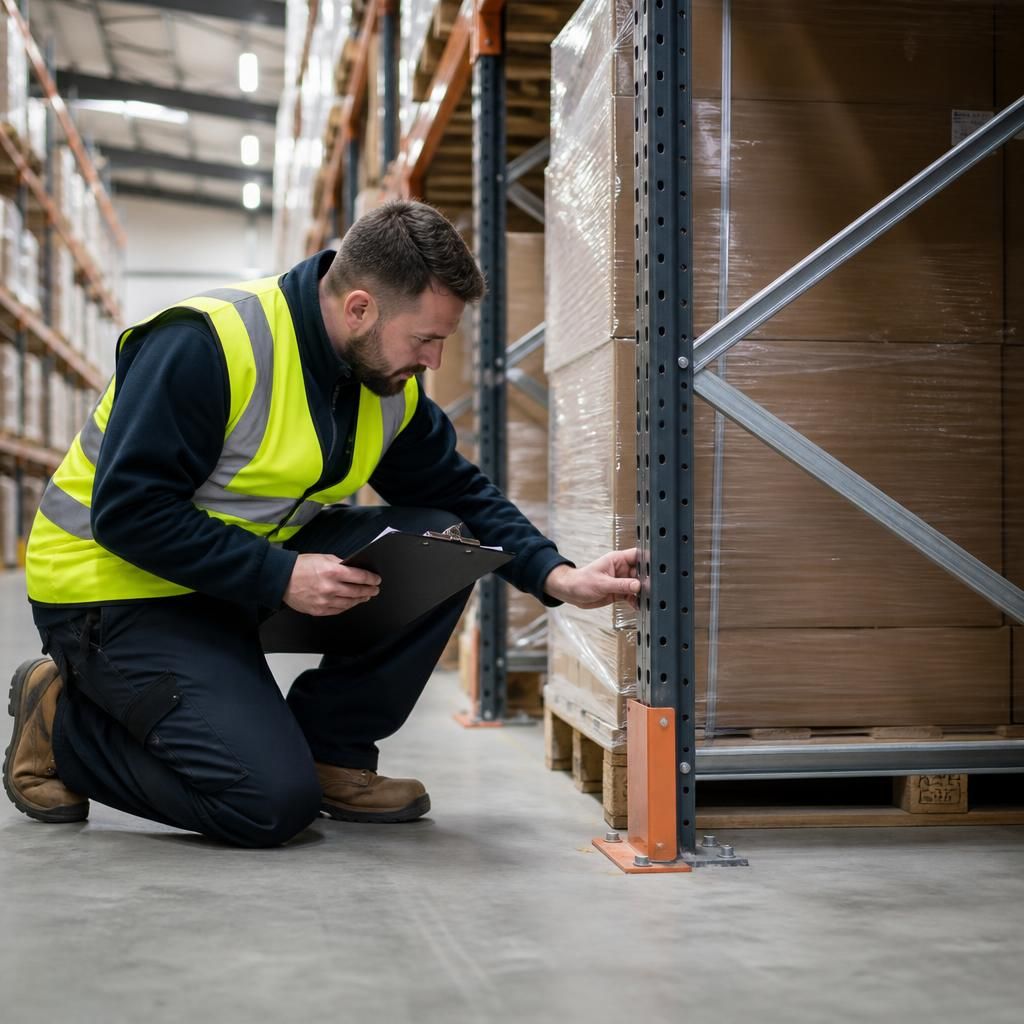
A formal warehouse racking inspection should be completed by a technically competent person at intervals based on a suitable risk assessment and never more than 12 months apart. This does not replace routine visual checks by trained warehouse staff, who should report damage, displaced loads, missing components or unsafe conditions immediately. An additional inspection may be necessary after an impact, system alteration, relocation, overloading or any other event that could affect safety.
Arrange Your Next Warehouse Racking Inspection
Arrange your next warehouse racking inspection with Able Racking to confirm that your inspection interval remains suitable and any identified risks are addressed promptly.