
What materials are commonly used in warehouse racking systems and why are they chosen?
Warehouse racking systems are commonly made from structural or cold-formed steel because it provides high strength, durability and predictable load performance. Steel components can be powder-coated or galvanised for corrosion resistance, while timber, steel mesh or composite decking may be selected for shelves and beams according to the load, environment and required visibility.
Warehouse racking systems are most commonly manufactured from structural or cold-formed steel because steel offers high strength, durability and predictable load performance. Other materials, including timber-based boards, steel mesh, wire and plastics, are generally used for decking, shelves, protection or specialist applications rather than as the primary load-bearing frame. The appropriate combination depends on the stored goods, bay configuration, working environment, handling equipment and required load capacity.
Material selection is not simply a matter of choosing the strongest option. Each component must be suitable for its intended function and work safely as part of the complete warehouse racking system. The manufacturer’s design information, load notices, installation instructions and inspection requirements should always be followed, and any alteration or damage should be assessed by a competent person.
Steel for frames, beams and bracing
Steel is the standard material for the main structural components of warehouse racking. Upright frames, horizontal beams, bracing members, support rails and other load-bearing parts are designed to transfer stored loads safely to the floor. Steel is selected for several important reasons:
- Strength: it can support substantial loads when correctly designed, formed and installed.
- Stiffness: it helps limit deflection and movement under load, which is important for stable storage and safe handling operations.
- Consistency: manufactured steel sections provide repeatable dimensions and predictable performance.
- Durability: suitable steel components can withstand the repeated loading and operational demands found in busy warehouses.
- Repairability and availability: standard steel components are widely used, making compatible replacement parts and protection systems easier to source.
Structural steel is typically used where heavy loads, demanding operating conditions or longer spans require robust sections. Cold-formed steel is shaped from sheet steel using forming processes rather than hot rolling. It can provide an efficient strength-to-weight ratio and is commonly used for upright profiles, beams and other components in engineered systems. The choice between structural and cold-formed sections is made by the manufacturer according to the design loads, geometry and connection requirements.
Protective finishes for steel
Steel can be finished in different ways to help protect it from corrosion and to provide a durable working surface. Powder coating is widely used for indoor warehouse racking. The coating creates a consistent finish and can make surfaces easier to identify and maintain, but it is not immune to impact damage. Scratches, dents and exposed metal should be reported and assessed rather than ignored.
Galvanised steel has a zinc coating that provides additional corrosion protection. It is particularly useful where the warehouse environment has increased moisture, condensation or exposure to corrosive substances. The required finish should be considered during the design stage because the most suitable protection depends on the atmosphere, cleaning regime, temperature and stored products.
Painted, powder-coated and galvanised components can all be appropriate when specified for the correct environment. A protective finish does not compensate for unsuitable storage conditions, poor housekeeping or repeated impact from handling equipment. Regular inspections remain necessary to identify corrosion, coating failure and physical damage.
Timber and engineered wood decking
Timber-based decking may be used across beams to create a continuous shelf surface. Solid timber, plywood and other engineered wood products can provide a practical and relatively economical surface for cartons, containers and boxed goods. They are also useful where smaller items could otherwise fall through open beam levels.
Wood-based decking must be selected for the expected load, span, support arrangement and warehouse conditions. Its condition can deteriorate if it becomes wet, contaminated, split or overloaded. Boards should sit correctly on their supports, remain free from serious damage and not be substituted with unsuitable materials. The decking’s capacity is separate from the capacity of the steel beams and frames, so both elements must be considered.
Timber can be less suitable in areas exposed to persistent moisture, wash-down processes, fire protection constraints or products that could contaminate the surface. Where these conditions apply, a different decking material may provide more appropriate durability and hygiene characteristics.
Steel mesh and wire decking
Steel mesh and wire decking are commonly used where visibility, ventilation and light transmission are important. The open construction allows warehouse operatives to see through shelf levels and can help prevent loose items from passing through the rear of a bay when correctly configured. Mesh decking can also be useful where sprinkler water needs to pass through storage levels, subject to the requirements of the building’s fire strategy and the advice of the relevant specialists.
Wire decking is generally resistant to everyday warehouse use, but its capacity depends on the wire diameter, grid pattern, support arrangement and design. It should not be treated as universally interchangeable between systems. Damaged, distorted or poorly seated mesh panels can create instability or snagging hazards and should be removed from service until assessed.
Plastic components and specialist materials
Plastics are used selectively in warehouse racking systems for items such as tote shelves, bins, dividers, wheel guides, end caps and protective accessories. Plastic can be useful where low weight, chemical resistance, smooth surfaces or easy cleaning is required. It is not normally selected for the primary structural frame in standard heavy-duty warehouse applications.
Plastic components can be affected by temperature, ultraviolet exposure, chemicals and impact. Their suitability should therefore be checked against the working environment and the manufacturer’s specification. Accessories should not be used to increase the stated capacity of a bay unless the complete arrangement has been assessed and approved.
Materials used for protection
Steel guards, barriers and reinforced polymer protectors are commonly installed around vulnerable uprights, corners and traffic routes. Their purpose is to absorb or deflect contact from handling equipment and reduce the likelihood of damage to the main structure. Protection should be securely fixed, positioned according to the site layout and maintained when it becomes loose, bent or heavily damaged.
Protective devices are an additional control, not a reason to accept careless vehicle movement or poor aisle management. Clear traffic routes, suitable operator training and prompt reporting of impacts remain essential to preserving the condition of the system.
How the materials are chosen
A competent design process considers the complete storage application rather than selecting materials in isolation. Important factors include:
- the weight, dimensions, shape and stability of the stored goods;
- the number and position of load levels;
- the required span between supports and the available clearances;
- the type of handling equipment and the likelihood of impact;
- floor condition, anchorage and building constraints;
- temperature, humidity, condensation, cleaning methods and chemical exposure;
- the required visibility, ventilation, hygiene and fire-safety arrangements; and
- the expected frequency of loading, unloading and future changes to the layout.
These factors determine the required section sizes, beam and frame configuration, decking type, protective finish and ancillary protection. The stated safe working load applies to the designed configuration. Changing beam levels, replacing decking, adding accessories or relocating components can alter how forces are distributed and may invalidate the original design information.
What to check during use and inspection
Material choice supports safety, but ongoing condition is equally important. Inspections should look for bent uprights, damaged bracing, distorted beams, failed connections, corrosion, cracked or broken decking, loose protection and signs that loads are not being stored as intended. Steel that appears only lightly marked may still require assessment if its shape or connection has changed.
Warehouse operatives should report impact damage, missing components and unsafe loading promptly. Repairs and replacements should use compatible parts and be carried out in accordance with the manufacturer’s requirements. Unauthorised welding, drilling, cutting or substitution of materials can affect the engineered performance of the system and should not be undertaken.
In practice, steel is chosen for the strength and reliability of the primary structure, while timber-based products, mesh, wire and plastics are selected to provide the most suitable shelf surface or accessory for the working conditions. The safest result comes from matching every material to its intended load, environment and connection detail, followed by proper installation, routine care and competent inspections.
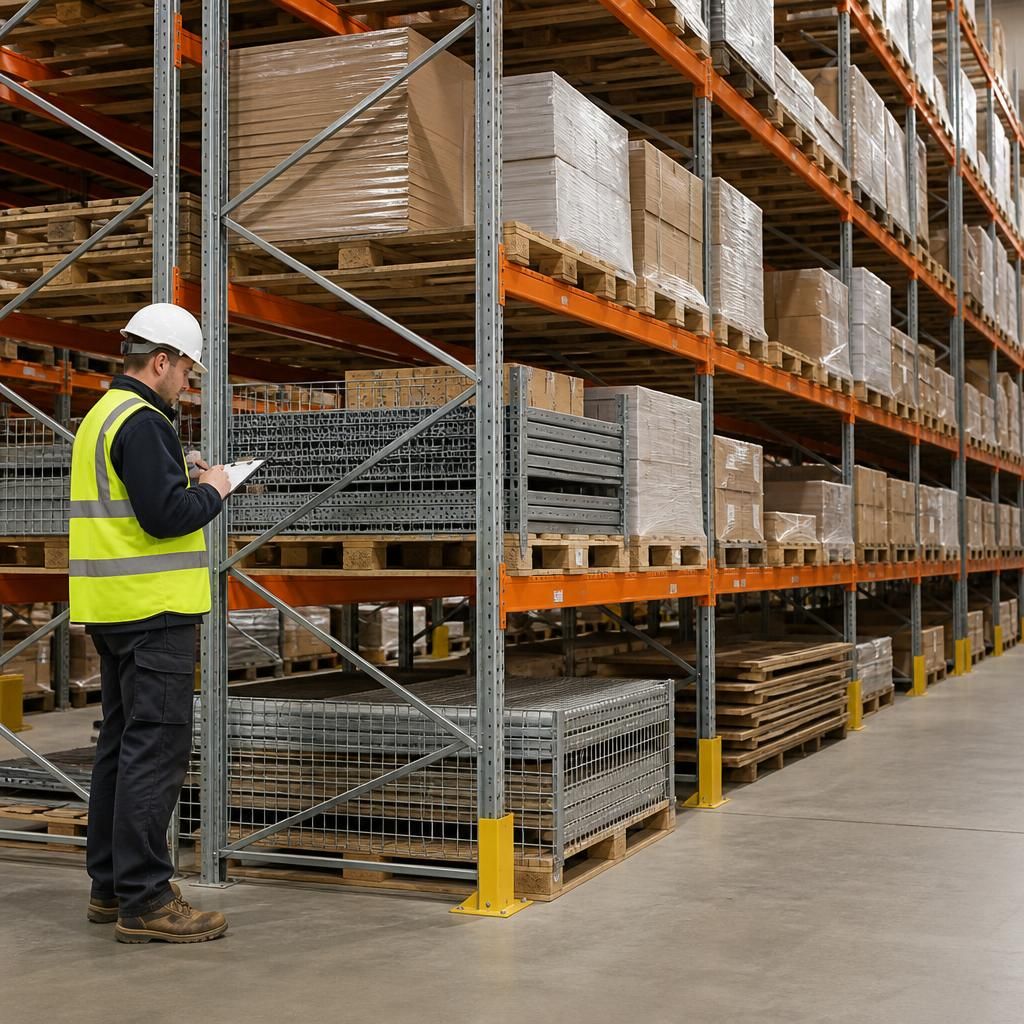
Warehouse racking systems are usually made from steel because it provides the strength, stiffness and predictable load performance required for frames, beams and bracing. Steel sections can be designed for the stored load and finished with powder coating or galvanising to help resist everyday wear and corrosion.
Other materials are selected for specific functions. Timber-based boards provide a continuous shelf surface, while steel mesh or wire decking offers visibility, ventilation and light transmission. Plastics may be used for bins, dividers and protective accessories where low weight, smooth surfaces or chemical resistance are useful. Each material must be matched to its load, environment and support arrangement, with damaged or unsuitable components assessed and replaced promptly.
Discuss the right materials for your warehouse racking system
Speak to Able Racking about selecting suitable materials for your warehouse racking system, based on the stored loads, operating environment and required protection. Our experienced team can help review your existing arrangement and identify appropriate improvements or replacements.