
What is the importance of safety pins and clips in industrial warehouse racking systems?
Safety pins and clips secure beam-to-upright connections in industrial warehouse racking systems, helping prevent beams from being accidentally dislodged by impacts or loading activity. They are essential for maintaining structural stability, protecting people and stock, and supporting safe, compliant warehouse operations.
Safety pins and clips are locking devices fitted to beam-to-upright connections in industrial warehouse racking systems. They help prevent a loaded beam from being accidentally lifted, displaced or dislodged if the structure is struck by handling equipment, subjected to vibration or disturbed during loading and unloading. Although small, they are essential components for maintaining the stability of the system and reducing risks to people, stock and warehouse operations.
How safety pins and clips work
Warehouse racking beams are normally connected to upright frames using hooked connectors or similar fittings. The connection is designed to support the beam and its load, while the safety pin or clip provides additional retention. Once correctly installed, it helps keep the connector fully engaged with the upright and prevents the beam from being unintentionally lifted out of position.
The exact design varies between systems. Some products use locking pins, while others use spring clips, retaining clips or integrated locking arrangements. Each component must match the racking manufacturer’s design and the specific beam and upright profile. A visually similar replacement is not necessarily suitable, because differences in size, shape or engagement can affect the security of the connection.
Why these components are important
- They help prevent beam dislodgement: an impact or upward force can disturb a beam connection if the locking device is missing, incorrectly fitted or damaged.
- They support structural stability: keeping beam connectors securely engaged helps the system perform as designed under normal loading conditions.
- They reduce the risk of falling loads: a displaced beam can allow pallets or other stored goods to become unstable.
- They protect people and equipment: secure connections reduce the likelihood of sudden component movement during warehouse activities.
- They support safe operation and compliance: safety devices form part of the manufacturer’s intended configuration and should be present before the system is used.
Safety pins and clips do not compensate for overloading, poor load distribution, damaged uprights, inadequate floor conditions or impact damage elsewhere in the system. They are one part of a wider safety arrangement. The beams, frames, bracing, baseplates, anchors and protection measures must all be correctly specified, installed and maintained.
What should be checked during an inspection?
A competent inspection should confirm that the correct locking device is fitted at each relevant beam connection and that it is fully engaged. The following points should be considered:
- the pin or clip is present and has not fallen out;
- the device is correctly positioned and visibly engaged;
- there are no signs of bending, cracking, excessive wear or corrosion;
- the beam connector and upright slot have not been distorted by impact;
- there are no unauthorised modifications or improvised retaining devices;
- the component is appropriate for that particular warehouse racking system; and
- the connection remains secure when checked in accordance with the manufacturer’s instructions.
Inspections should also look for evidence that a beam has moved, such as uneven connector engagement, a beam sitting at an unusual height or damage around the connection. A missing clip may be the visible symptom of an impact or installation problem rather than the only defect present.
What to do if a pin or clip is missing or damaged
Any missing, loose or damaged safety device should be reported promptly and assessed by a suitably competent person. The affected bay should not continue in service if the security of the beam connection is uncertain. Depending on the condition and the risk, the area may need to be isolated, unloaded and clearly marked until the defect has been rectified.
Replacement parts should be sourced through the original manufacturer or a suitably qualified warehouse racking specialist. Do not use wire, bolts, cable ties or other makeshift items as substitutes. A replacement should be installed only after checking that the beam, upright and connector have not been damaged. If impact damage is present, replacing the clip alone may leave a serious underlying defect unresolved.
Installation and maintenance considerations
During installation, every beam should be seated correctly before its locking device is fitted. Operatives should follow the system manufacturer’s installation instructions and verify the completed connections before loading the structure. Safety devices should never be removed to make installation, adjustment or access easier unless the relevant work is controlled and the devices are refitted correctly before use.
Routine warehouse activities can gradually expose these components to impacts, vibration, corrosion and accidental interference. Include them in scheduled visual checks, formal warehouse racking inspections and post-impact assessments. Staff should also know how to recognise a missing or displaced pin or clip and how to report it without attempting an unapproved repair.
Maintaining these small components is a straightforward but important part of warehouse racking safety. When safety pins and clips are correctly specified, fully engaged and checked alongside the rest of the structure, they help preserve beam connections, prevent avoidable movement and keep the system operating in accordance with its intended design.
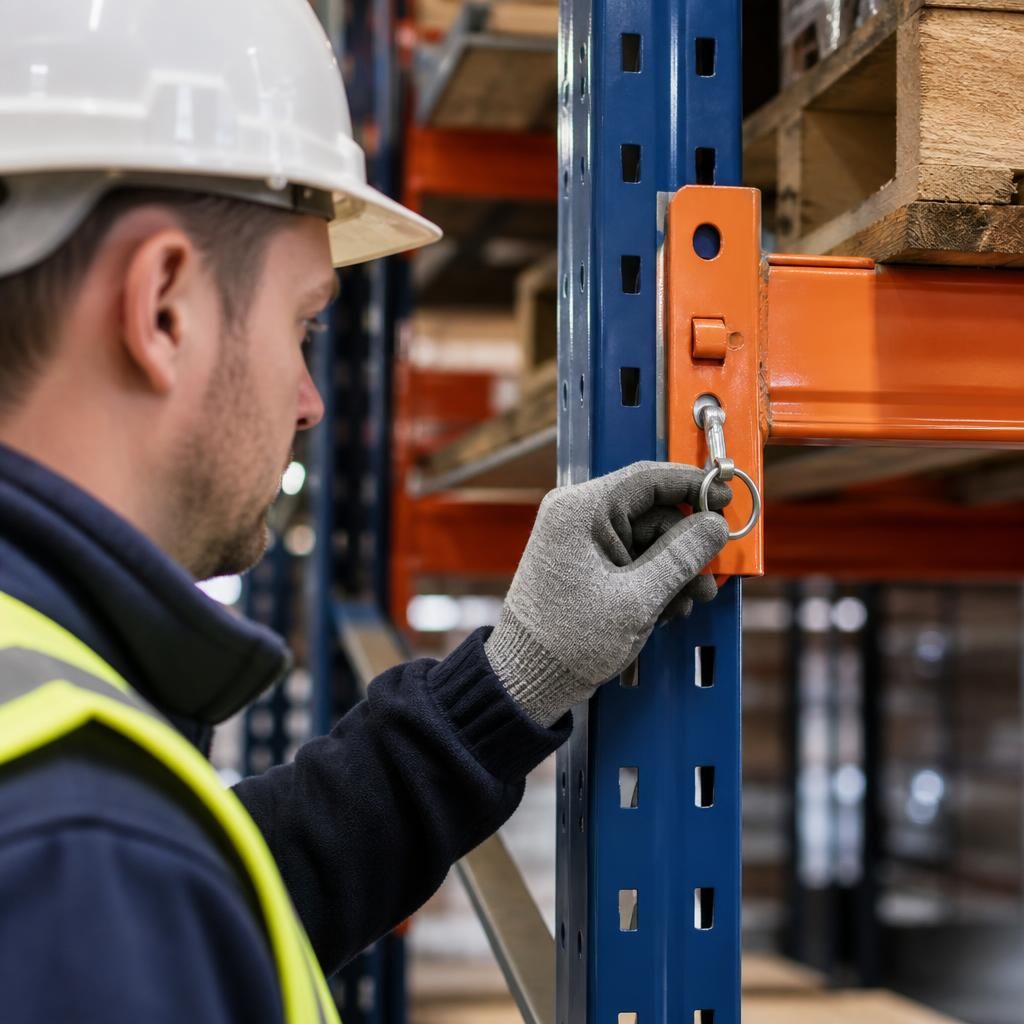
Safety pins and clips retain the beam connector in the upright, helping prevent the beam from being lifted or dislodged during loading activity or after an impact. Their presence supports the connection’s intended design and helps reduce the risk of falling loads.
During warehouse racking inspections, each device should be checked for presence, correct engagement, damage, corrosion and suitability for the system. A missing or damaged pin or clip should be reported immediately. Do not use wire, cable ties or other improvised substitutes; the correct replacement must be compatible with the manufacturer’s beam and upright profiles, and the connection should be checked for underlying impact damage before the system is returned to use.
Book your warehouse racking safety inspection
Book your warehouse racking safety inspection with Able Racking to identify missing, damaged or incorrectly fitted safety pins and clips, along with other hazards affecting your system.