
How does selective pallet racking accommodate different types of warehouse operations?
Selective pallet racking accommodates different warehouse operations by providing direct access to individual pallet locations, adjustable beam levels and flexible layouts for varying stock sizes, turnover rates and handling requirements. It suits operations that need efficient stock rotation, straightforward order picking and the ability to adapt storage capacity as inventory or workflow changes.
Selective pallet racking accommodates different warehouse operations by providing direct access to individual pallet positions, adjustable beam levels and layouts that can be adapted to stock dimensions, turnover rates and handling methods. This makes it suitable for warehouses storing varied product lines, replenishing pick faces, holding reserve stock or managing changing inventory levels without requiring every storage location to follow the same configuration.
Direct access for varied stock keeping units
Each pallet position can normally be accessed without moving other pallets. This is particularly useful where a warehouse holds many stock keeping units, has frequent order changes or needs to locate specific products quickly. Unlike storage arrangements that prioritise maximum density over accessibility, selective pallet racking allows operators to reach the required location directly with suitable materials-handling equipment.
Beam levels can be positioned to suit pallet height, product clearance and the available building height. Different bays within the same installation may therefore accommodate standard pallets, taller loads, cartons on pallets or products requiring additional vertical space. The design should allow sufficient clearance for safe handling while making effective use of the available storage volume.
Supporting different stock rotation methods
Selective pallet racking can support both last-in, first-out and first-in, first-out workflows, but the storage layout and operating procedure must be planned accordingly. Direct access makes it straightforward to retrieve a particular pallet, while access from both sides of a run can help support a controlled first-in, first-out process where product age or expiry is important. Stock rotation still depends on accurate identification, location control and disciplined warehouse procedures; the system itself does not guarantee a particular rotation method.
For high-turnover goods, frequently requested products can be positioned in locations that minimise travel and handling. Lower or more accessible levels may be used for active picking, with reserve pallets stored above or in less prominent locations. This can reduce unnecessary movements while retaining direct access to reserve stock.
Adapting to order picking and replenishment
Although selective pallet racking is primarily designed for pallet storage, it can support several order-picking approaches. Full pallets may be collected directly for despatch, while lower levels can act as pick faces for cases or individual items, provided the structure, load configuration and operating method are suitable. Reserve pallets can then be used to replenish these pick locations.
Warehouse teams should consider whether picking will be carried out by forklift trucks, powered equipment or by hand. The required aisle arrangement, beam height, access protection and positioning of stock will differ between these methods. Where people work at or near the storage structure, the design must address safe access, falling-object risks, load stability and interaction with vehicles.
Managing changing inventory and seasonal demand
Businesses with fluctuating stock levels can adjust the arrangement of beam levels or reallocate locations as product ranges change. This is useful for seasonal goods, project-based stock, promotional lines and businesses that regularly introduce or discontinue products. Empty locations can remain available for future use, while slower-moving stock can be consolidated to release accessible positions for faster-moving goods.
Changes should not be made informally. Altering beam positions, changing load types or increasing pallet weights can affect the original design assumptions. Any modification should be checked by a competent person, recorded where necessary and reflected in the load information displayed for operators.
Suitability for manufacturing and distribution operations
In manufacturing environments, selective pallet racking can hold raw materials, packaging, work-in-progress and finished goods in separate, clearly identified areas. Direct access helps production teams obtain required materials without disturbing unrelated stock. It can also support temporary holding areas where goods are waiting for inspection, processing or despatch.
In distribution and wholesale operations, the system can be arranged around receiving, storage, picking, consolidation and despatch activities. Location labels, stock management software and defined traffic routes help maintain control as goods move through these stages. The storage layout should reflect the actual workflow rather than simply filling the available floor area.
Working with different pallet and load characteristics
Selective pallet racking can be specified for a range of pallet sizes and load types, but compatibility must be established before installation or use. The design needs to account for pallet condition, load weight, load dimensions, overhang, packaging stability and how the pallet is supported by the beams. Poorly formed or damaged loads may require additional controls even when the structure is correctly designed.
Where stock varies significantly, the most demanding expected load should be considered when assessing the structure and operating conditions. Load notices should remain accurate, and operators should understand any restrictions relating to pallet placement, beam levels or uneven loading.
Balancing accessibility, capacity and vehicle movement
The main operational choice is usually the balance between storage density and access. Selective pallet racking uses floor space for aisles so that individual locations can be reached. This can provide faster and simpler handling, but the aisle arrangement must be designed around the vehicles, pallets and turning movements used on site.
A competent design should consider building columns, doors, fire precautions, lighting, sprinkler arrangements, pedestrian routes and emergency access as well as the storage requirement. Protectors and other impact controls may be appropriate in areas exposed to vehicle movements. Clear separation between pedestrians and industrial trucks is also important where both use the same working area.
Maintaining safe and reliable operation
Daily checks by warehouse staff should identify visible damage, displaced components, leaning frames, overloaded locations and unstable pallets. Any concern should be reported promptly, and affected areas should be controlled until assessed. Regular formal inspections provide a more detailed review of the installation and its use, helping identify damage or unsafe practices before they develop into a more serious problem.
Training should cover safe loading and unloading, interpreting load notices, reporting damage and working around vehicles and pedestrians. This is especially important when staff, products, equipment or operating patterns change. Preventative maintenance and prompt repairs help preserve the intended performance of the installation and reduce disruption to warehouse operations.
Overall, selective pallet racking is most effective where a warehouse needs accessible locations, adaptable storage levels and the ability to handle different stock profiles within one organised system. The best result comes from matching the layout and specification to the operation’s actual turnover, picking method, load characteristics, vehicle access and safety controls, then reviewing those conditions as the business changes.
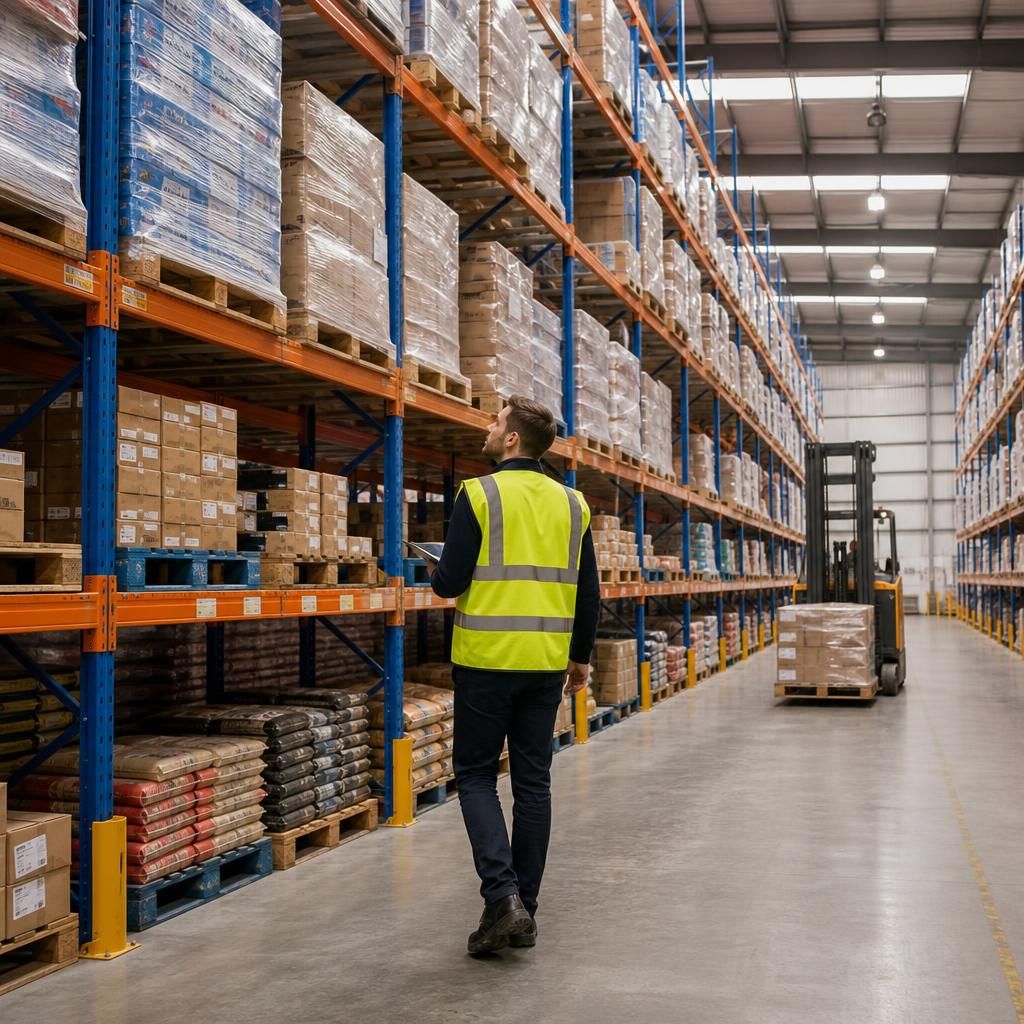
Selective pallet racking accommodates changing warehouse operations by allowing beam levels, storage locations and access routes to be configured around the stock and handling methods in use. This makes it suitable for warehouses managing mixed product sizes, variable demand, reserve pallets and active picking areas within the same installation.
As product ranges or workflows change, locations can be reassigned and beam positions adjusted, provided the revised arrangement remains within the original design and load limits. Changes to pallet weights, dimensions or handling equipment should be assessed by a competent person, with load notices and operating procedures updated where necessary.
Review Your Selective Pallet Racking Requirements
Review your selective pallet racking requirements with Able Racking to confirm that the layout, load capacities and access arrangements remain suitable for your operation. Our experienced team can advise on inspections, modifications, repairs and ongoing safety requirements.