
How do warehouse racking systems and mezzanine floors differ in terms of long-term maintenance requirements and costs?
Warehouse racking systems generally require routine inspections, damage checks and component repairs, while mezzanine floors need broader structural, access and fire-safety maintenance. Over the long term, warehouse racking maintenance is often more targeted and easier to budget, whereas mezzanine floors can involve higher costs when structural, flooring, stairway or compliance work is required.
Warehouse racking systems and mezzanine floors have different long-term maintenance profiles. Warehouse racking usually involves regular visual checks, formal inspections, damage assessment and replacement of individual components, while mezzanine floors require wider structural, access, flooring and fire-safety checks. As a result, warehouse racking maintenance is often more targeted and predictable, whereas mezzanine floor costs can be higher when structural repairs or building-compliance work is needed.
Warehouse racking maintenance requirements
Warehouse racking should be managed through a documented inspection and maintenance programme. Day-to-day checks should identify visible damage, including bent uprights, distorted beams, missing safety pins, damaged protection, loose fixings, displaced loads and signs of corrosion. Any impact from handling equipment should be assessed promptly rather than left until the next planned inspection.
A competent person should complete a more detailed warehouse racking inspection at an interval determined by the site risk assessment and the condition of the installation. This assessment should consider the design, loading arrangements, operating environment, previous damage and the effectiveness of existing controls. Inspection records should identify defects, prioritise remedial work and confirm when repairs have been completed.
Most warehouse racking repairs are component-based. Depending on the damage, work may involve replacing a beam, upright, bracing member, connector, safety device, floor protection or other proprietary part. This can limit the affected area and reduce disruption to warehouse operations. However, damaged sections should not be returned to service simply because they appear stable; repairs need to restore the system’s design performance and loading capacity.
Long-term costs also include maintaining load notices, protecting uprights from vehicle impact, checking floor fixings and controlling corrosion in damp or aggressive environments. Changes to bay configuration, beam levels or load types may require a review of the original design. Adding components or increasing loads without suitable technical confirmation can create both safety risks and unexpected remedial costs.
Mezzanine floor maintenance requirements
Mezzanine floors need a broader inspection scope because they are structural platforms integrated with the building and the activities taking place around and on them. Maintenance should cover the supporting steelwork, connections, decking, floor finishes, stairs, handrails, edge protection, gates, loading areas and any associated access equipment.
Checks should look for movement, impact damage, corrosion, loose or deteriorated connections, damaged decking, worn stair treads and defects in guardrails or gates. Loading areas require particular attention because repeated handling activity can damage edge protection or create unsafe transfer points. Any alteration to the platform, such as new equipment, changed storage use or additional services, should be reviewed before work begins.
Fire safety and building systems can add significant maintenance responsibilities. Depending on the design and use of the platform, this may include fire-resisting construction, fire detection, emergency lighting, escape routes, signage, sprinkler arrangements and the condition of protected penetrations. The required controls depend on the building, occupancy, layout and fire-risk assessment, so assumptions should not replace advice from the relevant competent professionals.
Floor finishes and structural components may have longer replacement cycles than individual warehouse racking components, but repairs can be more involved. Work may require access equipment, temporary restrictions on part of the building, structural assessment or coordination with electrical, fire-protection and building services contractors. These dependencies can increase both labour costs and operational disruption.
How the long-term costs compare
The cost of maintaining warehouse racking is generally easier to isolate because defects can often be linked to particular bays or components. A planned inspection programme, prompt treatment of minor damage and good vehicle-impact controls can help prevent larger repair bills. Costs rise when damage is widespread, components are obsolete, the system has been altered without records or loads no longer match the original design.
Mezzanine floor costs are more dependent on the condition of the whole installation and the building systems connected to it. A platform may require periodic structural review, repairs to access or edge protection, replacement of worn finishes and ongoing fire-safety checks. If water ingress, corrosion, settlement or overloading has affected the structure, the investigation and remedial work may be substantially more expensive than replacing an isolated component.
Neither option should be judged on maintenance cost alone. A reliable comparison should include inspection fees, planned repairs, replacement parts, access equipment, contractor coordination, possible downtime and the cost of keeping the installation compliant. The original design quality, installation workmanship, operating environment and discipline of the warehouse team all have a significant effect on lifetime expenditure.
Practical ways to control maintenance expenditure
- Keep design information, load limits, inspection reports, repair records and alteration details together.
- Investigate impacts, unusual movement, corrosion and other defects as soon as they are reported.
- Use competent specialists for inspections, structural assessments and repairs that affect load-bearing performance.
- Do not modify layouts, loading arrangements, access points or protective systems without checking the effect on the original design.
- Coordinate maintenance with warehouse operations so affected areas can be isolated safely and efficiently.
- Use preventative maintenance to address recurring causes of damage, such as vehicle routes, poor housekeeping, water ingress or unsuitable loading practices.
For budgeting purposes, warehouse racking is usually suited to a planned programme of inspections and component repairs. Mezzanine floors need a wider asset-management approach that includes structural condition, access, fire precautions and building interfaces. Maintaining accurate records and acting on defects early provides the clearest way to control both safety risk and long-term cost.
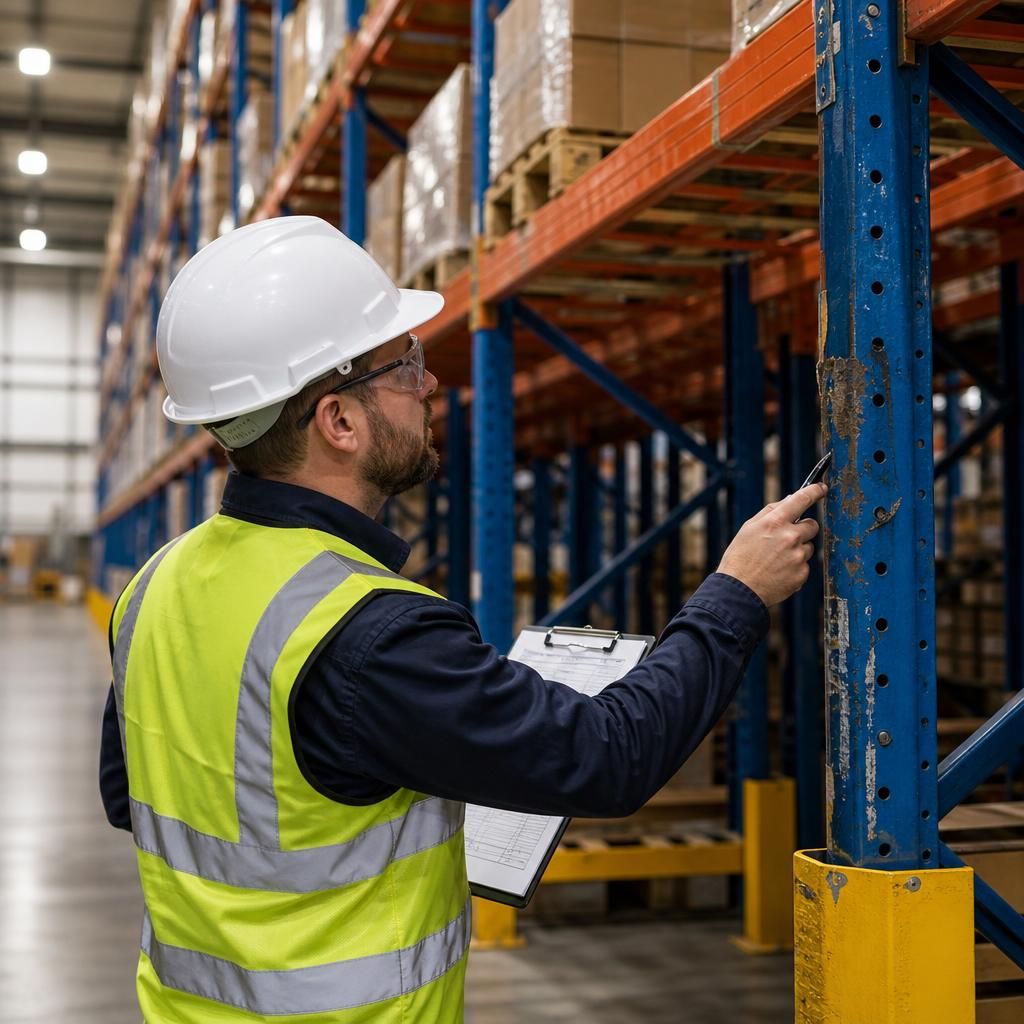
Warehouse racking maintenance costs are easier to control when inspections identify damage before it affects wider sections of the installation. Prompt action on bent uprights, damaged beams, loose fixings, missing safety pins, corrosion or failed protection can often limit repairs to individual components and reduce operational disruption.
Keep inspection reports, load information, repair records and alteration details together so recurring defects can be traced and addressed. Reviewing vehicle routes, loading practices and protective measures alongside scheduled inspections helps prevent avoidable damage and supports more predictable long-term expenditure.
Review Your Warehouse Racking or Mezzanine Floor Maintenance Plan
Ask Able Racking to review your warehouse racking or mezzanine floor maintenance plan and identify practical actions to control safety risks, disruption and long-term costs.