
What are the key benefits of completing a SEMA Racking Inspection Course?
Completing a SEMA Racking Inspection Course gives you the knowledge and practical skills to identify hazards in warehouse racking, assess damage and apply recognised inspection procedures. It supports safer operations, demonstrates competence, strengthens compliance and can help organisations manage issues promptly through informed in-house inspections.
Completing a SEMA Racking Inspection Course provides the knowledge and practical skills needed to inspect warehouse racking systematically, recognise damage and unsafe conditions, assess the urgency of defects, and record findings clearly. It helps participants carry out competent in-house checks while understanding when issues must be referred to a suitably qualified specialist.
Improved warehouse racking safety
The primary benefit is a more informed approach to identifying hazards before they contribute to an incident or operational disruption. Training covers the types of damage and deterioration that can affect warehouse racking, including bent or distorted components, missing or damaged safety devices, loose connections, overloading, impact damage and unsuitable alterations.
Participants learn to look beyond obvious damage and consider how the condition of the warehouse racking may affect stability, load capacity and safe use. This supports earlier intervention, such as isolating a damaged area, reducing a load or arranging a repair.
A structured and consistent inspection method
A recognised course gives inspections a clear process rather than relying on individual judgement or informal visual checks. Participants learn how to prepare for an inspection, examine warehouse racking methodically, classify defects and document the results in a consistent format.
Consistency is important where several people are involved in warehouse safety. A shared inspection method makes findings easier to understand, compare and act upon, helping managers identify recurring damage or areas that require further control.
Better understanding of legal and industry expectations
The course explains the responsibilities associated with the safe use and maintenance of warehouse racking. It helps participants understand the relevance of the Provision and Use of Work Equipment Regulations and the Health and Safety Executive’s guidance on the safe use of storage equipment, including the need for regular systematic inspections by a competent person.
Completion of the course does not remove the duty to manage risks or automatically make an organisation legally compliant. However, it gives the appointed inspector a stronger understanding of the procedures, records and escalation arrangements needed to support a suitable warehouse racking safety system.
Earlier identification and prioritisation of defects
Not every defect presents the same level of risk. SEMA-based training helps participants distinguish between damage requiring immediate action and less urgent issues that should still be monitored or scheduled for repair. This supports practical decisions about:
- Taking affected warehouse racking out of use where necessary.
- Reducing or removing loads from damaged areas.
- Reporting defects to the responsible manager.
- Arranging repairs or replacement components through an appropriate provider.
- Monitoring lower-risk damage until corrective work is completed.
Clear prioritisation can reduce delays while ensuring that safety-critical defects are not overlooked.
Stronger inspection records and follow-up
Good records show what was inspected, what was found, who carried out the inspection and what action was required. Course participants gain a clearer understanding of how to produce useful inspection reports rather than recording vague descriptions such as “damaged” or “needs attention”.
Detailed records support corrective action and provide a traceable history of warehouse racking condition. They can also help managers confirm that reported defects have been addressed and that outstanding issues have not been lost between shifts, departments or contractors.
More effective in-house safety management
Training an appropriate employee or responsible person can give a business greater day-to-day visibility of its warehouse racking. An informed in-house inspector may be able to identify and report problems promptly during routine operations, rather than waiting for an issue to become more serious.
This is particularly useful when the organisation has a suitable system for reporting damage, controlling access to unsafe areas and arranging repairs. In-house knowledge should complement, not replace, the periodic inspection and specialist advice required for the site’s circumstances.
Reduced risk of avoidable repair costs and disruption
Early reporting can help prevent minor damage from becoming more extensive. Prompt action may also reduce the risk of stock damage, blocked working areas, unplanned shutdowns and emergency remedial work. The financial benefit will depend on the condition, design and use of the warehouse racking, but a reliable inspection process gives managers better information for planning maintenance and expenditure.
Improved communication between warehouse teams
A trained inspector can describe defects using appropriate terminology and explain why a particular action is needed. This makes communication more effective between warehouse operatives, supervisors, facilities teams, maintenance personnel, suppliers and rack repair specialists.
It also helps reinforce safe behaviours, such as reporting vehicle impacts immediately, observing load limits, avoiding unauthorised modifications and keeping protection and safety components in place.
Evidence of competence and professional development
Successful completion demonstrates that the participant has undertaken relevant training in warehouse racking inspection principles and procedures. It can support the organisation’s decision to appoint that person to inspection duties, provided their experience, capability and supervision are also suitable for the work involved.
For individuals, the course develops a practical safety skill that can complement experience in warehouse operations, facilities management, health and safety or storage system maintenance. Competence should be kept current through practical experience, refresher learning and awareness of changes to equipment, guidance and site procedures.
Better decisions about external support
Course participants learn the limits of their role as well as the inspection process itself. They should be able to recognise when a defect requires assessment by a specialist, when a repair must be completed by a competent provider and when the available information is insufficient to make a safe decision.
This helps prevent unsafe improvisation, unauthorised alterations or continued use of warehouse racking where its capacity or structural condition is uncertain. The result is a more controlled process for escalating problems and verifying that remedial work has been completed appropriately.
Overall, a SEMA Racking Inspection Course supports safer warehouse racking, more reliable inspection records, clearer defect management and better-informed maintenance decisions. Its value is greatest when the training is integrated into a documented site procedure covering inspection frequency, reporting, isolation, repairs, follow-up and periodic review by suitably experienced professionals.
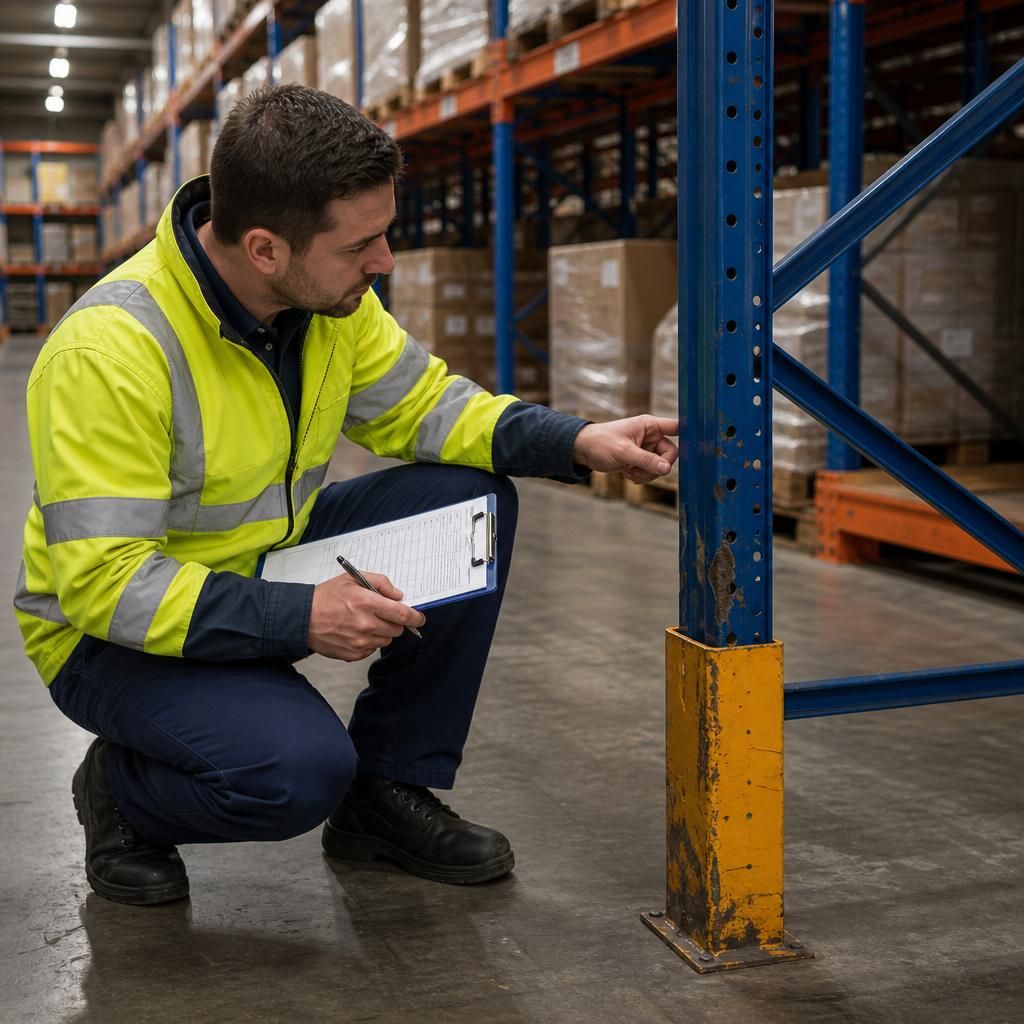
A key benefit of completing a SEMA Racking Inspection Course is learning how to prioritise defects in warehouse racking according to their potential risk. The training helps participants distinguish between damage requiring immediate action and issues that can be monitored or scheduled for repair.
This supports practical decisions, such as isolating an unsafe area, removing or reducing loads, reporting the defect clearly and arranging suitable remedial work. It also helps prevent minor damage from being overlooked until it affects stability, operations or stock. Where a defect is outside the inspector’s competence, the course reinforces the importance of escalating it to an appropriately qualified specialist rather than attempting an unauthorised repair.
Take the Next Step with SEMA Inspection Training
Speak to Able Racking about enrolling on a SEMA Racking Inspection Course and developing competent in-house inspection skills. We can help you select suitable training for your team and site requirements.