
What qualifications do I need to undertake this cantilever rack installation training?
You do not usually need a specific prior qualification to undertake cantilever rack installation training, although you should be physically capable, able to understand technical and safety instructions, and have suitable site experience. Any work involving lifting equipment, powered access, or work at height also requires the relevant training and authorisation, which should be confirmed before installation begins.
There is usually no single statutory qualification required before undertaking cantilever racking installation training. However, you should be physically capable of carrying out installation work, able to understand technical and safety instructions, and have suitable experience in a warehouse, construction or installation environment. The training is intended to develop the practical knowledge and competence needed to install cantilever racking safely and in accordance with the manufacturer’s instructions.
Employers must ensure that anyone installing warehouse racking is competent for the tasks they are expected to perform. Competence normally comes from a combination of relevant training, practical instruction, supervised experience and an understanding of the risks associated with the work. Completing a course alone does not automatically authorise someone to carry out every installation task or work independently on every site.
Typical entry requirements
- Good enough spoken and written English to understand training materials, installation drawings, warning notices, risk assessments and method statements. Where required, suitable support should be provided so that language or literacy does not create a safety risk.
- Reasonable physical ability to handle components safely, work in the required positions and use basic hand tools. Any lifting limits, medical restrictions or other relevant conditions should be discussed with the employer before training.
- Basic site awareness, including understanding of workplace rules, exclusion zones, personal protective equipment and the need to report unsafe conditions.
- Some practical experience of warehouse, engineering, construction, assembly or maintenance work is useful, although it is not always essential for an introductory course.
- A willingness to follow the specified installation sequence rather than relying on assumptions or previous experience with a different racking system.
Training that may be needed alongside the course
The qualifications required will depend on the installation method and the equipment used on the particular site. For example, anyone operating a forklift truck, telehandler, mobile elevating work platform or other lifting equipment must have appropriate training, assessment and employer authorisation for that equipment. A general cantilever racking course does not replace equipment-specific operator training.
- Work at height training: required where installation involves ladders, platforms, scaffolds or other work at height. The equipment and controls must be suitable for the task.
- Lifting equipment training: required for people who operate lifting equipment or attach, guide or control suspended loads. The responsibilities of operators, slingers and signallers should be clearly defined.
- Manual handling training: important because uprights, arms, braces and other components can be long, awkward or heavy. The handling plan should account for the load, route, posture and number of people involved.
- Site induction: normally required before work starts. This should cover traffic routes, emergency arrangements, assembly points, access restrictions and local hazards.
- Health and safety training: installers should understand risk assessments, method statements, personal protective equipment, safe exclusion zones and the process for stopping work when conditions change.
If drilling, cutting, welding, electrical work or specialist anchoring is involved, the people carrying out those tasks must also have the relevant trade competence and authorisation. Installation teams should not alter structural components, substitute fixings or change the approved layout unless the change has been assessed and authorised by the appropriate competent person.
What the cantilever racking course should demonstrate
A suitable course should cover more than the names of the components. It should explain how to interpret the supplier’s drawings and instructions, check the installation area, identify damaged or unsuitable components, assemble the structure in the correct sequence, install braces and arms, verify alignment and secure the system to the floor where specified. It should also address safe lifting practices, temporary stability, exclusion zones and checks before the system is handed over.
Assessment may include written questions, verbal checks, practical exercises or observation of an installation task. On successful completion, the provider may issue a certificate or record of achievement. This evidence can support an employer’s competence assessment, but the employer should still confirm that the person can perform the role safely in the conditions found on its own site.
Experience and supervision after training
Newly trained installers may need to work under the supervision of an experienced and competent installer until they have demonstrated that they can complete the required tasks consistently. A supervisor should check the team’s understanding of the drawings, installation sequence, load information and site controls before work begins.
Before booking, confirm the course’s entry requirements with the training provider and explain the type of cantilever racking, access equipment and installation work involved. Able Racking can help identify any additional training or authorisation needed for the planned work, so that the course is matched to the installation team, equipment and site conditions rather than treated as a standalone qualification.
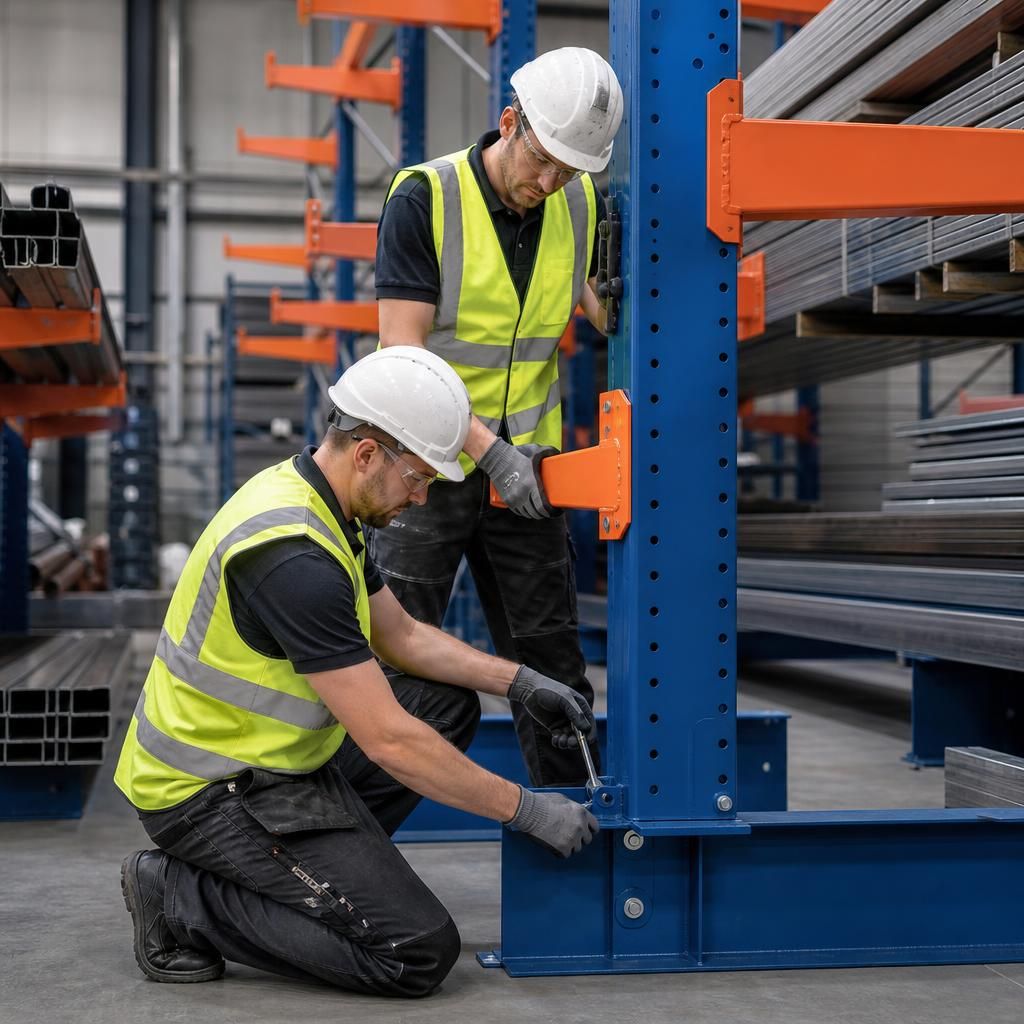
Completing cantilever rack installation training provides evidence of learning, but it does not by itself authorise an installer to carry out every task unsupervised. Competence also depends on practical ability, familiarity with the manufacturer’s instructions and supervised experience on the type of warehouse racking being installed.
Before work begins, confirm that the installation team has any additional training required for the site, such as manual handling, work at height or operation of lifting equipment. The employer should then assess each installer’s competence and provide suitable supervision until safe, consistent performance has been demonstrated.
Prepare for your cantilever rack installation training
Before attending cantilever rack installation training, confirm the course entry requirements and any additional site-specific training needed for manual handling, work at height or lifting equipment. Contact Able Racking to discuss your installation team, equipment and planned work so the training is properly matched to your requirements.