
What are the signs that my warehouse racking needs maintenance?
Warehouse racking needs maintenance when inspections identify damage, instability, excessive wear or changes that could affect its safe use. Warning signs include bent frames or beams, loose or missing components, damaged protection, corrosion, overloaded locations and repeated impact from handling equipment; any significant defect should be isolated and assessed by a competent professional.
Warehouse racking needs maintenance when there is visible damage, looseness, instability, excessive wear, corrosion, overloading or any change that could affect its safe use. Bent frames or beams, missing components, damaged protection and repeated impacts from handling equipment should be treated as warning signs, not cosmetic defects. The affected area should be made safe, reported and assessed by a competent person before it is returned to service.
Regular visual checks by warehouse staff help identify problems early, but they do not replace a formal inspection. A trained inspector can assess whether damage requires immediate unloading, repair, replacement or continued monitoring. The following signs should prompt action.
- Bent or distorted frames: Uprights, bracing members and frame components should be straight and securely connected. Bends, twists, dents or buckling can reduce the structure’s load-bearing capacity, particularly where the damage has been caused by a forklift or other handling equipment.
- Damaged or deflected beams: Beams that are visibly bent, twisted, displaced or no longer seated correctly in their connectors may not support loads as intended. Permanent deflection, damaged end connectors or signs that a beam has lifted from its support should be investigated immediately.
- Loose, missing or incorrectly fitted components: Missing locking pins, loose fixings, damaged clips, displaced braces and incomplete connections can allow components to move under load. Never assume that a rack is safe because the defect appears small; a missing retaining component can affect the stability of an entire bay.
- Damaged column guards and other protection: Impact protection is intended to reduce damage to structural members, but it must remain correctly positioned and securely fixed. Cracked, displaced or heavily damaged protection may no longer provide adequate protection and should be repaired or replaced.
- Corrosion, cracking or material deterioration: Rust, flaking coatings, cracks and other deterioration can weaken components over time. Pay particular attention to areas exposed to moisture, chemicals, leaks or repeated cleaning. Corroded or cracked members require competent assessment rather than simple repainting.
- Signs of overloading or poor load distribution: Loads should remain within the stated capacity of the relevant bay, beam level and component. Warning signs include overloaded shelves, bowed beams, unstable pallets, goods projecting into access routes and loads concentrated in a way the system was not designed to support. Capacity notices must be present, legible and consistent with the current layout and configuration.
- Repeated impact or recurring damage: Fresh scrapes, dents, paint transfer and damage in the same location often indicate that vehicle routes, working practices or protection need to be reviewed. Repairing the component without addressing the cause can lead to repeated defects and increasing safety risk.
Some warning signs are less obvious than physical damage. Changes to the warehouse layout, the type or weight of stored goods, beam levels, loading methods or vehicle movements can alter the demands placed on a warehouse racking system. A system that was suitable for its original configuration may require reassessment after alterations, relocation or increased loading.
Watch also for leaning frames, uneven floors, movement during loading, pallets that do not sit correctly, missing identification notices and goods obstructing access or fire routes. These conditions may indicate incorrect installation, settlement, poor housekeeping or a mismatch between the storage method and the warehouse racking design.
When a significant defect is found, prevent further use of the affected location. Remove or restrain the load only where this can be done safely, isolate the bay or area, and report the defect to the person responsible for warehouse safety. Do not straighten, weld, drill or improvise a repair to a damaged component. Unauthorised alterations can change the design assumptions and may create a further hazard.
A competent inspection should determine the appropriate response. Depending on the condition, this may involve immediate unloading, temporary restriction, replacement of a component, repair using an approved method or continued monitoring at a suitable interval. Any repair should be completed by a suitably experienced person and the system should be checked before normal use resumes.
Maintenance records should identify the location and nature of the defect, the action taken, the person responsible and the date the area was cleared for use. Keep records of inspections, repairs, alterations and changes to loading requirements so that recurring problems can be identified and addressed.
Routine staff checks, planned maintenance and formal inspections work together. Staff should report damage as soon as it is noticed, while a competent inspector should examine the warehouse racking at the required intervals and after significant impact, alteration or other event that may affect its integrity. Early attention is usually safer and more practical than continuing to use a damaged bay until the problem becomes more serious.
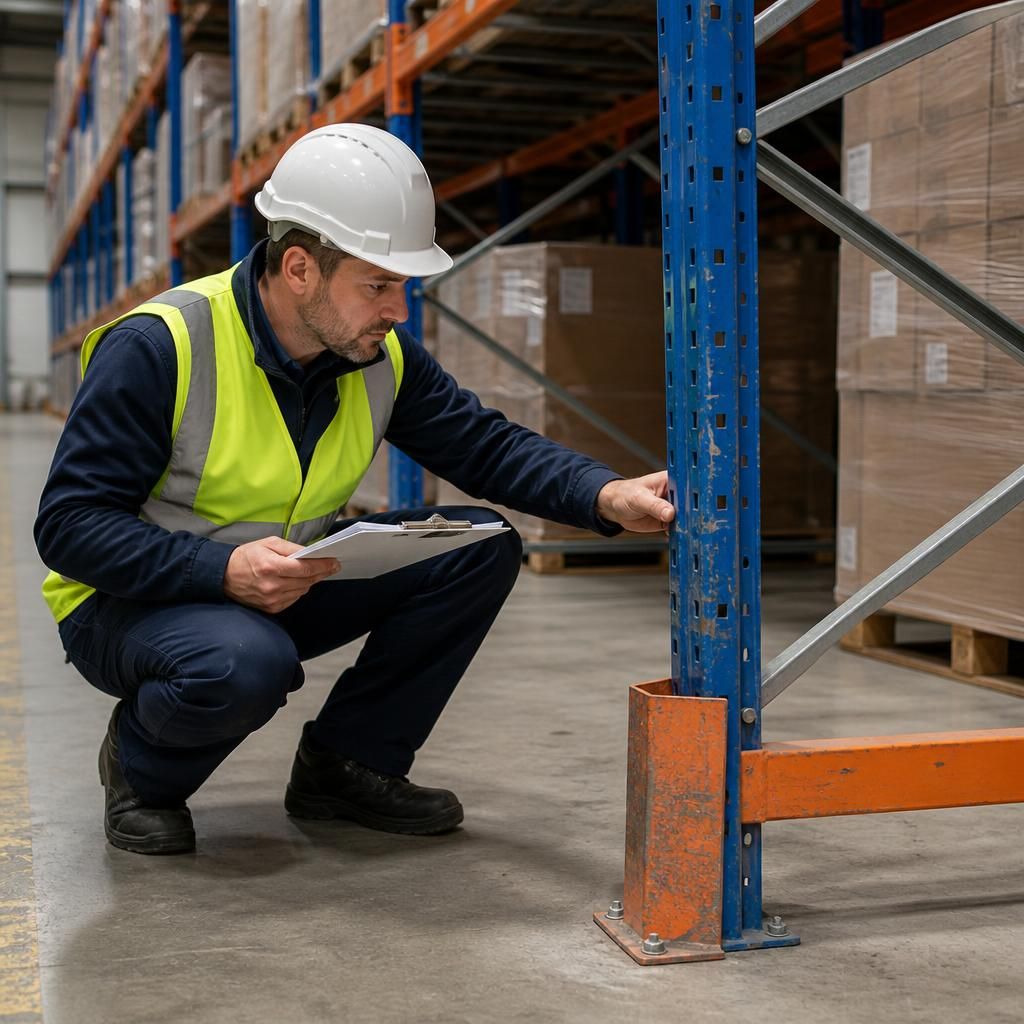
Any significant damage to warehouse racking should be isolated and assessed before the affected location is used again. Bent frames, displaced beams, missing locking pins or damaged column guards can affect load capacity and stability, even when the defect appears minor.
Prevent access to the affected bay, report the issue and arrange assessment by a competent person. Do not straighten, weld or modify damaged components without an approved repair method. The inspection should establish whether the area needs unloading, repair, component replacement or continued monitoring before it is returned to service.
Arrange an Expert Warehouse Racking Inspection
If you have identified damage, instability or any other warning sign, arrange an expert warehouse racking inspection with Able Racking. Our competent inspectors can assess the affected area and advise whether it requires unloading, repair, replacement or monitoring.