
What maintenance is required for mezzanine loading gates to ensure ongoing safety and performance?
Mezzanine loading gates require regular visual checks, scheduled maintenance and prompt repair of damaged or worn components, including barriers, hinges, latches, interlocks and safety signage. A competent person should record inspections, keep mechanisms correctly adjusted and arrange a thorough examination after any impact, modification or operational change to maintain safe, reliable performance.
Maintenance for a mezzanine loading gate consists of planned inspections, cleaning, adjustment, lubrication and prompt repair of every component that controls access to the edge. The barrier, gate frame, hinges, rollers, latches, interlocks, counterbalance or lifting mechanism, fixings, protective finishes and safety signage must all remain in sound working order so the gate prevents falls when the loading position is not in use and allows materials to be transferred safely when required.
Maintenance should be based on the gate design, operating environment, frequency of use and findings from previous inspections. A competent person should establish the inspection schedule, define what constitutes a defect and ensure that damaged equipment is taken out of service until it has been assessed and repaired.
Routine checks should include:
- Looking for bent, cracked, distorted or heavily worn sections of the gate, frame and surrounding edge protection.
- Checking that hinges, rollers, pivot points and tracks move smoothly without excessive play, binding or unusual noise.
- Operating the gate through its full movement to confirm that it opens, closes and settles correctly.
- Confirming that latches engage fully and cannot be bypassed by normal handling or vibration.
- Testing interlocks, sensors and other protective devices to ensure the gate cannot be left in an unsafe position or operated in the wrong sequence.
- Checking counterweights, springs, cables, chains, hydraulic parts or powered equipment for damage, slackness, leaks and signs of fatigue, where fitted.
- Inspecting bolts, welds, brackets and anchor points for looseness, corrosion or movement.
- Confirming that warning notices, operating instructions and load information remain present, legible and securely attached.
Operators should carry out a brief visual and functional check before use, particularly where the gate is used frequently or by different teams. This is not a substitute for a planned competent inspection. Any defect that could affect containment, access control or safe operation should be reported immediately. The gate should be clearly identified as unavailable and physically prevented from use where continued operation could expose people to danger.
Cleaning and lubrication
Dust, packaging debris, spilled goods and other contamination can restrict movement and prevent latches or sensors from operating correctly. The gate and its working area should therefore be kept clean, using cleaning methods suitable for the materials and equipment. Tracks, rollers and hinges should be checked for trapped debris before lubricant is applied. Lubrication should follow the manufacturer’s instructions; applying unsuitable or excessive lubricant can attract dust, contaminate braking or friction surfaces and conceal wear rather than resolve it.
Where the gate has a powered drive, electrical controls, sensors or hydraulic equipment, cleaning and maintenance should be carried out by a suitably authorised person. Isolation procedures must be followed before guards are removed, adjustments are made or anyone places their hands near moving parts.
Adjustment and component replacement
A gate that drops, drifts, swings unexpectedly, fails to latch or requires unusual force should not simply be compensated for by repeated adjustment. These symptoms may indicate worn bearings, stretched cables, damaged springs, a misaligned frame, a failing brake or movement in the supporting structure. The underlying cause should be identified before the gate is returned to service.
Replacement parts should be compatible with the original design and suitable for the gate’s operating loads. Safety devices must not be removed, defeated or substituted with improvised restraints. Repairs involving structural members, lifting mechanisms, powered controls or fall-protection functions should be completed by appropriately competent personnel, followed by a functional check and, where necessary, a formal examination.
Inspection after specific events
A thorough inspection is required after an impact from a forklift or other handling equipment, an overload, a collision with a load, unusual movement, a reported near miss or any other event that may have affected the gate or its supports. The same applies after alterations to the loading area, changes to the operating method or modification of the gate itself. Visible damage may be limited even when fixings, welds, anchors or internal mechanisms have been affected.
Following an incident, the area should be made safe and the gate should remain out of service until a competent person has assessed it. The assessment should consider the gate, its supporting steelwork, edge protection, floor connections and any associated control or interlocking equipment. A repair should not be signed off solely because the gate appears to operate normally.
Records and planned maintenance
Inspection and maintenance records should identify the gate, inspection date, person completing the work, condition found, defects raised, corrective action and date of completion. Records should also include details of replacement parts, adjustments, impact inspections and any recommendations for more frequent checks. Reviewing these records helps identify recurring faults, unsuitable operating practices and components approaching the end of their serviceable life.
The maintenance plan should reflect the manufacturer’s instructions and the findings of the site risk assessment. Higher use, harsh environments, outdoor exposure, corrosive substances, airborne dust and frequent impacts may require more frequent attention. Planned servicing should never be postponed simply because the gate still appears functional: wear in latches, hinges, lifting parts and interlocks can develop before an obvious failure occurs.
Maintenance arrangements should also support the duties under the Provision and Use of Work Equipment Regulations (PUWER), where applicable. Powered or lifting elements may create additional inspection requirements, and the responsible person should confirm which statutory examinations apply to the particular gate and its method of operation. Competence, isolation and safe access are essential whenever inspection or repair work is carried out.
Effective maintenance is demonstrated by a gate that remains aligned, secure, easy to operate and dependable under normal working conditions, with all protective devices functioning and all defects traceable through documented action. Regular checks, competent servicing and immediate response to damage protect people at the loading edge while preserving the gate’s intended performance.
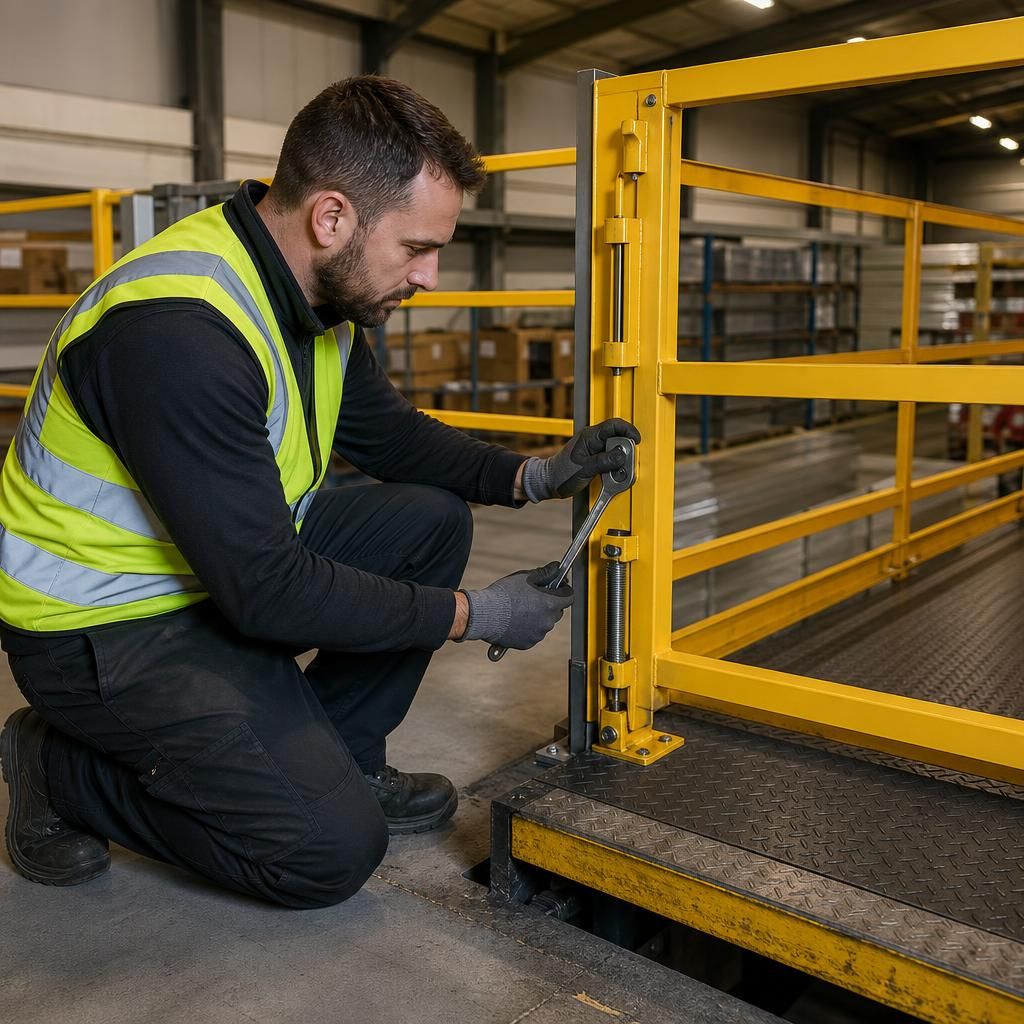
After any impact, overload or operational change, a mezzanine loading gate should be taken out of service until it has been assessed by a competent person. Damage may affect fixings, welds, hinges, interlocks, lifting components or supporting steelwork without being obvious from a visual check.
The assessment should confirm that the gate remains correctly aligned, securely fixed and able to contain the loading edge. Repairs must use suitable replacement components, and the gate should undergo a documented functional check before returning to service. Recording the defect, corrective action and inspection outcome provides clear evidence that safety has been restored.
Book a Mezzanine Loading Gate Inspection
Arrange a professional mezzanine loading gate inspection to identify defects, confirm safe operation and keep maintenance records up to date. Contact Able Racking to book an inspection tailored to your equipment and operating environment.