
What are the consequences of neglecting regular warehouse racking inspections?
Neglecting regular warehouse racking inspections can allow damage, instability and loading defects to develop unnoticed, increasing the risk of falling materials, injuries and structural failure. It can also lead to non-compliance, unplanned repairs, operational downtime and higher costs when defects are eventually identified.
Neglecting regular warehouse racking inspections allows damage, instability and loading defects to remain undiscovered. The consequences can include falling materials, serious injuries, structural failure, enforcement action, unplanned repairs, operational downtime and higher overall costs. Regular inspections identify defects early, before they affect people, stock or the wider operation.
Increased risk of accidents and injury
Warehouse racking can be damaged by forklift impact, incorrect loading, overloading, poor installation or unauthorised alterations. Defects are not always obvious from ground level. A bent upright, displaced beam, missing safety component or loose connection can progressively reduce the stability of a bay. If the condition is not identified and controlled, stored goods may fall or part of the warehouse racking system may collapse.
Falling materials can injure employees, visiting drivers, contractors and other people working near the warehouse racking. Even relatively minor damage can create a foreseeable risk if it is left in service. Inspections provide a structured opportunity to assess the condition of the warehouse racking and determine whether affected areas must be unloaded, isolated, repaired or taken out of use.
Damage becomes more extensive and expensive
Small defects are generally easier to manage than widespread or progressive damage. For example, an impact-damaged upright may require prompt isolation and repair, whereas leaving it in use can place additional stress on connected components and stored loads. A defect that could have been addressed through a planned repair may eventually require more extensive work, stock relocation or replacement of multiple components.
Inspection records also help distinguish new damage from historic defects and make it easier to prioritise remedial work. Without a consistent inspection history, it is more difficult to demonstrate that defects have been assessed and managed appropriately.
Unplanned downtime and disruption
When a serious defect is discovered unexpectedly, the affected warehouse racking may need to be emptied and cordoned off immediately. This can interrupt picking, replenishment, dispatch and stock access. In some cases, safe access to adjacent bays may also be restricted while the area is assessed.
Planned inspections allow problems to be identified during controlled conditions. Repairs, unloading and stock movements can then be coordinated with operational requirements wherever practicable. This reduces the likelihood of emergency closures and helps maintain continuity of warehouse activities.
Non-compliance and weaker safety management
Employers have duties under UK health and safety legislation to provide and maintain safe workplaces, work equipment and systems of work. Warehouse racking should be managed as part of the site’s wider risk assessment and inspection arrangements. The recognised guidance for storage equipment, including BS EN 15635, supports systematic inspection, competent assessment and prompt action where damage is found.
Failing to carry out suitable inspections can make it difficult to demonstrate that reasonably foreseeable risks have been identified and controlled. Depending on the circumstances, this may contribute to enforcement action, adverse findings following an incident, insurance complications or contractual concerns raised by customers and other stakeholders. Compliance is not established by holding an inspection certificate alone; defects must also be reported, prioritised and resolved.
Loss of control over loading and use
Warehouse racking remains safe only when it is used within its design limits and according to the approved configuration. Neglected inspections may allow load notices to become inaccurate, beams to be relocated, components to be substituted or unsupported changes to be made without proper assessment.
An inspection can identify issues such as:
- Loads that exceed the stated capacity or are distributed incorrectly.
- Missing or damaged protection, locking devices, bracing or other safety components.
- Impact damage to uprights, frames, beams or connections.
- Uneven floors, settlement or other conditions affecting stability.
- Unauthorised changes to the warehouse racking layout or configuration.
- Obstructions that prevent safe access, handling or emergency movement.
These findings can then be compared with available design information, load specifications and the way the warehouse racking is actually being used.
Problems with stock, equipment and business costs
A warehouse racking failure can damage stored products, pallets, vehicles, handling equipment and building fabric. It may also cause stock loss, contamination, delayed orders and additional labour for recovery and clean-up. The financial effect is therefore not limited to the cost of repairing the warehouse racking itself.
There may also be indirect costs from investigating an incident, replacing damaged goods, arranging temporary storage, rescheduling deliveries and managing claims. Preventative inspection is intended to identify unsafe conditions before these wider consequences occur.
Inspection is part of an ongoing process
A formal warehouse racking inspection should not be treated as a substitute for day-to-day control. Employees should know how to report damage, unsafe loading and other concerns as soon as they are noticed. Designated personnel should also carry out regular visual checks appropriate to the site, while a competent person should complete the required formal inspection at a suitable frequency based on the warehouse racking, working environment and risk.
Additional assessment is appropriate after events such as a significant impact, alteration, relocation, unusual loading, fire, flooding or other incident that could affect stability. Any area presenting an immediate risk should be unloaded or isolated in accordance with the site’s procedures until it has been assessed and made safe.
What to do when defects are found
- Record the defect clearly, including the location and affected components.
- Assess the risk and prevent access or use where necessary.
- Unload or isolate affected bays when their continued use cannot be justified.
- Arrange repair or replacement using suitable components and competent personnel.
- Reinspect the area after remedial work and retain the supporting records.
- Review the cause, such as vehicle impact, poor load placement or inadequate training, to help prevent recurrence.
Inspection reports should be understandable to the people responsible for managing the warehouse. A report that identifies the location, severity and required action is more useful than a simple pass or fail statement. Records should be retained with other relevant information, such as layout drawings, load notices, repair evidence, training records and previous inspection findings.
Regular warehouse racking inspections therefore protect more than the structure itself. They support legal compliance, safer working practices, reliable stock handling and better control of maintenance costs. Combining formal inspections with prompt defect reporting, competent repairs, correct loading and suitable employee training is the most effective way to prevent minor problems developing into serious disruption.
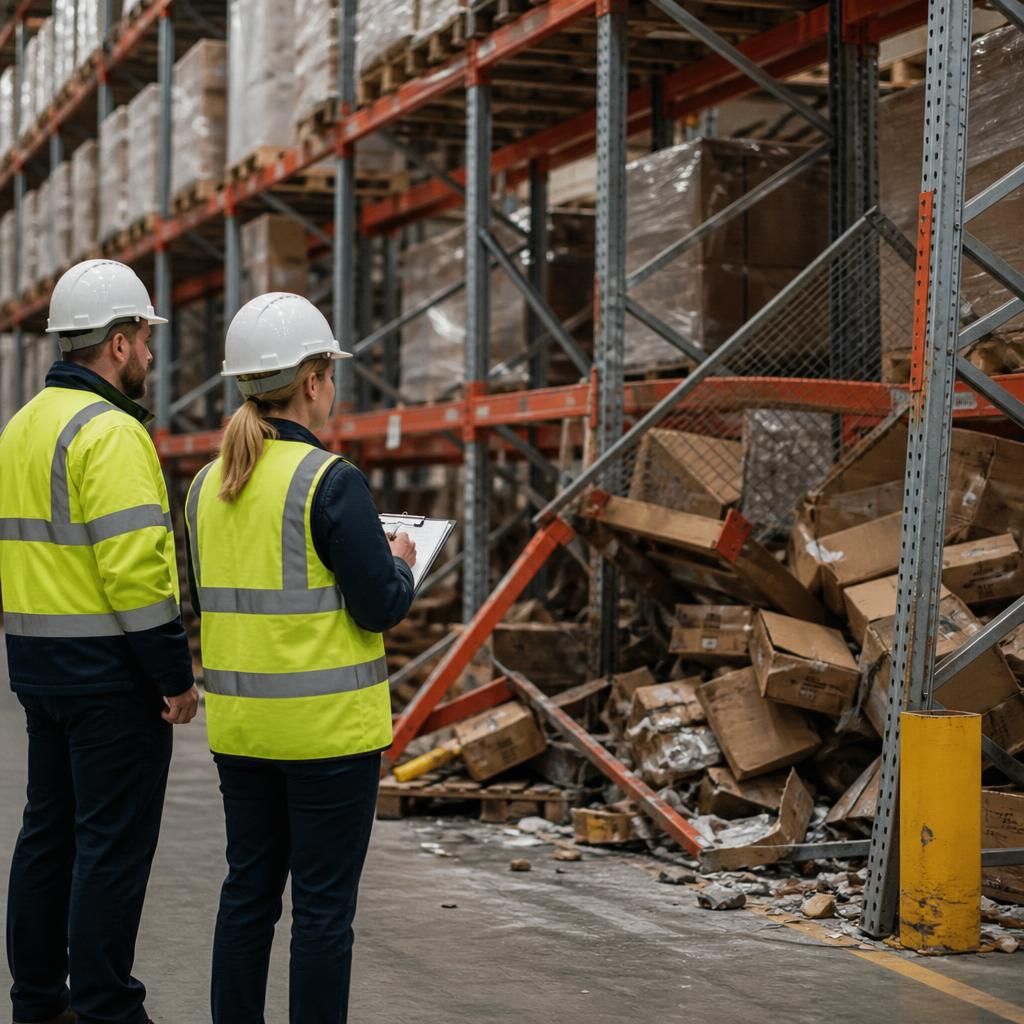
Neglecting regular warehouse racking inspections increases the likelihood that damage will be discovered only after it has created an immediate safety or operational problem. A serious defect may require affected bays to be unloaded, isolated or taken out of use, disrupting picking, replenishment, dispatch and stock access.
Planned inspections help identify impact damage, loose connections, missing components and loading concerns during controlled conditions. This gives the responsible team time to prioritise repairs, coordinate stock movements and reduce the risk of emergency closures, wider damage and avoidable business costs.
Arrange your warehouse racking inspection with Able Racking
Arrange a warehouse racking inspection with Able Racking to identify defects, manage risks and maintain safe, compliant storage operations.