
What types of damage should a warehouse racking inspector be able to identify during inspections?
A warehouse racking inspector should identify damage such as bent or twisted uprights, distorted beams, damaged bracing, loose or missing connections, displaced components, corrosion, impact damage and overloaded or incorrectly configured bays. They should also assess whether damage affects the stability and safe use of the warehouse racking system, then recommend appropriate remedial action.
A warehouse racking inspector should be able to identify structural damage, impact damage, missing or loose components, corrosion, overloading, poor configuration and any other condition that could reduce the stability or safe use of a warehouse racking system. The inspection should assess not only what is damaged, but also the likely cause, the level of risk and the action needed to control it.
Important damage and safety issues include:
- Bent or twisted uprights: Uprights can be damaged by forklift impact, dropped loads or contact with adjacent equipment. Even slight distortion can affect the vertical alignment and load-bearing capacity of a warehouse racking frame.
- Damaged frame bracing: Diagonal and horizontal bracing helps a frame resist movement and maintain its shape. Bent, buckled, cracked, disconnected or missing bracing should be recorded and assessed promptly.
- Distorted beams: Beams may be bent, twisted, dented or pulled out of position following an impact or overloading. Damage to beam connectors, end plates or locking pins can also reduce the security of the connection.
- Loose, missing or incorrectly fitted components: Inspectors should check beam locking devices, bolts, clips, braces, base plates, shims, anchors and other securing components. A missing safety pin or loose fixing can allow a component to move unexpectedly.
- Damaged base plates and floor fixings: Base plates may be bent or cracked, while anchors can become loose, damaged or ineffective. The surrounding floor should also be checked for cracking, settlement or other defects that could affect the stability of the warehouse racking.
- Impact damage: Forklift and pallet truck contact can damage frames, beams, guards and accessories. Inspectors should look for fresh dents, scrapes, paint transfer, displaced components and damage at low level, where vehicle impacts are most common.
- Corrosion and deterioration: Rust, chemical exposure, moisture and general deterioration can weaken steel components or affect their connections. Corrosion should be considered alongside the operating environment and the extent of material loss.
- Overloaded or incorrectly configured bays: Inspectors should compare the installed arrangement with available load notices, design information and manufacturer requirements. Problems may include loads exceeding stated capacities, unsuitable pallet sizes, missing load labels, altered beam levels or components used outside their intended purpose.
- Damaged pallets and unstable loads: A warehouse racking inspection should identify broken pallets, poorly wrapped goods, leaning loads, items projecting into access aisles and loads that are not properly supported. These conditions can cause falling objects or place unexpected forces on the warehouse racking.
- Displaced or unsuitable accessories: Pallet supports, backstops, mesh panels, timber decks, guide rails, guards and other accessories should be present, secure and appropriate for the installed system. A damaged accessory can allow goods to fall or pallets to be positioned incorrectly.
- Clearance and access problems: The inspector should identify insufficient clearance between loads, frames, beams, vehicles and walkways. Obstructions can increase the likelihood of impact and may prevent operators from using the warehouse racking safely.
An experienced inspector also looks for less obvious signs, including leaning frames, uneven beam levels, abnormal deflection, gaps at connections, missing anchors and changes since the warehouse racking was originally installed. The inspection should consider whether alterations, repairs or relocated components have been made without suitable design review or approval.
Damage is normally assessed according to its seriousness and its effect on safe operation. Where there is an immediate risk of collapse, falling goods or further damage, the affected bay or area may need to be taken out of use and unloaded until suitable remedial work is completed. Less serious defects may require prompt repair, monitoring or correction within an agreed timescale. The decision should be based on the condition of the component, its location, the applied load and the overall stability of the warehouse racking, rather than on appearance alone.
A useful inspection report should describe the exact location of each defect, identify the affected component, record the observed condition and explain the recommended action. Photographs, bay references and clear priority ratings help site teams locate problems and prevent repairs from being overlooked. The report should also distinguish between damage requiring immediate control measures and items that can be addressed through planned maintenance.
Warehouse racking users should not straighten, weld, drill or otherwise alter damaged components without suitable technical advice. Unauthorised repairs can change the strength or behaviour of the system and may conceal a wider problem. After remedial work, the repaired area should be checked to confirm that the warehouse racking has been restored to a safe and approved condition.
Regular inspections, operator reporting and prompt removal of damaged components work together to prevent minor defects becoming serious safety issues. A competent warehouse racking inspector will combine a detailed visual assessment with an understanding of loading, system design, workplace activity and previous repairs, providing practical recommendations that support safe and compliant warehouse operations.
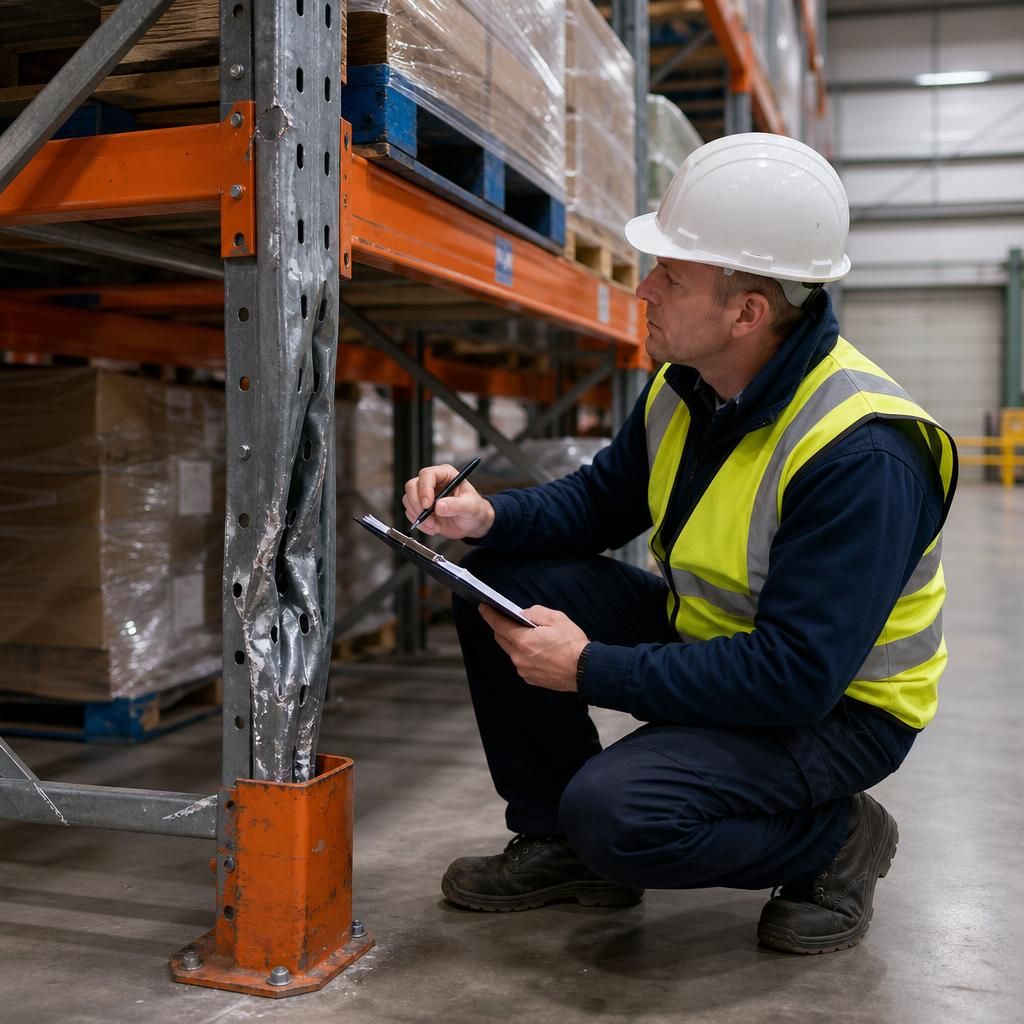
Impact damage is one of the most important defects a warehouse racking inspector must identify, particularly around frame uprights, beams, guards and base plates. Forklift contact may leave dents, scrapes, paint transfer or displaced components, but the visible mark does not always show the full extent of the structural damage.
An experienced inspector will assess the affected component, its location, the load being carried and the effect on the stability of the warehouse racking. Where damage could lead to collapse or falling goods, the affected bay should be isolated and unloaded until suitable remedial action is completed. The inspection report should record the exact bay location, include photographs where useful and state clearly whether immediate control, repair or further technical assessment is required.
Book your warehouse racking inspection
Book your warehouse racking inspection with Able Racking to identify damage, assess risk and agree any necessary remedial action.