
What is the significance of frequency in warehouse racking inspections? Regular warehouse racking inspections identify damage, deterioration and unsafe changes early, helping maintain compliance, protect people and prevent avoidable disruption or repair costs.
Regular warehouse racking inspections identify damage, deterioration and unsafe changes early, helping maintain compliance, protect people and prevent avoidable disruption or repair costs. The appropriate frequency depends on factors such as usage, risk, operating conditions and any changes to the storage system.
Inspection frequency is significant because it determines how quickly damage, deterioration and unsafe changes to warehouse racking are identified and controlled. A suitable inspection programme combines routine in-house checks with a documented expert inspection at planned intervals, based on the risks and conditions in the warehouse.
Warehouse racking can be affected by forklift impacts, altered loads, missing components, uneven floors, corrosion and changes to the working environment. Damage is not always obvious during normal operations, and a small defect can worsen if it is not reported and addressed. Regular inspections provide a structured way to identify problems before they affect the stability or safe use of the storage system.
Why frequency matters
- It protects people: Early identification of damaged frames, beams, bracing, protection or connections helps reduce the risk of falling loads and structural failure.
- It supports compliance: A consistent inspection schedule, supported by records and corrective action, helps demonstrate that warehouse racking is being managed responsibly in line with relevant guidance and the manufacturer’s requirements.
- It controls repair costs: Prompt attention to minor damage can prevent more extensive damage, load restrictions, stock movement or emergency repairs.
- It maintains operational efficiency: Safe, serviceable storage systems are less likely to cause unplanned disruption, blocked aisles or avoidable changes to warehouse processes.
- It identifies unauthorised changes: Inspections can highlight altered beam levels, added components, changed load arrangements or other modifications that may not have been properly assessed.
How often should inspections take place?
The appropriate frequency depends on the level of risk rather than a one-size-fits-all timetable. As a minimum, warehouse racking should be subject to regular visual checks by suitably trained personnel and a formally documented expert inspection at intervals determined by the operating conditions. In accordance with BS EN 15635, the expert inspection interval should not exceed 12 months, while a higher-risk environment may require more frequent inspections.
Routine checks and expert inspections serve different purposes. Employees or nominated warehouse personnel should report visible damage, unsafe loading, missing components and other concerns as soon as they are noticed. Organisations should also carry out planned visual checks at a frequency appropriate to their risk assessment. These checks do not replace an inspection by a competent person with the knowledge and experience to assess the warehouse racking system as a whole.
Factors that may require more frequent inspections
- Frequent forklift or other material-handling equipment movements near the warehouse racking
- High vehicle traffic, restricted visibility or difficult manoeuvring conditions
- Heavy, irregular or frequently changed loads
- High turnover of stock and regular reconfiguration of storage locations
- Harsh conditions, including moisture, temperature variation, dust or corrosive substances
- Previous impact damage, repeated repairs or a history of reported defects
- Changes to the building, floor, storage layout, equipment or loading arrangements
- New, inexperienced or frequently changing warehouse personnel
- Evidence that routine checks or defect reporting have not been completed consistently
Where any of these conditions apply, the inspection programme should be reviewed rather than relying automatically on the longest permissible interval. The responsible person should consider the warehouse layout, work activities, equipment, load characteristics and previous inspection findings when deciding whether additional checks are necessary.
Inspections after changes or incidents
An expert inspection should not wait for the next scheduled date if the warehouse racking has been involved in an impact, overload, modification or other unusual event. An immediate assessment may be necessary following a forklift collision, movement of the structure, an unplanned change in beam levels, installation of additional components, water damage, fire or another event that could affect stability.
If damage is found, the affected area should be assessed promptly and controlled in accordance with the inspection findings. This may involve unloading a location, preventing access, fitting a clearly identified restriction or arranging repair or replacement. Warehouse racking should not be returned to normal use simply because it appears stable after an incident.
Frequency should be supported by effective checks
Inspection frequency is only effective when the process is properly managed. The warehouse should have clear reporting arrangements, defined responsibilities and a system for recording defects and corrective actions. Staff should know how to identify and report damage, and reported issues should be reviewed without unnecessary delay.
Each formal inspection should produce a clear report describing the areas examined, defects identified, risk classification where applicable and recommended actions. Records should show when the inspection took place, who completed it and how outstanding issues were resolved. Reviewing previous reports can also reveal recurring impact points, repeated damage or areas where working practices need to change.
In practical terms, the right inspection frequency is the one that reflects the actual risks of the warehouse and leads to timely action. A planned annual expert inspection is an important baseline, but it must be supplemented by routine checks and additional inspections whenever operating conditions, damage or changes to the storage system justify them. Able Racking can help review your inspection arrangements and provide experienced, documented warehouse racking inspections tailored to the way your facility operates.
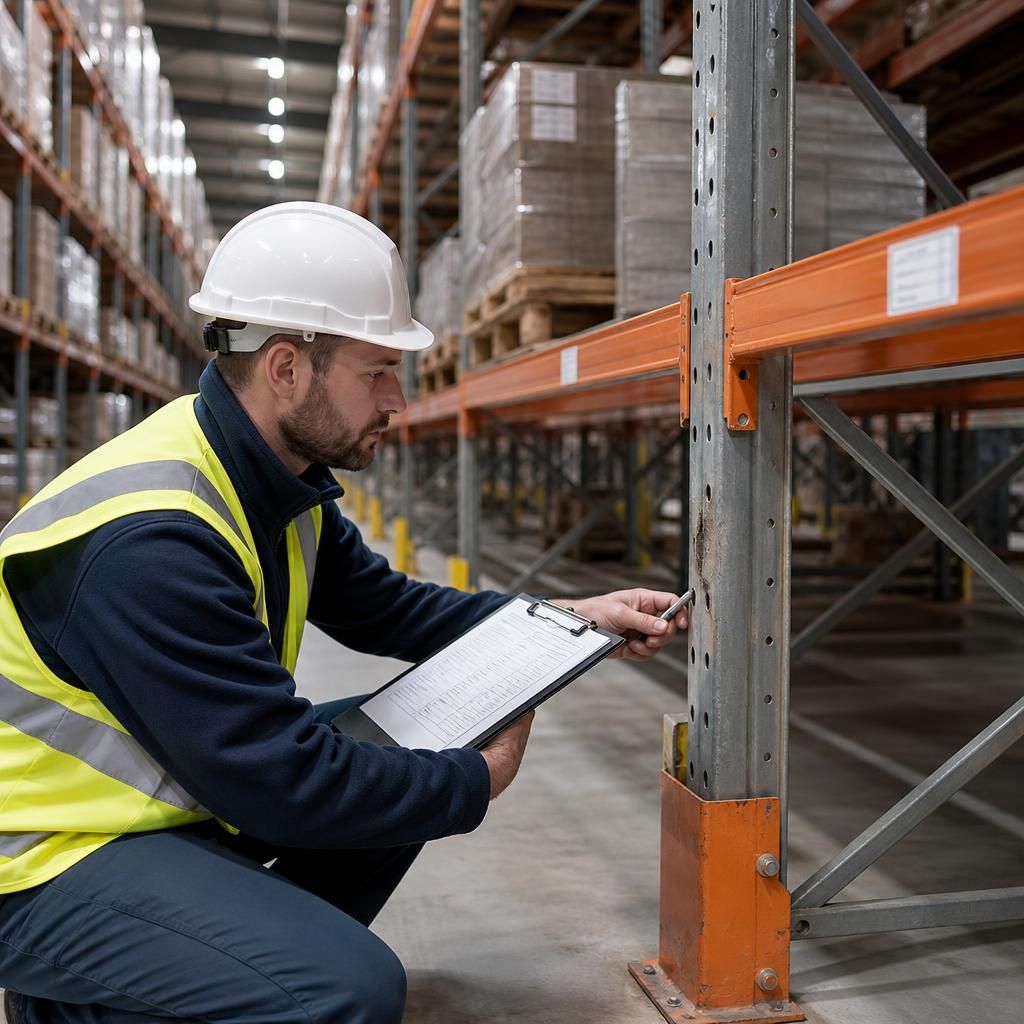
Warehouse racking inspection frequency should reflect the level of risk in the working environment, rather than relying on a fixed timetable alone. Areas exposed to frequent forklift movements, changing loads, repeated impact damage, harsh conditions or regular layout changes may need more frequent checks than lightly used areas.
A scheduled expert inspection should be supported by routine visual checks and immediate reporting of damage or unsafe changes. Following an impact, overload, modification or other incident that could affect stability, the affected area should be assessed without waiting for the next planned inspection. This approach helps identify defects early, control risks promptly and keep inspection records aligned with the way the warehouse actually operates.
Review Your Warehouse Racking Inspection Frequency
Contact Able Racking to review whether your warehouse racking inspection frequency reflects your current operating conditions, risks and previous findings. We can help arrange a documented inspection programme tailored to your facility.