
What qualifications or certifications should inspectors have for conducting warehouse racking inspections effectively?
Warehouse racking inspectors should be demonstrably competent through relevant training, practical experience and a sound understanding of applicable UK safety standards and inspection methods. There is no single statutory inspector qualification, so choose an experienced professional who can identify damage and instability, assess risks consistently, document findings clearly and recommend appropriate corrective action.
There is no single statutory qualification that every warehouse racking inspector must hold in the UK. An effective inspector should instead be able to demonstrate relevant technical training, practical experience, knowledge of applicable safety standards and the competence to identify, assess and report defects accurately.
Competence is more important than a certificate alone. A suitably qualified inspector should understand how warehouse racking is designed, loaded, installed and used, as well as how damage, missing components, poor housekeeping and changes to the storage layout can affect stability and safety.
Relevant technical knowledge
An inspector should have a sound working knowledge of:
- Warehouse racking components, including frames, beams, bracing, guards, supports, fixings and load notices.
- Common causes of damage, such as forklift impact, overloading, incorrect loading and unauthorised alterations.
- How to recognise deformation, corrosion, missing or loose components, inadequate protection and signs of structural instability.
- Safe working practices for inspecting active warehouse environments.
- Risk assessment, defect classification and the need for immediate action where a dangerous condition is identified.
They should also understand the manufacturer’s instructions and the original design requirements where these are available. This helps ensure that findings are assessed against the system’s intended use rather than general assumptions.
Training and recognised guidance
Inspectors should have completed suitable training in warehouse racking inspection and be familiar with the principles set out in HSE guidance, including HSG76 Warehousing and storage: A guide to health and safety. They should also understand the inspection principles in BS EN 15635, which covers the use and maintenance of steel static storage systems.
Training may be provided through an established industry body, specialist training provider or an employer’s structured competence programme. The important point is that the training should be relevant to the types of warehouse racking being inspected and should include practical application, not just a theoretical assessment.
Where an inspection involves unusual configurations, significant damage, a proposed alteration or uncertainty about the system’s design capacity, the inspector should know when to refer the matter to a suitably qualified structural or design engineer. An inspector should not approve repairs, changes or increased load capacities beyond their competence.
Practical experience
Experience is essential because warehouse racking defects are not always obvious. An experienced inspector can distinguish cosmetic damage from deformation that may affect load-bearing performance, identify repeated impact patterns and recognise when apparently minor defects indicate a wider operational problem.
Suitable experience may include carrying out warehouse racking inspections, installation checks, maintenance assessments, damage surveys or safety audits. Inspectors should have worked with the types of system found at the site, such as adjustable pallet warehouse racking, drive-in systems, cantilever systems or other specialist storage arrangements.
They should also be familiar with warehouse activities, including vehicle movements, loading practices, pedestrian routes and stock handling. This operational understanding helps them assess how the system is actually being used and whether site practices are contributing to damage or unsafe conditions.
Ability to inspect and report consistently
A competent inspector should follow a defined inspection process rather than relying on a general visual check. This normally includes reviewing available design and load information, discussing known incidents or changes with site personnel, inspecting accessible components systematically and recording defects with clear descriptions and photographs where appropriate.
The inspection report should identify the location and nature of each defect, explain the potential risk, set out any required action and make clear where immediate isolation or unloading is necessary. Recommendations should be practical and proportionate. For example, the report may require a damaged bay to be unloaded and isolated, a component to be replaced by a competent installer or the system to be reassessed before being returned to service.
Good inspectors also communicate their findings clearly to the person responsible for warehouse safety. They should be able to explain the difference between a defect requiring urgent action, a defect requiring planned repair and a condition that should be monitored.
Evidence to request before appointing an inspector
Before arranging an inspection, ask the provider to confirm:
- The inspector’s relevant training and qualifications.
- The inspector’s practical experience with the warehouse racking systems at your premises.
- Whether inspections are carried out in line with applicable HSE guidance and BS EN 15635 principles.
- How defects are categorised, recorded and escalated.
- Whether the inspector holds suitable public liability and professional indemnity insurance.
- How conflicts of interest are managed if the same provider also carries out installation or repair work.
- When engineering or specialist advice would be recommended.
A professional provider should be able to explain its competence arrangements, inspection methodology and reporting process without presenting a certificate as the only evidence of capability. Ongoing development is also valuable, as inspectors should keep their knowledge current when standards, equipment, working practices or manufacturers’ requirements change.
For routine warehouse racking safety inspections, choose an inspector whose training, experience and reporting methods can be evidenced and whose competence matches the complexity and risk of the site. This provides a more reliable basis for identifying defects early, prioritising repairs and maintaining safe, compliant storage operations.
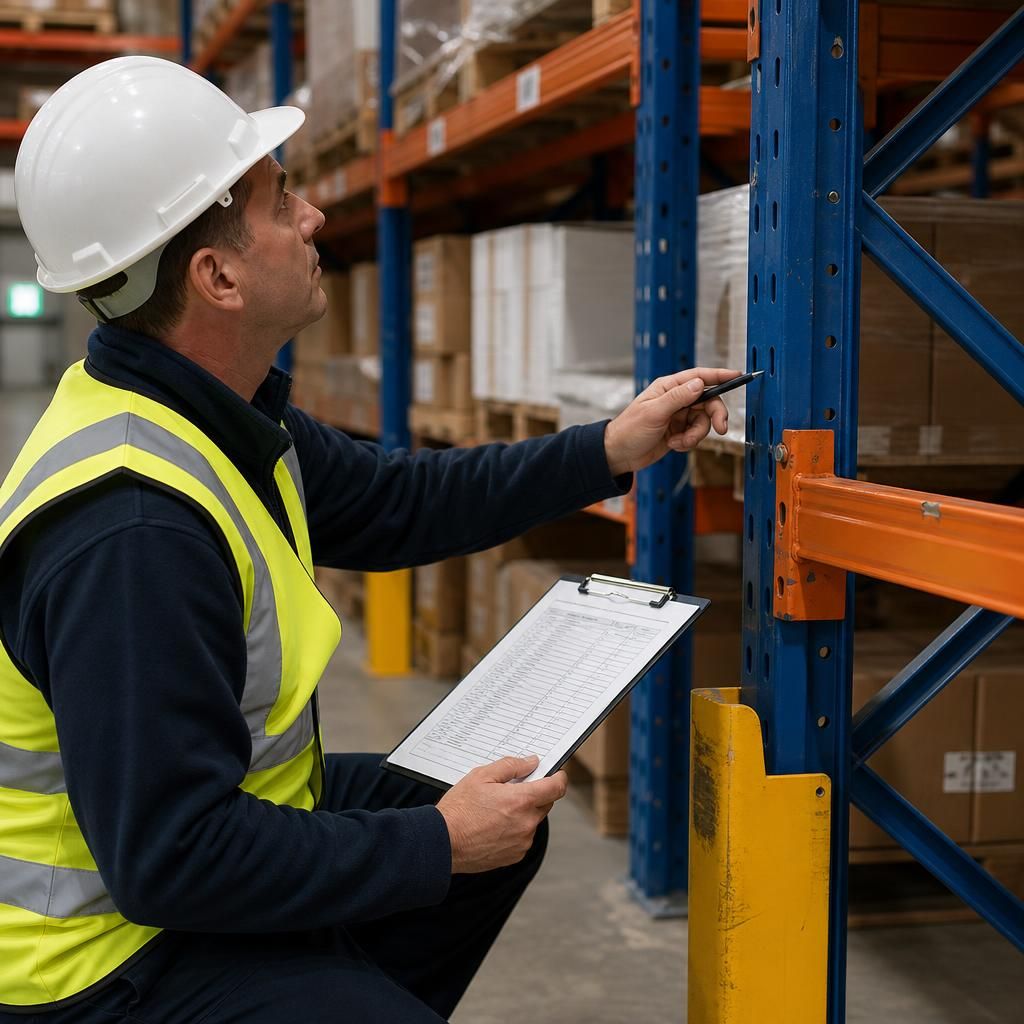
For effective warehouse racking inspections, demonstrated competence matters more than holding a certificate alone. The inspector should have relevant technical training, practical experience with the type of warehouse racking installed at your site and a clear understanding of how to identify, assess and report defects.
Before appointing an inspector, ask how they classify damage, record findings and decide when a bay must be isolated or unloaded. They should also recognise when a defect, alteration or uncertain load capacity requires referral to a suitably qualified engineer. This combination of training, experience and sound judgement provides a reliable basis for prioritising repairs and maintaining safe warehouse operations.
Arrange Your Warehouse Racking Inspection With Able Racking
Arrange your warehouse racking inspection with Able Racking for a competent assessment of defects, damage and safety risks. Contact our experienced team to discuss your site requirements and schedule an inspection.