
How do shuttle racking systems improve warehouse safety protocols?
Shuttle racking systems improve warehouse safety by reducing forklift movement within storage lanes, limiting collision risks and keeping operators at safer distances from stored pallets. Integrated safety features, controlled shuttle movements and routine inspections also help maintain stable loads, clear operating areas and compliant warehouse racking.
Shuttle racking systems improve warehouse safety by reducing forklift travel within storage lanes, limiting the opportunities for collisions and keeping operators away from areas where pallets are being placed or retrieved. A powered pallet shuttle moves loads along dedicated channels, while forklifts generally remain at the front of the system. This separation supports safer traffic management, more consistent load handling and better control of warehouse racking operations.
Reduced forklift exposure inside storage lanes
In a conventional drive-in arrangement, a forklift may enter the storage structure to position or retrieve pallets. A shuttle system allows the forklift to place a pallet on the shuttle rails, after which the shuttle transports it to the required position. Retrieval follows the same controlled principle. Fewer forklift movements inside the structure can reduce the likelihood of contact with frames, rails, pallets and other equipment.
This does not remove the need for trained forklift operators or careful driving. The loading face remains a working area, so reversing, positioning and pallet transfer must still be managed through suitable site rules, pedestrian controls and visibility measures.
More controlled pallet movement
Shuttle systems use programmed movement rather than relying solely on a forklift operator’s judgement to position every load within a channel. Depending on the equipment, controls may include sensors, remote operation, stop functions and load-position monitoring. These features help the operator place pallets consistently and reduce unnecessary handling.
Safety depends on the system being correctly configured. The shuttle, rails, pallets and stored loads must be compatible, and operating settings must reflect the design of the installation. Loads that are damaged, unstable, over the permitted dimensions or unsuitable for the system should not be placed into the channels.
Clearer separation between people and machinery
A well-designed shuttle installation can make it easier to define forklift-only areas, pedestrian routes and access points. Barriers, gates, floor markings and physical protection can then be used to separate people from moving vehicles and automated equipment. Clear exclusion zones are particularly important while a shuttle is operating, during fault recovery and when maintenance is taking place.
Personnel must not enter a storage channel or reach into an operating lane unless the equipment has been stopped, isolated and confirmed safe under the site’s lockout and access procedures. Remote controls should be kept with authorised operators, and access keys or permits should be managed so that unauthorised activation is prevented.
Protection against common warehouse hazards
Shuttle racking systems can support safer operations by addressing several recurring hazards:
- Impact damage: reduced forklift entry can lower the risk of impacts to frames, rails and pallet supports, although front-of-system collisions remain possible and require protection.
- Falling loads: correctly positioned pallets, suitable load restraints where required and regular checks help prevent loads from becoming unstable.
- Obstructions: sensors and operating procedures can help identify blocked channels, but operators must never rely on controls instead of visual checks.
- Unexpected movement: emergency stops, isolation procedures and controlled access help prevent the shuttle from moving while a person is working in a hazardous area.
- Damaged equipment: routine inspections identify bent frames, displaced rails, worn components and other defects before they develop into more serious failures.
Safety protocols required for effective protection
The equipment provides safety benefits only when supported by documented procedures. A suitable protocol should cover loading and unloading, permitted pallet types, maximum load characteristics, operating speeds where applicable, fault response, emergency stops, battery charging and access for maintenance. It should also explain how to report damage, isolate unsafe equipment and prevent loads from being stored in unsuitable positions.
Operators should receive instruction specific to the installed shuttle system rather than relying only on general warehouse or forklift training. Training should include the control interface, warning indicators, safe loading practices, exclusion zones, emergency procedures and the limits of the equipment. Refresher training is appropriate when the system, layout, work process or personnel change.
Inspections and preventative maintenance
Regular checks are central to maintaining safe shuttle operations. Daily or shift-based user checks should look for visible frame damage, displaced components, damaged pallets, obstructions, unusual noises, warning messages and signs that the shuttle is not travelling correctly. Any concern should be recorded and escalated promptly rather than being worked around.
More detailed inspections should be completed by a suitably competent person at intervals determined by the risk assessment, usage and condition of the installation. A warehouse racking inspection should consider the structure, protection, rails, access arrangements, load notices, pallet condition and evidence of impact. Maintenance should follow the equipment manufacturer’s requirements and be completed by competent personnel, with defective components repaired or replaced before the system is returned to normal use.
Inspection records should identify the location and nature of each defect, the action required, the person responsible and the date of completion. This provides a practical audit trail and helps site managers identify repeated damage, poor loading practices or areas where additional protection and training may be needed.
Good design and housekeeping also matter
Safety improvements begin before installation. The system should be designed around the pallet dimensions, load weights, stock rotation method, forklift type, operating clearances and available access routes. Adequate protection at exposed frame ends and loading faces can help limit the consequences of vehicle contact. Lighting, floor condition and visibility should also support accurate pallet handling.
Housekeeping must keep loading faces, travel routes and emergency access points clear. Damaged pallets should be removed, loose packaging should not enter the channels and spillages should be dealt with without delay. Safe working practices should remain effective during busy periods, stock changes and temporary storage arrangements.
Shuttle racking systems therefore improve warehouse safety by reducing hazardous vehicle movements, controlling pallet transfer and supporting clearer separation between people, forklifts and stored loads. They are not a substitute for competent operation, suitable training, physical protection, planned maintenance or periodic warehouse racking inspections. When the system, procedures and workforce are managed together, the installation can provide a more predictable and controlled storage environment while helping preserve the condition and performance of the warehouse racking.
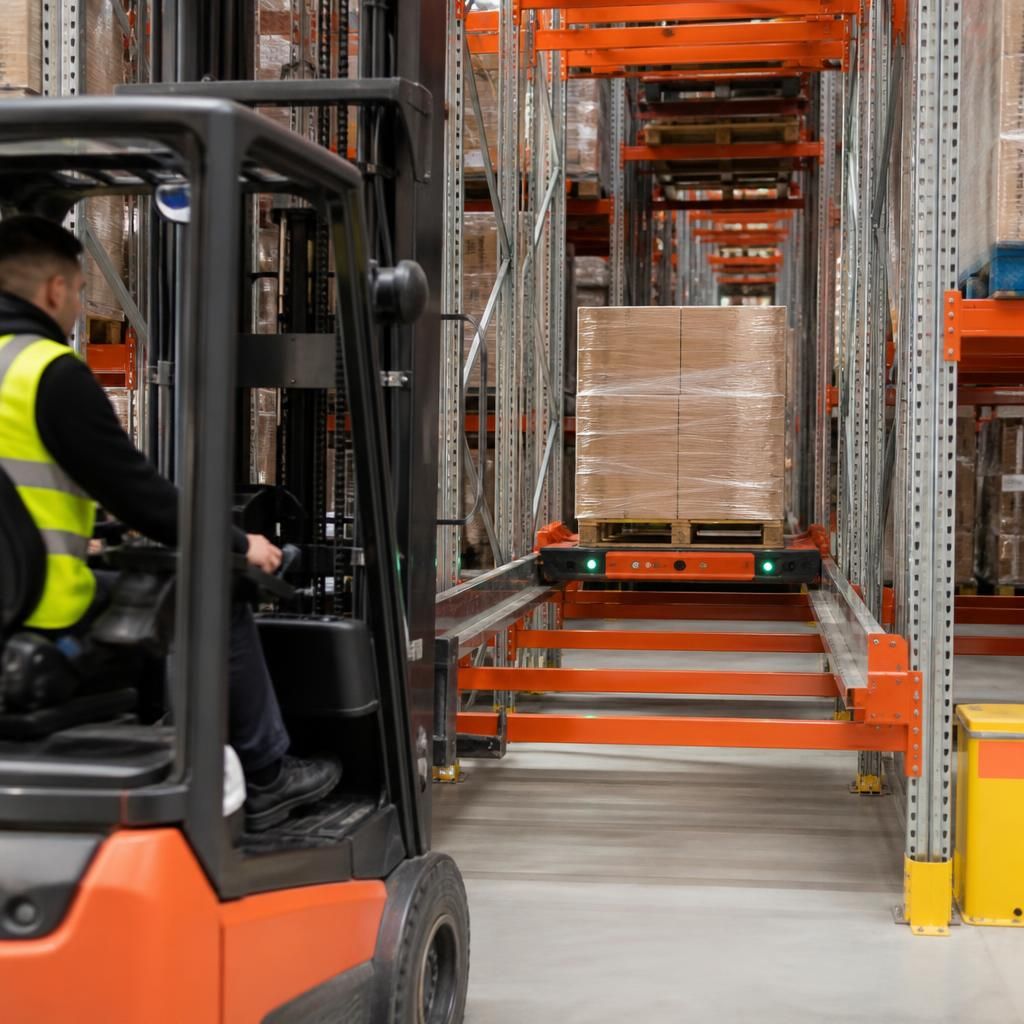
Shuttle racking systems improve warehouse safety by keeping forklifts at the loading face while a powered pallet shuttle moves loads through the storage channel. This reduces forklift entry into the structure, lowering the risk of impacts with frames, rails, pallets and other equipment.
The safety benefit depends on clear exclusion zones, suitable pallet condition and trained operators. Barriers, floor markings and controlled access should keep people away from active channels, while inspections check for structural damage, displaced components, obstructions and unsafe loads before they create a greater risk.
Arrange Your Shuttle Racking Safety Inspection
Arrange your shuttle racking safety inspection with Able Racking to identify damage, loading concerns and maintenance requirements before they affect safe warehouse operations. Contact our experienced team to schedule a thorough inspection for your warehouse racking system.