
What are the best practices for maintaining portable timber mezzanine floors?
Best practice for maintaining portable timber mezzanine floors is to carry out scheduled inspections, keep surfaces clean and dry, follow the specified load limits, and address damage or movement promptly. Check decking, supports, fixings, guarding, access points and fire protection, recording findings and arranging repairs by a competent professional where structural integrity or safety may be affected.
The best practice for maintaining a portable timber mezzanine floor is to combine planned inspections, careful cleaning, controlled loading and prompt repair of defects. Maintenance should cover the timber deck, supporting frame, connections, guarding, access equipment and any fire-safety provisions. Findings should be recorded, and work affecting structural integrity should be completed or approved by a competent professional.
Follow the manufacturer’s instructions
Start with the supplier’s installation, use and maintenance instructions. These should identify the permitted loading, approved alterations, cleaning methods, inspection requirements and any restrictions on relocating the structure. A portable floor must not be moved, extended or reconfigured without checking that the revised arrangement remains suitable for the building, the intended loads and the access arrangements.
Keep the original drawings, specifications, load information and installation records available to warehouse supervisors and maintenance personnel. If documents are missing, obtain technical advice before making changes or placing unfamiliar loads on the floor.
Carry out planned inspections
Inspect the floor at a frequency based on its use, environment, loading and the manufacturer’s recommendations. It should also be checked after relocation, impact, water ingress, a significant change in use or any event that could have affected stability. Inspections should be carried out by someone with suitable knowledge and experience, with a more detailed assessment arranged where a defect may affect safety.
Look for:
- Cracked, split, swollen, delaminated or excessively worn decking;
- Loose, bent, displaced or damaged structural members;
- Missing, loose or corroded bolts, screws, brackets and other connections;
- Gaps, movement, unevenness or changes in level across the deck;
- Damage to posts, base plates, feet or other areas supporting the load;
- Loose or damaged handrails, guardrails, toe boards and gates;
- Defects in stairs, ladders, ramps, landings and other access points; and
- Signs of water damage, mould, insect attack or deterioration around joints and contact points.
Record the inspection date, areas checked, defects identified, actions required and the person responsible for completing them. A defect should not be treated as closed until the repair has been completed and, where appropriate, checked by a competent person.
Control loading and use
Display the permitted floor loading where it can be seen by users. Do not exceed the specified uniformly distributed load or any point-load limitation. Heavy equipment, concentrated stock and wheeled loads can impose stresses that are different from evenly distributed goods, so their suitability should be confirmed before use.
Distribute stored items evenly and keep heavier materials over the designed supporting members where the layout allows. Do not stack goods against guardrails, place loads on access routes or use the handrails to support materials. Any change from light storage to workstations, machinery, archive storage or regular pedestrian activity should be reviewed because it can alter both loading and fire-safety requirements.
Prevent unauthorised alterations, including drilling into structural members, removing guardrails, cutting the deck or attaching equipment. Cable routes, lighting, sprinklers and other services should be installed without weakening the structure or obstructing escape routes.
Keep the timber deck clean and dry
Remove dust, packaging, spillages and loose materials promptly. Use cleaning products and methods that are suitable for the timber finish; excessive water can enter joints and cause swelling, distortion or decay. Do not conceal damaged boards beneath temporary coverings without assessing the underlying defect.
Investigate recurring dampness, condensation, leaks or water tracking from adjacent equipment. Improve the source of the moisture rather than relying only on drying the surface. Any timber that remains swollen, soft, stained or structurally weakened should be assessed before the area is returned to service.
Keep aisles, stairs and working areas clear. Good housekeeping reduces trip hazards and makes movement, damage and changes in the floor condition easier to identify during inspections.
Check guarding and access equipment
Guardrails, toe boards and gates should remain secure, correctly positioned and suitable for the activities taking place. Check that openings are protected, gates close properly and no part of the guarding has been removed to make handling goods easier. Repairs or replacements should maintain the original level of protection.
Stairs, ladders and ramps should be checked for secure fixings, damaged treads, worn surfaces, obstructions and excessive movement. Keep access routes clear and provide adequate lighting. Where work near an unprotected edge is unavoidable, the control measures should be reviewed before the task begins.
Maintain fire and emergency arrangements
Do not obstruct escape routes, fire exits, fire doors, alarm devices, extinguishers or sprinkler coverage. Changes to the floor layout or stored materials should be considered as part of the site’s fire risk assessment. Timber elements, protective coatings and any fire-resisting construction should be maintained in accordance with the design and relevant specialist advice.
Emergency procedures should explain how defects are reported, how unsafe areas are isolated and how people can leave the floor safely. Damaged access or guarding should be taken out of use until it has been made safe.
Repair defects correctly
Minor housekeeping issues can be dealt with by trained site personnel, but structural damage, loose connections, significant timber deterioration, movement or impact damage requires competent technical assessment. Do not rely on improvised packing, additional fixings, welding, timber patches or unapproved strengthening as a permanent repair.
Where a defect could affect stability, loading capacity or fall protection, restrict access and remove loads from the affected area if it is safe to do so. Mark the area clearly, report the issue and arrange an inspection by a suitably experienced professional. Replacement boards, fasteners and components should be compatible with the original design and installed in accordance with the supplier’s instructions.
Review the maintenance programme
Use inspection records to identify recurring problems, such as repeated impacts, moisture exposure, overloading or damage caused by handling equipment. The maintenance programme should be revised when the floor is relocated, the business changes its use, new equipment is introduced or the surrounding building conditions change.
Effective maintenance is therefore a continuing control process rather than a one-off repair. Regular checks, clear load control, good housekeeping, competent repairs and accurate records help preserve the floor’s condition and support a safe, compliant and efficient working environment.
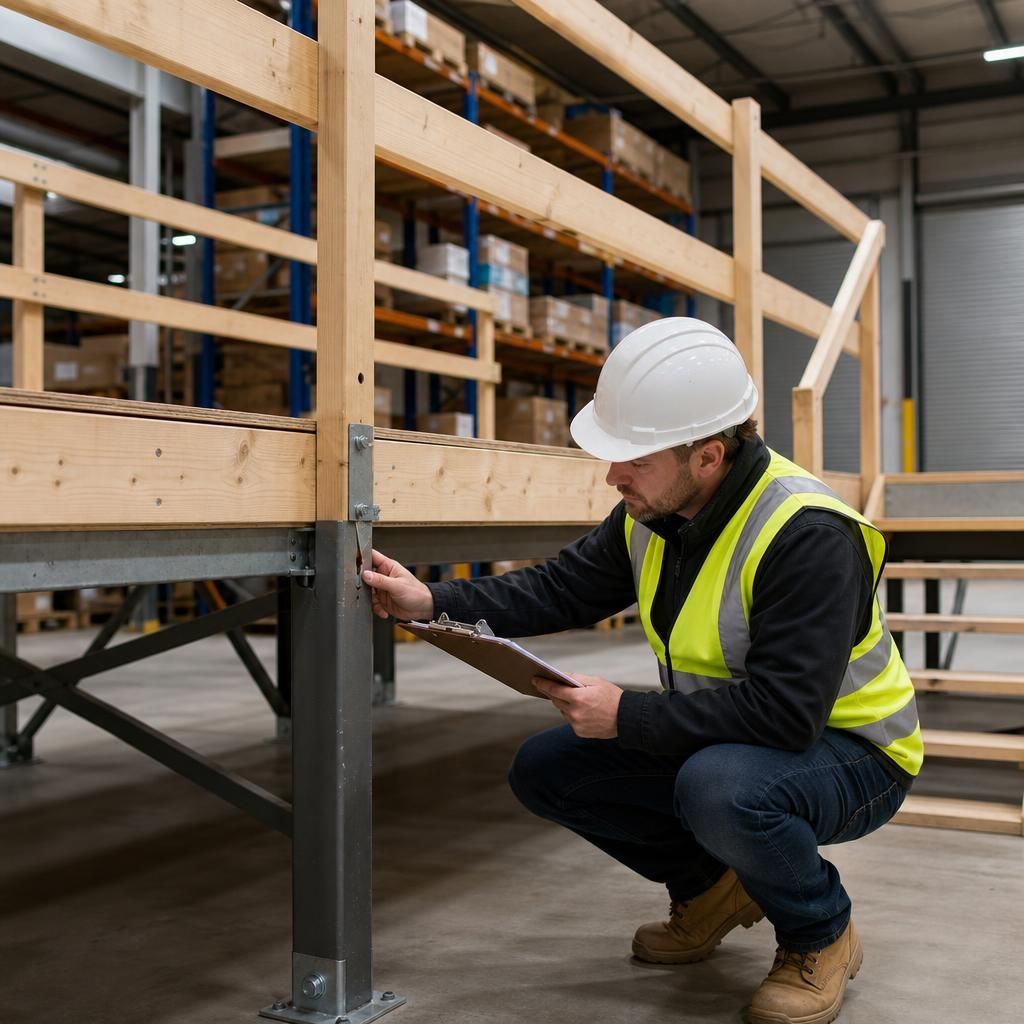
Regular inspections are central to maintaining a portable timber mezzanine floor because they identify damage before it affects stability, loading capacity or fall protection. The inspection should cover the timber decking, supporting members, connections, base plates, guardrails, toe boards, gates, stairs and other access points.
- Look for split, swollen, delaminated or excessively worn decking.
- Check for loose fixings, bent members, movement, gaps or changes in level.
- Inspect for water damage, mould, soft timber and deterioration around joints.
- Confirm that guardrails, toe boards, gates and access equipment remain secure and unobstructed.
Record the inspection findings and arrange prompt assessment of any defect that could affect structural integrity or user safety. Restrict access to an affected area where necessary, and use a competent professional for repairs, replacement components or any alteration to the original design.
Arrange a Professional Portable Timber Mezzanine Floor Inspection
Arrange a professional portable timber mezzanine floor inspection to identify defects, confirm safe condition and support ongoing compliance. Contact Able Racking to discuss your inspection requirements with an experienced specialist.