
What maintenance considerations are important for steel mezzanine structures?
Regular maintenance of steel mezzanine structures should include planned inspections, checks of load-bearing components and connections, prompt repair of damage, and reviews after any alteration or impact. Keeping inspection records and addressing corrosion, loose fixings, damaged flooring, guarding and access equipment helps preserve structural safety and support ongoing compliance.
Steel mezzanine structures should be maintained through planned inspections, routine housekeeping, prompt repairs and documented reviews after alteration, impact or unusual loading. The maintenance process should cover the steel frame, connections, floor, edge protection, access equipment, fire-related provisions and any services attached to or passing through the structure. Inspections should be completed by suitably competent people and should follow the manufacturer’s information, the building’s risk assessment and applicable UK requirements.
Inspect the primary steelwork and connections. Check columns, beams, bracing, plates, welds, bolts and other structural connections for distortion, cracking, movement, impact damage, corrosion or loose components. Particular attention is needed around column bases, beam-to-column connections and areas close to vehicle routes or handling equipment. Any unexpected deflection, separation, damaged weld or change in alignment should be assessed by a competent structural professional before the affected area is used normally.
Check the floor and its supporting components. Floor panels, decking, joists and support members should be examined for damage, excessive wear, deflection, gaps, lifting, contamination and signs of water ingress. Replace damaged panels and ensure replacement materials have suitable strength, fire and surface performance. Openings created for conveyors, services, access points or equipment must be properly supported and protected; they should not be enlarged or relocated without an approved design review.
Maintain edge protection and access equipment. Guardrails, gates, toe boards, handrails, staircases, ladders and loading gates should remain secure, correctly positioned and free from damage. Check fixings, hinges, latches, treads, nosings and non-slip surfaces. Gates and barriers must operate as intended and should not be propped open or removed during normal operations. Damaged or incomplete protection should be taken out of service until it has been repaired.
Monitor loading and changes in use. The structure should only be used within its designed load capacity and for the purpose for which it was assessed. Keep load information visible and make sure it remains accurate if the layout, stored goods, equipment or working practices change. Concentrated loads, mobile equipment, machinery, partitioning and accumulated materials can introduce forces that were not included in the original design. A competent person should review any proposed change before work begins.
Control corrosion and environmental damage. Look for rust, damaged paint, water staining, condensation, chemical exposure and deterioration caused by cleaning products or industrial processes. Find and address the source of moisture rather than simply coating over affected steel. Remove loose corrosion, prepare surfaces correctly and apply a compatible protective coating where appropriate. Extensive corrosion, section loss or damage to fire-protective finishes requires specialist assessment.
Protect fire safety measures. Maintenance should include any fire-resisting floor construction, protected steelwork, compartmentation, fire doors, escape routes, emergency lighting and alarm equipment associated with the structure. Do not drill through, remove, coat over or alter fire protection without confirming that the work is suitable. Keep escape routes clear and ensure that stored materials, services and later alterations do not compromise the agreed fire strategy.
Review attached services and equipment. Electrical installations, lighting, sprinklers, ductwork, pipework, conveyors and other services should be securely supported and maintained independently where required. Check that their weight is included in the structural assessment and that access for inspection and repair has been considered. Unauthorised fixing, suspended loads or service penetrations can damage protective coatings, weaken components or obstruct fire and escape provisions.
Inspect after impact or abnormal events. Any collision involving a vehicle, lifting equipment or stored goods should trigger an immediate local inspection. The area should be isolated if there is visible damage, movement, instability or uncertainty about its condition. Further review is also appropriate after fire, flooding, significant water ingress, building movement, unusual vibration or an unexpectedly heavy load. Repairs should be based on an assessment rather than concealed with paint or temporary work.
Use a planned maintenance process. A practical programme normally combines routine visual checks by trained site personnel with more detailed inspections at intervals determined by risk, use, environment and the structure’s condition. Keep records of findings, photographs, identified defects, risk controls, repair decisions and close-out dates. Records should also include drawings, design information, load details, manufacturer guidance and evidence of any structural assessment. Clear documentation helps demonstrate that defects are being managed and prevents important information being lost when responsibilities change.
Manage repairs and alterations properly. Minor housekeeping tasks may be completed under site procedures, but structural repairs, welding, cutting, drilling, strengthening, changes to guarding and alterations to access arrangements should be designed and carried out by appropriately qualified people. Temporary repairs should have a defined control period and follow-up action. After significant work, inspect the completed installation and update drawings, load information, fire documentation and maintenance records.
Good maintenance is preventative rather than reactive. Keeping the structure clean, controlling impact risks, preventing unauthorised alterations and reporting defects early will reduce deterioration and operational disruption. Where an inspection identifies a concern, restrict use of the affected area and obtain advice from a competent structural or safety specialist before returning it to service.
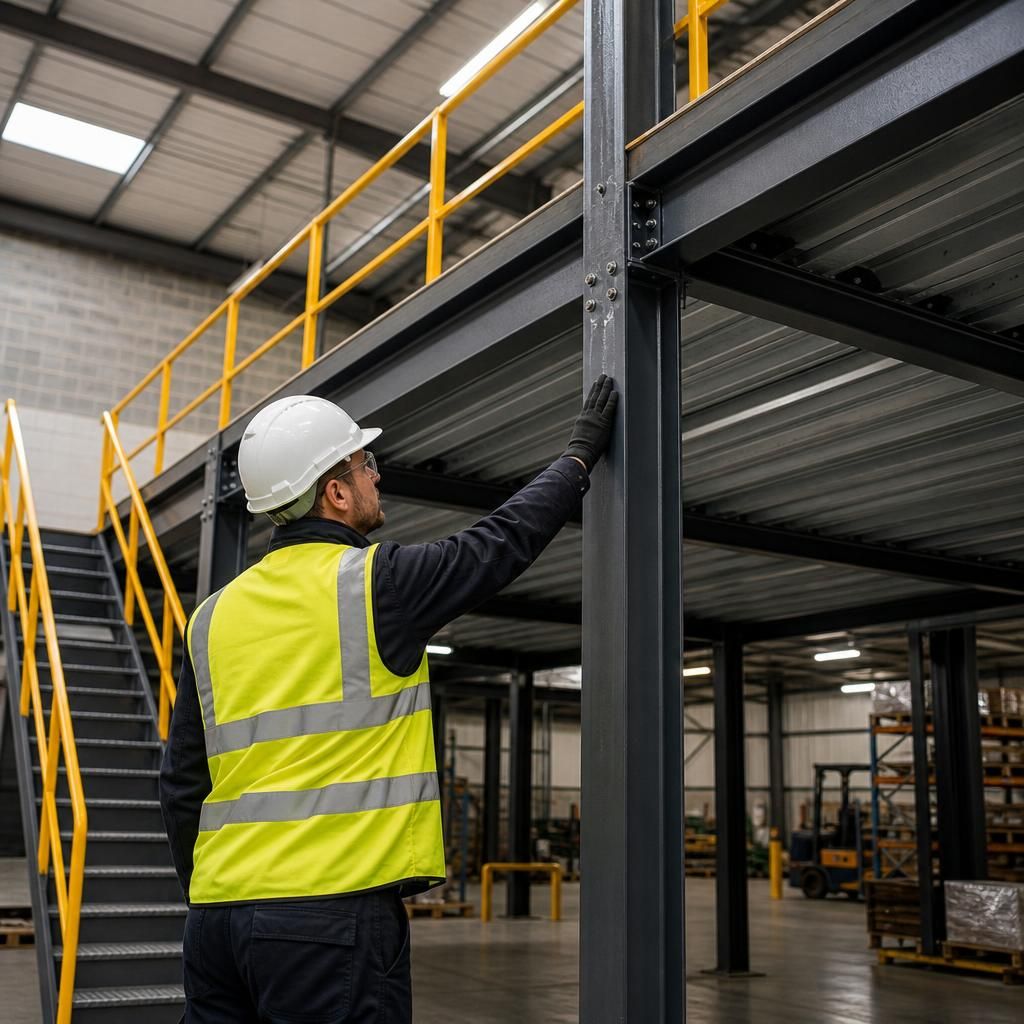
Planned inspections are a key part of maintaining steel mezzanine structures because they identify deterioration before it affects stability, access or safe use. Checks should cover the frame, connections, flooring, guardrails, stairs, loading gates, fire protection and attached services.
- Inspect for corrosion, impact damage, loose fixings, distortion, damaged flooring and changes in alignment.
- Check that edge protection, access equipment and escape routes remain secure and unobstructed.
- Record defects, photographs, risk controls and completed repairs so outstanding issues are not overlooked.
- Arrange a competent assessment after impact, fire, flooding, unusual loading or any structural alteration.
Any damaged area should be isolated where necessary, with repairs completed by suitably qualified people before normal use resumes.
Arrange expert maintenance advice for your steel mezzanine structure
Contact Able Racking for expert maintenance advice on your steel mezzanine structure, including inspections, defect assessment and planned repairs. Our experienced team can help you address concerns promptly and keep the structure safe, compliant and fit for use.