
What are the learning outcomes of the racking inspection training courses offered?
Racking inspection training teaches you how to identify damage, unsafe conditions and potential hazards, assess their severity, and decide what corrective action is required. You will also learn how to carry out structured inspections, record clear findings, escalate significant risks and apply relevant UK safety requirements to support safer, compliant warehouse operations.
The learning outcomes of Able Racking’s inspection training courses are centred on developing the knowledge and practical judgement needed to inspect warehouse racking safely and consistently. By the end of the training, participants should be able to identify damage and unsafe conditions, assess the seriousness of defects, record clear findings, recommend appropriate action and escalate significant risks in line with relevant UK safety requirements.
The course is intended to help warehouse personnel carry out their inspection responsibilities with greater confidence and consistency. It does not replace the need for competent structural assessment or specialist engineering advice where damage is serious, complex or outside the inspector’s level of competence.
Recognising damage and unsafe conditions
A key outcome is the ability to recognise the types of defects that can affect the safety and performance of warehouse racking. This includes damage to uprights, beams, bracing, connectors, guards and other components, as well as problems caused by impact, overloading, poor installation, corrosion, missing parts or unauthorised alterations.
Participants learn to look beyond obvious physical damage and identify conditions that may increase risk, such as:
- Distorted or bent structural members;
- Loose, displaced or incorrectly fitted components;
- Missing safety pins, locking devices or protective equipment;
- Inadequate load notices or loads that do not match the stated configuration;
- Unsafe loading, poor housekeeping or obstructions affecting safe use;
- Signs that a warehouse racking system has been altered without suitable technical approval; and
- Repeated impact or damage patterns that may indicate an underlying operational issue.
The training also develops an understanding of why a defect matters. A minor-looking issue can have wider consequences if it affects stability, load capacity or the connection between components.
Assessing the severity of defects
Inspection training teaches participants to assess findings in a structured way rather than relying solely on personal opinion. They learn how to consider the location, type and extent of damage, the component affected, the load being supported and whether the defect creates an immediate or developing risk.
Depending on the course content and inspection procedure being used, findings may be prioritised according to recognised risk categories. The important outcome is that the inspector can distinguish between damage requiring immediate action, damage requiring prompt attention and lower-risk issues that should still be monitored and corrected through planned maintenance.
Participants should also understand that an inspection is not simply a visual search for faults. It involves making a reasoned decision about the next step, which may include restricting access, unloading a location, isolating part of the system, arranging a repair or referring the matter to a suitably qualified person.
Carrying out systematic inspections
Another learning outcome is the ability to follow a repeatable inspection method. Participants learn how to prepare for an inspection, work through the warehouse racking in an organised sequence and avoid relying on memory or informal observations.
This typically includes understanding how to:
- Review available layout drawings, load information and previous inspection records;
- Confirm the areas and components included within the inspection scope;
- Inspect structural members, connections, protection and associated safety features;
- Check for changes in use, loading or configuration;
- Use suitable inspection forms, photographs and supporting records; and
- Confirm that reported defects have been addressed or remain under suitable control.
A consistent method makes inspections easier to repeat and helps different people interpret findings in a similar way. It also creates a more reliable record for managers, maintenance teams and any person responsible for warehouse safety.
Recording accurate findings
Clear reporting is an essential part of competent inspection. The training helps participants describe what they have seen accurately, identify the affected location and explain why action may be required.
Good inspection records should be specific enough for another person to locate and understand the issue. Rather than recording a vague comment such as “damaged racking”, an effective report should identify the relevant aisle, bay, level and component where possible, describe the nature of the damage and state the recommended action or escalation route.
Participants also learn the importance of separating observed facts from assumptions. If the cause or structural significance of damage cannot be confirmed during a routine inspection, the report should say so and recommend an appropriate technical review instead of presenting an unsupported conclusion.
Applying UK safety requirements
The courses provide an understanding of the responsibilities and inspection principles relevant to warehouse racking in the UK. This includes the role of the employer, users, managers, suppliers, installers and competent inspection personnel in maintaining a safe storage system.
Training commonly covers the principles associated with HSE guidance and the recognised inspection approach in BS EN 15635, where applicable to the warehouse racking system and inspection arrangements. Participants learn how these requirements support routine monitoring, reporting, corrective action and the appointment of competent persons.
The outcome is not simply familiarity with a standard. Participants should understand how to apply relevant guidance to everyday warehouse conditions and recognise when a matter needs to be referred to a specialist rather than dealt with through an informal repair or adjustment.
Understanding corrective action and escalation
Participants learn how to respond appropriately after identifying a defect. This includes understanding the difference between recording an issue for planned action and taking immediate steps to control a serious risk.
- Serious damage may require the affected area or location to be taken out of use until it has been made safe;
- Less urgent defects may require prompt repair, monitoring or management action;
- Overloading, missing information or unsafe use may require operational controls as well as physical repair; and
- Structural concerns, unusual damage or proposed alterations may require advice from a suitably competent specialist.
The training reinforces that inspectors should not improvise structural repairs, straighten damaged components or approve changes beyond their competence. Safe inspection includes knowing the limits of the inspector’s role and escalating issues through the correct process.
Supporting preventative warehouse safety
Once participants can identify and report defects consistently, they can contribute more effectively to preventative maintenance. Inspection findings can help reveal recurring impact points, poor working practices, unsuitable loading or weaknesses in housekeeping and traffic management.
This allows the warehouse team to address causes as well as symptoms. Appropriate follow-up may include reviewing operator practices, improving protection, updating load information, changing storage arrangements, arranging repairs or providing additional instruction. The result is a more controlled approach to maintaining safe and efficient warehouse racking.
Knowing the limits of the training outcome
Completion of a course demonstrates that the participant has received relevant instruction and developed the intended inspection knowledge for that course. It does not automatically make the participant competent to undertake every type of structural assessment, design modification or repair. Competence depends on the training completed, practical experience, the inspection scope and the person’s ability to apply their knowledge safely in the workplace.
After training, participants should be able to use the inspection process taught, communicate findings clearly and seek further advice when a situation exceeds their experience. For a warehouse manager, this provides a practical basis for assigning inspection duties, reviewing reports and maintaining an effective warehouse racking safety process.
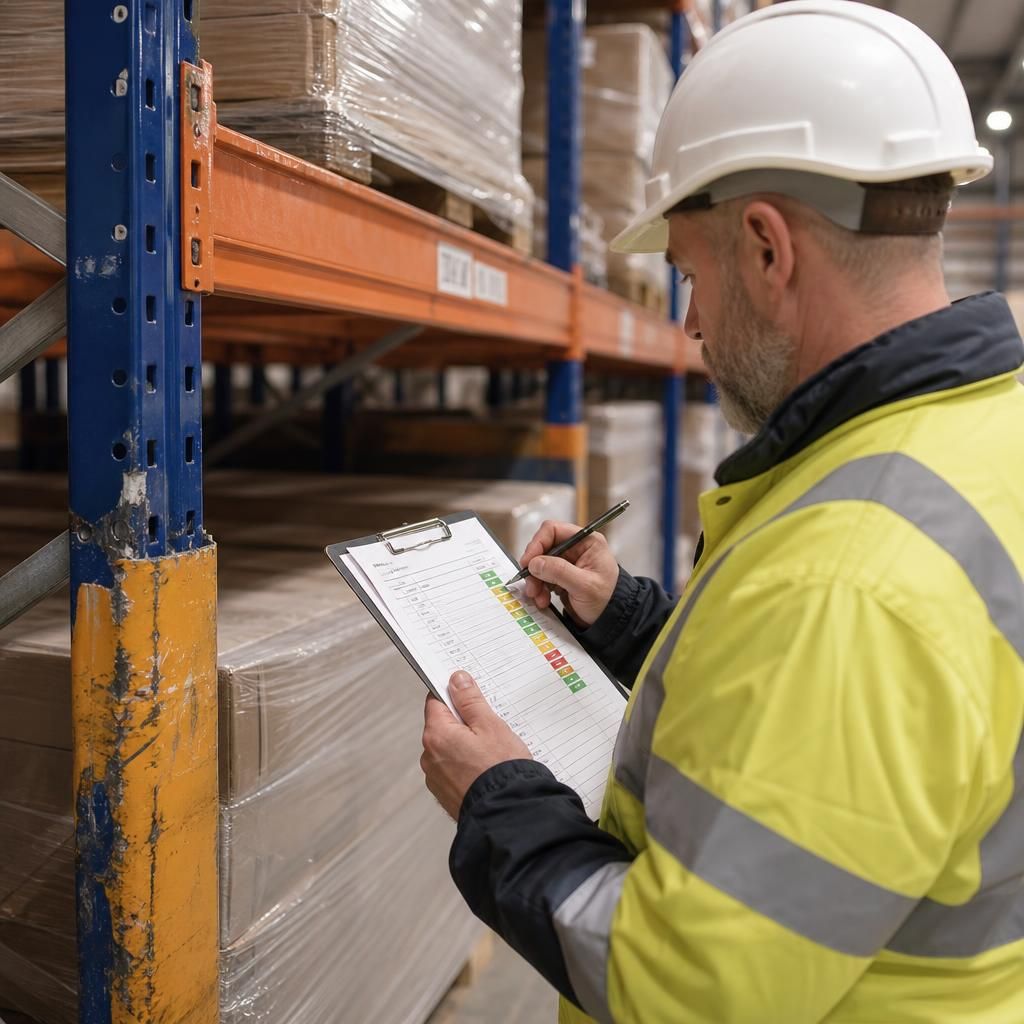
A key learning outcome of racking inspection training is the ability to turn an inspection finding into a clear, proportionate safety response. Participants learn to record the affected warehouse racking component and location, describe the observed defect accurately, assess its urgency and identify whether it requires monitoring, repair, isolation or specialist advice.
This approach helps prevent ambiguous reports and inappropriate corrective action. Inspectors are also taught to recognise the limits of their role: serious structural damage, unusual defects and unauthorised alterations must be escalated rather than repaired or approved without suitable technical competence. Clear records support managers, maintenance teams and competent specialists in keeping warehouse racking safe and compliant.
Book your racking inspection training course
Contact Able Racking to book your warehouse racking inspection training course and confirm the most suitable format for your team.