
What factors affect the cost of warehouse racking repairs?
The cost of warehouse racking repairs depends on the extent and location of the damage, the parts required, site access, labour and any work needed to make the system safe. A detailed inspection helps identify the correct repair method and provides a reliable quotation based on the actual condition of the warehouse racking.
The cost of warehouse racking repairs is mainly determined by the severity and location of the damage, the components required, site access, labour and any additional work needed to make the warehouse racking safe and compliant. An inspection is therefore essential before providing a reliable quotation, as apparently similar damage can require very different repair methods.
The main factors affecting the cost include:
- Extent of the damage: Minor impact damage may require a straightforward repair, while bent, split or severely distorted components may need replacement. Damage affecting the structural integrity of the warehouse racking generally requires more extensive work than cosmetic damage.
- Location and accessibility: Damage at a readily accessible bay is usually simpler to repair than damage in a busy aisle, at height or in an area obstructed by stock, equipment or other operations. Additional access equipment, isolation of the work area or temporary removal of goods can increase the total cost.
- Components and materials: The price depends on which parts are needed, such as frames, beams, bracing, guards, safety pins or other protective components. Availability, specification and compatibility with the existing warehouse racking system must be checked before replacement parts are ordered.
- Repair method: The appropriate solution may involve a component repair, a replacement part or a more substantial dismantling and reinstallation process. The method must be based on the manufacturer’s requirements, the condition of the system and the findings of the inspection, rather than on cost alone.
- Number of affected areas: Repairing several damaged bays during the same visit can be more efficient than arranging separate visits. However, widespread impact damage may indicate an underlying operational or protection issue, requiring a broader inspection and additional corrective work.
- Labour and specialist equipment: Costs can include inspection, planning, delivery, installation, dismantling and testing. Where work is carried out at height or in a restricted area, trained operatives and suitable access equipment may be necessary.
- Site conditions and working arrangements: Warehouse opening hours, restricted access, permit requirements, traffic management and the need to work around picking or loading operations can affect how long the work takes. Out-of-hours or urgent attendance may also change the labour and mobilisation cost.
- Safety and compliance requirements: The repair may need to include temporary protection, making the affected area safe, updating inspection records or carrying out follow-up checks. If the damage has affected the configuration or load capacity of the warehouse racking, further assessment and updated documentation may be required.
- Transport and delivery: Larger replacement components may need specialist handling or scheduled delivery. Delivery conditions, unloading arrangements and the distance to site can all contribute to the final price.
A quotation based only on photographs may be indicative, but it cannot always confirm whether hidden damage, incorrect loading or related defects are present. A proper inspection considers the affected component, its connections, surrounding bays and the way the warehouse racking is being used. This helps establish whether the proposed work will resolve the immediate defect or whether further action is necessary.
It is also important to distinguish the repair price from the potential cost of leaving damage untreated. A damaged component can worsen through continued loading, vehicle impact or repeated movement, potentially resulting in stock loss, operational disruption and more extensive repairs. The affected area should be assessed promptly and isolated or unloaded where required by the risk assessment.
To help control costs, provide accurate site information, identify any known impacts, confirm access arrangements and make relevant warehouse racking records available before the inspection. Clear information about load requirements, operating hours and any previous repairs allows the repair team to plan the correct parts, equipment and method.
The most dependable way to plan expenditure is to arrange a detailed warehouse racking inspection and request an itemised quotation. This should explain the identified damage, recommended repair method, replacement components, access requirements and any work needed to return the system to a safe condition. It should also make clear whether follow-up inspection, testing or preventative measures are recommended.
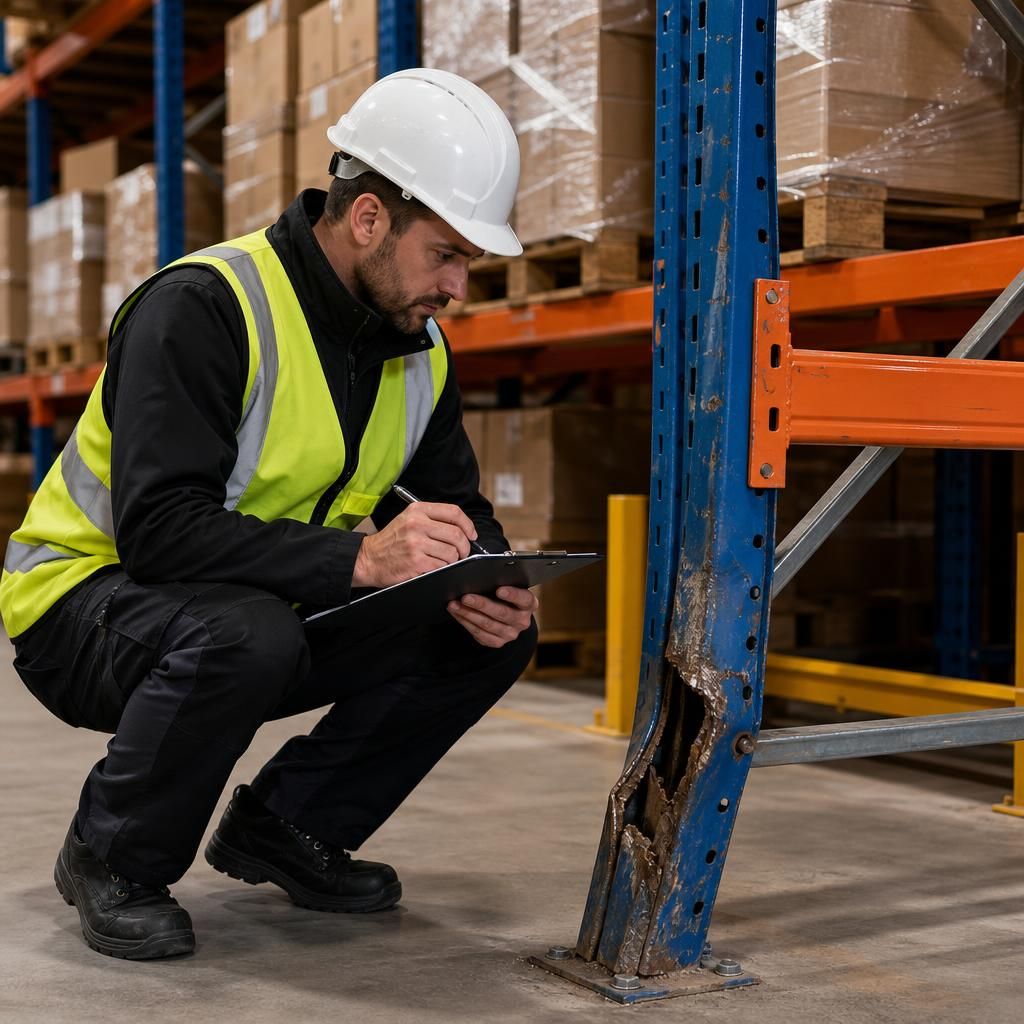
The most reliable way to establish the cost of warehouse racking repairs is a site inspection, because photographs may not show concealed damage, distorted connections or problems in adjacent bays. The inspection confirms the affected components, the repair method required and any access or safety controls needed before work begins.
A detailed quotation should distinguish between replacement parts, labour, access equipment, delivery and any follow-up checks. It should also identify whether the affected area needs to be unloaded or isolated, and whether changes to the warehouse racking configuration or load information require further assessment. Providing accurate details about the damage, site access and operating conditions helps the repair team plan efficiently and reduces the risk of unexpected costs.
Request a warehouse racking repair quotation
Request a detailed warehouse racking repair quotation from Able Racking. Share the damage details, site access arrangements and any relevant warehouse racking records so the repair method, parts and associated costs can be assessed accurately.