
How often should warehouse racking inspections be conducted for optimal safety and compliance?
Warehouse racking should receive a documented expert inspection at least every 12 months, with routine visual checks carried out at least weekly and after any impact, alteration or other significant change. The inspection frequency should also reflect risk, usage, damage history and site conditions, so higher-risk systems may require more frequent checks.
Warehouse racking should receive a documented inspection by a technically competent person at least every 12 months. In addition, operators should carry out routine visual checks at least weekly and immediately after any collision, alteration, relocation, overloading event or other significant change. The inspection frequency should be set through a risk assessment, so busy or higher-risk systems may need more frequent expert inspections.
There is no single inspection interval that is suitable for every warehouse. The responsible person should consider how the system is used, the type of loads stored, the equipment operating nearby and the consequences of a failure. A documented annual inspection provides an important baseline, but it does not replace regular checks by trained warehouse staff.
A practical inspection schedule includes:
- Routine visual checks: trained staff should look for obvious damage, displaced loads, missing components, leaning frames, damaged protection and other unsafe conditions at least weekly, or more often where the risk assessment requires it.
- Immediate post-incident checks: an inspection should take place after any forklift or handling-equipment impact, dropped load, suspected overload, fire, flood or other event that could affect structural integrity.
- Periodic expert inspections: a technically competent inspector should complete a thorough documented inspection at least every 12 months. The inspection should cover the structure, components, protection, load information, operating practices and any previous concerns.
- Additional inspections after change: alterations to the layout, beam levels, components, load configuration or handling equipment can change the risks and should trigger a review before the system is put back into normal use.
Factors that may require more frequent inspections include high traffic levels, frequent forklift movements, demanding loading cycles, poor housekeeping, outdoor or corrosive conditions, uneven floors, a history of impact damage and regular changes to stored goods. Systems supporting heavy or irregular loads also need careful monitoring because small defects can have serious consequences.
Weekly checks should be straightforward and focused on visible conditions. Staff should report bent or distorted frames and beams, damaged bracing, missing safety pins, loose fixings, displaced components, inadequate protection, unsafe loads and signs that the structure is no longer plumb or stable. They should not attempt to straighten, remove or repair damaged components unless authorised to do so.
Any item presenting an immediate danger should be isolated and unloaded where this can be done safely. The responsible person should then arrange an assessment by a competent inspector or suitably qualified repair specialist. Repairs should be completed using appropriate components and methods, followed by a suitable reinspection before the affected area returns to service.
Inspection records should show the date, areas covered, findings, risk classification, actions required, the person responsible and the date of close-out. Keep these records with relevant drawings, load notices, previous reports and repair documentation. Reviewing recurring defects can help identify whether the inspection interval, staff training, traffic management or operating procedures need to change.
The annual expert inspection is therefore a minimum planning point rather than a complete safety programme. A combination of weekly visual checks, immediate post-incident inspections and risk-based expert assessments gives warehouse operators a more reliable way to protect staff, demonstrate control of safety risks and keep warehouse racking compliant and serviceable.
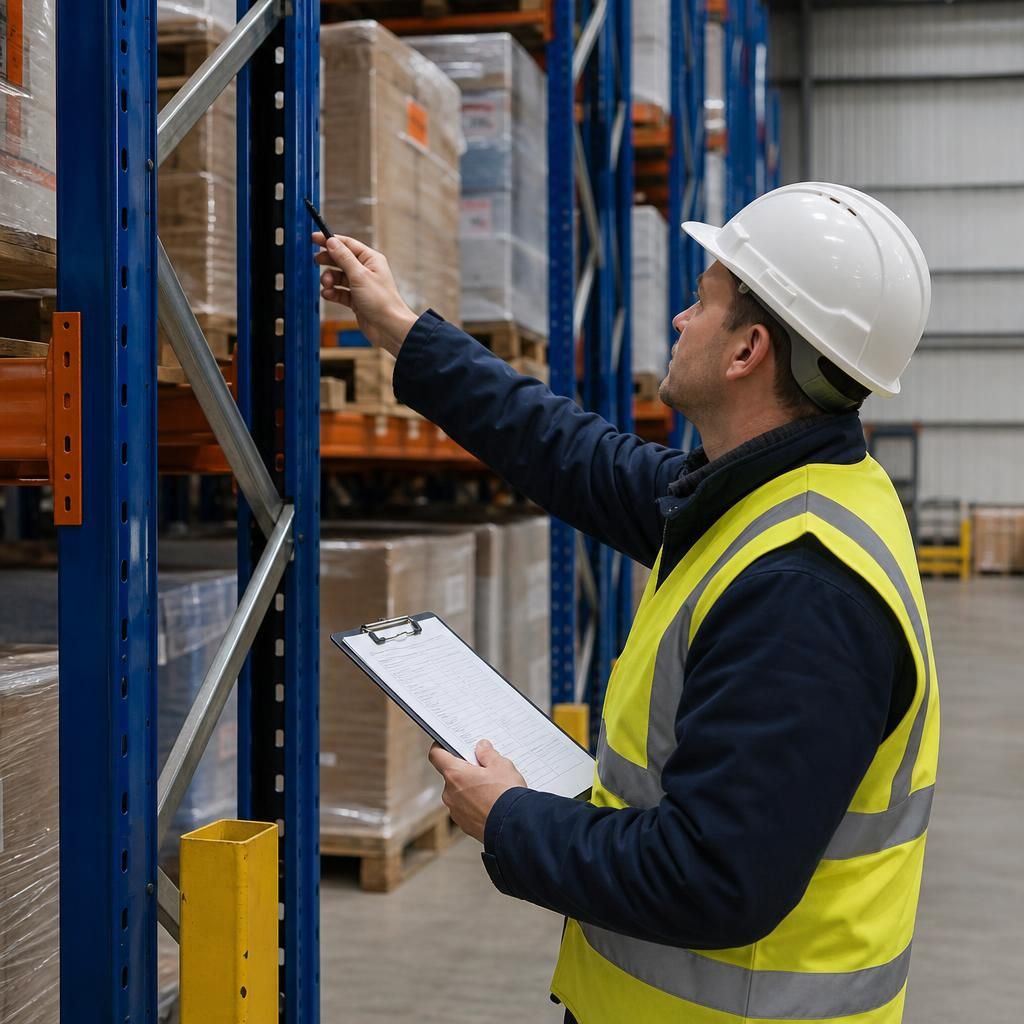
Warehouse racking should have a documented inspection by a technically competent person at least every 12 months, supported by routine visual checks carried out by trained staff at least weekly. This annual inspection is a minimum baseline, not a substitute for monitoring day-to-day conditions.
An additional inspection is needed immediately after a forklift impact, dropped load, suspected overload, alteration, relocation or any event that could affect structural integrity. Higher-risk systems may also require more frequent expert inspections, based on traffic levels, load types, damage history, operating conditions and the findings of the site risk assessment.
Book Your Warehouse Racking Inspection
If your warehouse racking inspection is due, or your storage system has been altered or damaged, contact Able Racking to arrange a thorough assessment by a technically competent inspector.