
What are the maintenance requirements for automated racking and ASRS systems?
Automated racking and ASRS systems require planned inspections, manufacturer-recommended servicing, software and control-system checks, and prompt repairs by competent specialists. Maintenance should cover the storage structure, conveyors, cranes, sensors, safety devices and electrical systems, with accurate records kept to support safe, compliant and reliable operation.
Automated racking and ASRS systems require a documented, risk-based maintenance programme covering the storage structure, automated machinery, conveyors, controls, software, electrical equipment and safety devices. Maintenance should combine routine operator checks, planned servicing, competent inspections and prompt repairs, with all work recorded and carried out in line with the manufacturer’s instructions and applicable UK health and safety requirements.
Maintenance should cover the complete system, not just the visible warehouse racking. An ASRS installation operates as an integrated system, so a fault with a sensor, control panel or conveyor can affect storage equipment, access points and wider warehouse operations. A suitable programme normally includes the following areas:
- Warehouse racking structure: inspect frames, beams, bracing, connections, guides, rails, decking and protection for impact damage, distortion, corrosion, loose components or other defects.
- Storage equipment: check pallets, load supports, shuttle equipment, stacker cranes, lifting mechanisms and other handling interfaces for wear, damage and correct alignment.
- Conveyors and transfer equipment: examine belts, rollers, chains, drives, motors, bearings, transfer points and guarding. Check that loads move smoothly without snagging or unsafe accumulation.
- Electrical and control equipment: inspect control panels, wiring, switches, drives, batteries, charging equipment and communication connections. Unauthorised modifications should be investigated and corrected.
- Sensors and automation: test photoelectric sensors, position sensors, scanners, encoders, limit switches and other detection equipment. They must identify loads and equipment positions accurately.
- Safety systems: test emergency stops, interlocked gates, light curtains, safety scanners, access controls, audible and visual warnings, isolation points and other protective devices.
- Software and data: review programmable controls, warehouse management system interfaces, alarms, user permissions, backups and fault logs. Updates should be controlled, tested and documented before being introduced into live operation.
Routine operator checks should identify obvious defects before equipment is used. Trained operators can check for unusual noise or vibration, damaged loads, obstructions, oil leaks, alarm messages, misaligned equipment and visible damage to the warehouse racking or guarding. These checks do not replace a technical inspection. Any defect affecting safe operation should be reported immediately, with the affected area isolated where necessary.
Planned servicing should follow the equipment manufacturer’s recommendations and the findings of previous inspections. Servicing may include lubrication, adjustment, cleaning, replacement of wear parts, tensioning, alignment checks, calibration and inspection of drive systems. The required frequency depends on the design of the ASRS, operating hours, load characteristics, environment and history of faults. Dust, temperature, humidity, corrosive substances and heavy traffic can all increase maintenance demands.
Thorough inspections should be completed by a competent person who understands both warehouse racking safety and automated machinery. The inspection should consider damage caused by impact, overloading, incorrect pallet dimensions, poor housekeeping, unauthorised alterations and repeated equipment faults. Findings should be prioritised so that serious risks are dealt with immediately and less urgent defects are assigned a clear completion date.
Where a defect could affect structural stability, load handling, access control or the operation of a safety device, the equipment should be taken out of service until it has been assessed. Temporary repairs, bypassed interlocks and continued operation with recurring alarms can create additional risk. Repairs should use suitable replacement parts and be completed by appropriately trained and authorised personnel.
Safe maintenance procedures are essential. Before work begins, the relevant equipment should be stopped, isolated and secured against unexpected movement or re-energisation. Isolation may need to cover electrical, mechanical, hydraulic, pneumatic and stored-energy sources. Maintenance personnel should follow a documented permit or lock-off process where appropriate, use suitable access equipment and confirm that guards and safety devices have been reinstated before returning the system to service.
Maintenance also needs to account for changes to the installation. Altering rack positions, load profiles, pallet types, conveyor routes, software settings or safety zones can affect the original design assumptions. Any change should be risk assessed, approved by the responsible parties and followed by suitable testing and updated drawings, operating instructions and training.
Accurate records demonstrate control of the system. Keep inspection reports, servicing schedules, defect notifications, repair certificates, test results, software changes, isolation records and staff training records together. Records should identify the equipment inspected, the condition found, actions required, the person responsible and the date of completion. Trend analysis can also reveal repeated impacts, failing components or areas where operating procedures need improvement.
Training is part of maintenance. Operators should know how to complete routine checks, report damage, respond to alarms and use emergency stops. Maintenance staff need training relevant to the specific ASRS controls, machinery and isolation arrangements. Refresher training is appropriate when equipment, software, responsibilities or working practices change.
A practical maintenance plan should therefore include a current asset register, manufacturer’s instructions, risk assessments, routine checklists, planned service intervals, competent inspections, defect escalation procedures and controlled return-to-service checks. Reviewing the plan after incidents, system modifications or repeated failures helps keep automated racking and ASRS equipment safe, compliant and dependable throughout its working life.
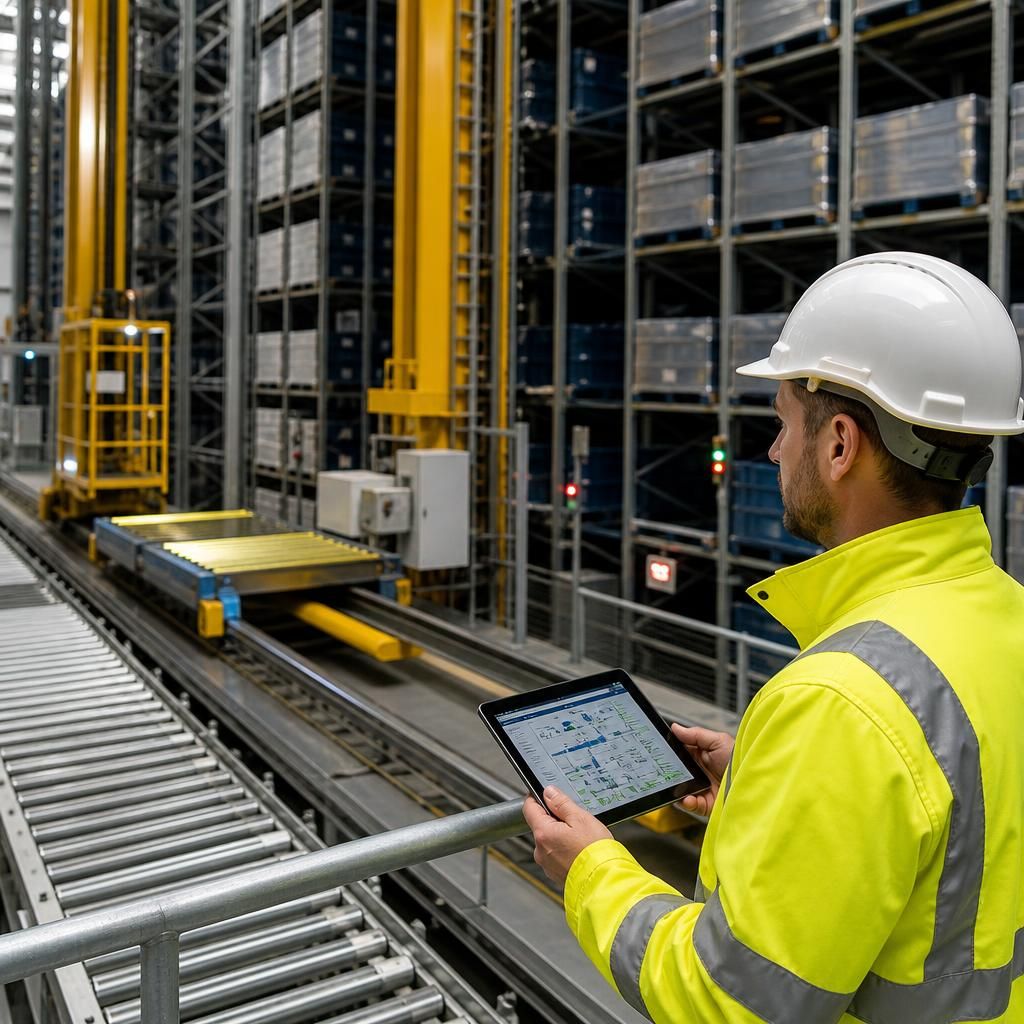
Maintenance for automated racking and ASRS systems must cover the complete installation, including the warehouse racking structure, conveyors, stacker cranes, sensors, controls and safety devices. A fault in one part can affect the safe movement of loads elsewhere, so inspections and servicing should assess how the components operate together rather than treating each item in isolation.
Routine operator checks should identify visible damage, unusual noise, alarm messages, obstructions, leaks and misaligned loads. Planned servicing and competent technical inspections should then examine wear, alignment, lubrication, electrical connections, guarding, emergency stops and access controls. Any defect that could affect structural stability, load handling or safe access should be reported promptly, with the affected equipment isolated until a suitable repair has been completed.
Keep inspection findings, service records, repairs, test results and return-to-service checks together. This provides a clear maintenance history and helps identify recurring impacts, component failures or changes in operating conditions that require the maintenance programme to be reviewed.
Arrange an Automated Racking & ASRS Maintenance Review
Arrange an automated racking and ASRS maintenance review with Able Racking to assess your system’s structure, machinery, controls and safety devices. We can help identify defects, prioritise remedial work and maintain reliable, compliant operation.