
What are the maintenance requirements for drive-through warehouse racking systems?
Maintenance for drive-through warehouse racking systems includes regular inspections, prompt repair or replacement of damaged components, checks on frames, rails, guides, bracing and load signs, and keeping storage and access areas clear. A planned maintenance programme, supported by trained operators and a competent warehouse racking inspector, helps identify impact damage, instability and wear before they affect safety or compliance.
Drive-through warehouse racking systems require a planned maintenance programme covering routine visual checks, formal inspections, prompt repairs and careful control of forklift movements. The frames, rails, guides, bracing, protection, load signs and surrounding floor must remain in good condition, with damaged components taken out of service or repaired using suitable, approved parts.
Routine visual checks should be carried out by trained warehouse personnel during normal operations. These checks should look for impact damage, bent or displaced components, loose connections, missing safety devices, damaged guide rails, leaning frames, damaged bracing and signs that the system has moved from its original position. Operators should also check for pallets that are broken, poorly positioned or unsuitable for the system.
Forklift traffic through the storage lanes creates particular maintenance risks. The entry points, guide rails, upright protectors and lower frame areas are vulnerable to repeated contact. Any damage should be reported immediately rather than left until the next planned inspection. A clear reporting process, supported by a defect log, helps ensure that issues are assessed, controlled and closed out.
Formal warehouse racking inspections should be completed by a competent person at intervals based on the risk assessment and relevant guidance. The inspection programme should include:
- Visual checks by trained operators as part of normal warehouse activities.
- More detailed inspections by a nominated person at regular intervals, with weekly checks commonly used where the system is in frequent operation.
- A recorded expert inspection at least every twelve months, in line with the principles of BS EN 15635, unless a shorter interval is justified by the working environment or risk assessment.
The inspection frequency may need to increase where forklifts operate intensively, loads are frequently changed, the warehouse has narrow access routes or the system has a history of impact damage. Records should identify the area inspected, defects found, actions required, responsible persons and completion dates.
Structural components should be checked for damage and secure connections. This includes uprights, horizontal beams, diagonal bracing, baseplates, anchors, rails, guide components and any rear or end protection. Particular attention should be given to distortion, cracking, corrosion, missing fixings and changes in alignment. Components must not be straightened, welded or modified on site unless the work has been specifically approved by a suitably qualified person and is consistent with the system design.
Guide rails and lane equipment need special attention because they help position forklifts and pallets within the storage lanes. Damaged or displaced guides can increase the likelihood of contact with the frame. Rails should be kept securely fixed, correctly aligned and free from obstructions. Any guide components that are worn or no longer provide effective protection should be repaired or replaced before the lane is returned to normal use.
Load control is also part of maintenance. Load notices must remain visible and must match the current layout, beam levels, pallet types and permitted loads. Changes to the configuration should be reviewed by a competent person before use. Operators should not exceed stated capacities, place unsuitable pallets into the lanes or store loads that overhang and could strike the structure.
Storage lanes and access routes should be kept clear of loose packaging, damaged pallets, debris and equipment that could obstruct forklift movement. Floors should be checked for defects that may affect vehicle stability or cause pallets to be placed unevenly. Good housekeeping reduces impact risks and makes structural damage easier to identify.
Repairs and damaged components should be managed according to the severity of the defect:
- Where damage presents an immediate risk of collapse or further impact, the affected lane or area should be unloaded, isolated and clearly marked to prevent use.
- Where damage is less severe but still requires attention, interim controls should be applied and the repair scheduled without unnecessary delay.
- Where components are damaged beyond safe use, they should be replaced with compatible parts approved for the system.
- The area should be re-inspected after repair before loads and vehicles return to normal operation.
Repairs should not be concealed by paint or completed with makeshift materials. A replacement component must be suitable for the original design and installed in accordance with the manufacturer’s instructions. If the system has been altered, overloaded or involved in a significant impact, its suitability should be reviewed before it is put back into service.
Operator training supports the maintenance programme. Forklift operators and warehouse staff should understand the permitted load limits, correct pallet placement, lane access arrangements, impact reporting procedure and actions to take when damage is found. Refresher training is appropriate when equipment, storage layouts or working practices change, or when inspection records show repeated problems.
Maintenance records should be retained with inspection reports, repair details, layout information and evidence that corrective actions have been completed. Reviewing these records can reveal recurring impact points, unsuitable pallets, overloaded positions or training issues. Preventative action may include improved protection, revised traffic controls, changes to pallet quality checks or adjustments to the storage layout.
A competent warehouse racking inspector can assess the complete system, identify defects that may not be obvious during routine checks and advise on proportionate corrective action. Combining operator vigilance, documented inspections and properly controlled repairs helps keep drive-through warehouse racking systems safe, compliant and reliable throughout their working life.
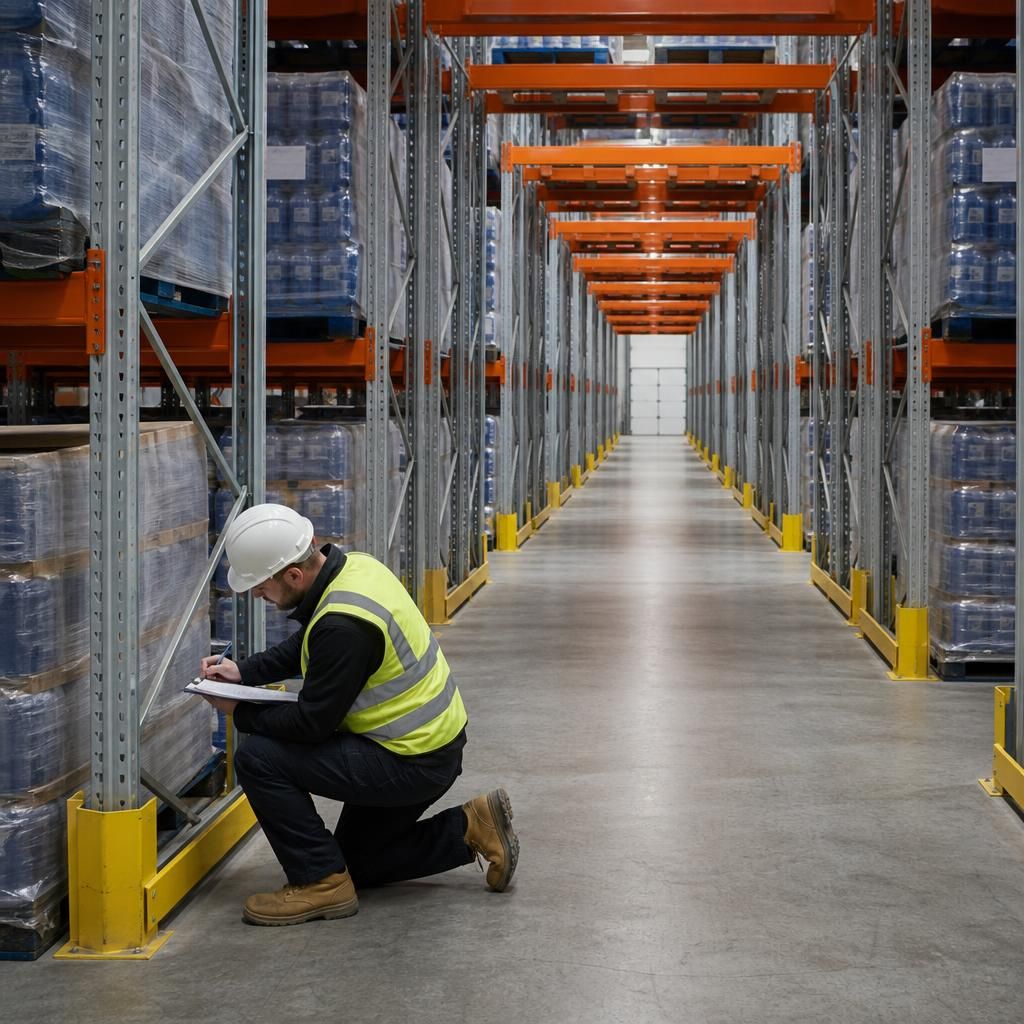
Planned inspections and prompt defect control are central to maintaining drive-through warehouse racking systems. Routine checks should identify impact damage, displaced guides, bent uprights, loose connections, damaged bracing and unsafe pallets before these issues affect stability or forklift movements.
When damage is found, the affected lane or area should be assessed immediately. Serious defects may require unloading, isolation and clear marking to prevent further use. Repairs should use compatible, approved components and follow the system manufacturer’s instructions; damaged parts should not be straightened, welded or concealed with paint. After repair, the area should be re-inspected before loads and vehicles return to normal operation.
Arrange a drive-through warehouse racking maintenance inspection
Arrange a drive-through warehouse racking maintenance inspection to identify defects, confirm corrective actions and support continued safe operation. Contact Able Racking to discuss your inspection requirements.