
What maintenance practices are essential for ensuring the longevity and safety of a cantilever racking system?
Essential maintenance for a cantilever racking system includes scheduled inspections, prompt repair of damage, checking load labels and keeping the structure clear of unauthorised alterations or overloading. Regularly inspect columns, arms, bracing, anchors and protective components, and remove any damaged parts from service until assessed and repaired by a competent professional.
Essential maintenance for a cantilever racking system combines routine visual checks, planned inspections, prompt repairs, accurate load information and strict control of how the system is used. Columns, arms, bracing, connections, anchors, protective components and the supporting floor should all be checked for damage, movement, corrosion or unauthorised alteration. Any component that may affect structural safety should be taken out of service until it has been assessed and repaired or replaced by a competent person.
Carry out routine visual checks
Warehouse personnel should look over the system regularly, particularly after an impact, unusual loading event or change to operating conditions. Checks should cover:
- Bent, twisted, dented or split columns and arms.
- Loose, missing or damaged bolts, pins, clips and other connections.
- Displaced or damaged bracing members.
- Cracked welds, distorted sections or signs of excessive deflection.
- Corrosion, especially where moisture, chemicals or outdoor conditions are present.
- Damaged end stops, arm restraints, guards and other protective components.
- Loose or damaged floor anchors and signs that the base has moved.
- Cracks, settlement or other deterioration in the supporting floor.
Small defects can worsen under repeated loading, forklift contact or vibration. Do not assume that a component is safe because the system remains upright or continues to hold stock.
Arrange planned inspections by a competent person
Routine user checks do not replace a formal inspection. A technically competent inspector should examine the complete installation at planned intervals, taking account of the environment, loading, traffic levels, previous damage and the manufacturer’s instructions. HSE guidance recommends that an expert inspection of workplace storage equipment is carried out at intervals not exceeding twelve months, with more frequent inspections where the risk assessment indicates this is necessary.
The inspection should produce a clear record of findings, including the location and severity of defects, immediate controls, recommended repairs and the person responsible for completing them. Inspection records should be retained with the system’s maintenance and installation information so that recurring problems can be identified.
Respond promptly to damage
Where damage is found, isolate the affected area and prevent further loading until the condition has been assessed. Clearly mark unsafe bays or arms and remove stock if necessary. Do not straighten, weld, drill or modify a damaged structural component on site unless the repair method has been designed and approved by a suitably qualified person.
Repairs should use compatible replacement components and follow the original design requirements. After repair, the system should be checked before it is returned to service. If the damage has resulted from vehicle impact, investigate the cause as well as repairing the structure. Review traffic routes, visibility, operator behaviour, protection and working procedures to reduce the chance of recurrence.
Check load information and loading practices
Load labels should remain visible, legible and securely fixed. They should reflect the actual configuration, including the number and position of arms, bay spacing, supported materials and any changes approved since installation. If the layout or loading arrangement changes, obtain confirmation that the system remains suitable before using it.
Operators should follow the stated load limits and keep loads stable, evenly distributed and within the intended support area. Avoid concentrated loads, excessive overhang, impact loading and placing materials on damaged or unsuitable arms. Long, flexible or irregular stock may require additional controls to prevent rolling, sliding or falling.
Never increase capacity by adding arms, changing their position, extending the structure or altering bracing without a competent design review. Unauthorised modifications can change the load path and reduce stability even when the alteration appears minor.
Maintain connections, anchors and stability
Connections should be checked for looseness, wear, distortion and missing retaining devices. Floor anchors must remain secure and appropriate for the supporting slab. If an anchor has pulled out, the floor is damaged or the baseplate no longer sits correctly, stop using the affected area until it has been assessed.
Keep bracing complete and correctly connected. Do not remove braces to create access or make room for stock. Where the system is installed outdoors or in a corrosive environment, use a maintenance plan suited to the exposure and inspect vulnerable surfaces more frequently.
Keep the area clear and protect the structure
Good housekeeping is part of structural maintenance. Keep access routes, working areas and the space around the bases clear of waste, loose packaging and materials that could obstruct inspection or create a trip hazard. Store loads so they cannot contact columns, arms or bracing during placement and removal.
Where vehicles operate nearby, maintain suitable impact protection and keep it correctly positioned. Inspect guards after contact and replace them if they are cracked, displaced or no longer provide the intended protection. Protection does not make vehicle impact acceptable; damaged structural components still require assessment.
Control cleaning, corrosion and environmental risks
Remove dust, dirt and spilled materials that could conceal defects or retain moisture. Use cleaning methods and products that will not damage coatings or create additional corrosion. Check areas exposed to water, chemicals, temperature changes or outdoor weather for early signs of deterioration.
Corrosion should be assessed rather than covered with paint alone. Surface treatment may be suitable for minor, non-structural deterioration, but loss of section, pitting or corrosion around connections requires advice from a competent professional.
Keep records and review the maintenance plan
Record routine checks, formal inspections, damage reports, repairs, replaced components and any restrictions placed on the system. Review the maintenance plan after an incident, change of use, building alteration, loading change or repeated defect.
Staff who load and unload the system should know the permitted loads, safe handling method, reporting process and circumstances in which the equipment must be taken out of use. Effective maintenance is therefore a continuing process: inspect, record, control the immediate risk, repair correctly and verify the system before normal use resumes.
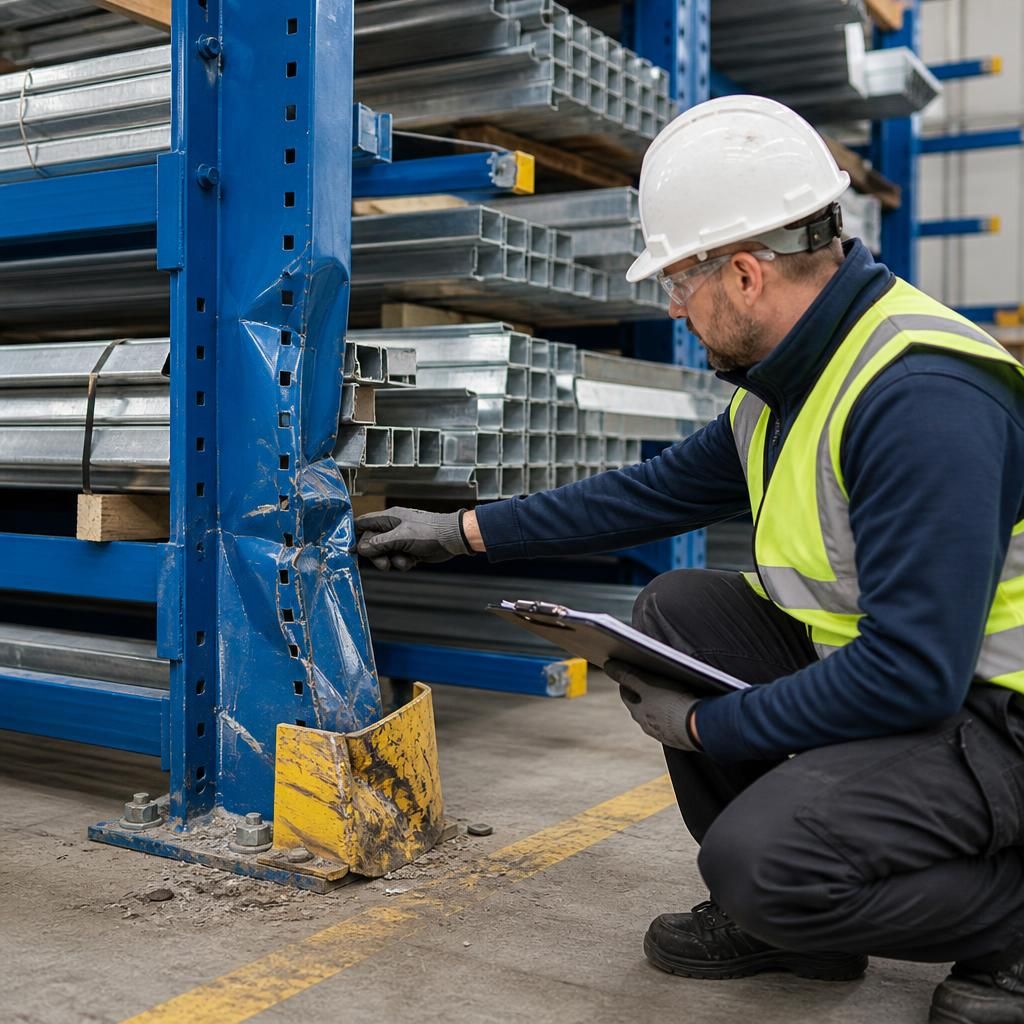
Promptly isolating and repairing damage is one of the most important maintenance practices for a cantilever racking system. After a vehicle impact, unusual loading event or visible defect, stop using the affected area, prevent further loading and arrange an assessment by a competent professional.
Do not straighten, weld, drill or modify damaged columns, arms, bracing or connections without an approved repair method. The cause of the damage should also be investigated, whether it involves vehicle movements, poor visibility, unstable loads or unsuitable operating procedures. Only return the system to service after compatible replacement components have been correctly fitted and its safety has been verified.
Book Your Cantilever Racking Inspection
Book your cantilever racking inspection with Able Racking to identify defects, confirm safe loading and maintain compliance. Our competent inspectors provide clear findings and practical recommendations for any required repairs.