
What are the primary safety hazards identified during warehouse racking audits?
The primary safety hazards identified during warehouse racking audits include damaged or distorted components, overloading, unstable loads, inadequate protection from vehicle impact, missing safety measures and incorrectly installed or altered systems. Audits also identify poor housekeeping, blocked access routes and insufficient inspection records, allowing defects to remain unreported and increase the risk to staff, stock and operations.
The primary safety hazards identified during warehouse racking audits are damaged or distorted components, overloading, unstable or incorrectly positioned loads, inadequate protection from vehicle impact, missing safety components, poor installation or unauthorised alterations, and inadequate inspection controls. Audits also examine housekeeping, access routes, operating practices and the condition of the surrounding work area, because these factors can increase the likelihood and consequences of a racking failure.
A warehouse racking audit should not be limited to a visual check of the uprights and beams. A competent inspection considers the complete storage system, how it is being used, the condition of its components and whether the arrangements remain suitable for the loads, equipment and working practices on site.
Damaged or distorted components
Impact damage is one of the most common hazards found during inspections. Forklift trucks and other materials-handling equipment can strike uprights, bracing, beams, guards and floor fixings. Damage may appear as dents, bends, twists, buckled sections, displaced connections or scraped protective finishes. Even where a component still appears serviceable, distortion can reduce its capacity and affect the stability of adjoining parts.
Audits also identify damage caused by dropped loads, contact during loading and unloading, corrosion or deterioration over time. Defects should be assessed by a suitably competent person and categorised according to their seriousness. Items requiring immediate action may need to be unloaded and taken out of use until repaired or replaced.
Overloading and incorrect load information
Warehouse racking can become unsafe when beams, bays or individual storage levels are loaded beyond their assessed capacity. Auditors check whether the stored loads are compatible with the system design and whether the relevant safe working load information is available, legible and being followed. They may also compare the actual configuration with the original design, including beam lengths, support levels, decking and the type of stored goods.
Overloading is not always obvious. A bay may be overloaded because goods have been concentrated in one area, pallets are heavier than expected, or the loading arrangement differs from the design assumptions. Missing or inaccurate load notices make it harder for warehouse staff to identify these risks.
Unstable, damaged or incorrectly positioned loads
Loads should be stable, suitable for the pallet or support surface and positioned so that their weight is distributed correctly. Audits look for leaning pallets, broken boards, damaged containers, loose goods, overhanging products and loads that are not fully supported. They also identify goods placed too close to the edge of a beam or in a position that could fall during handling.
Uneven loading can place unexpected forces on the structure. A load that projects into an aisle can be struck by handling equipment, restrict visibility or reduce the clearance needed to move safely. Smaller items should be contained where necessary, particularly when there is a risk of objects falling into work areas or onto access routes.
Inadequate protection from vehicle impact
Where powered handling equipment operates near storage systems, suitable protection is needed at exposed uprights, corners, aisle ends and other vulnerable locations. An audit considers whether guards or barriers are correctly positioned, securely fixed and appropriate for the likely impact risk. It also checks whether existing protection has itself been damaged or displaced.
Protection is not a substitute for safe operating practices. Poor visibility, narrow manoeuvring areas, unsuitable traffic routes and insufficient separation between people and vehicles can all contribute to impact damage. The inspection should therefore consider the relationship between the storage layout and day-to-day warehouse movements.
Missing, loose or unsuitable components
Racking systems rely on correctly fitted components to provide their intended strength and stability. Auditors check for missing or loose beams, locking pins, braces, connectors, anchors, baseplates, safety bars and other specified parts. They also look for components that have been replaced with unsuitable items or modified in a way that has not been assessed.
A missing locking device, for example, can allow a beam to become displaced during loading. Missing bracing or inadequate floor anchorage can affect the stability of the structure. Small omissions should not be dismissed simply because the main frame remains upright; the significance of each defect depends on the design and the way the system is used.
Poor installation, modification or configuration
Audits can reveal systems that do not match the approved design or have been altered without technical assessment. Common examples include repositioned beams, removed braces, extended frames, changes to aisle widths and the addition of storage levels or accessories without confirming their compatibility.
Installation defects may include inadequate anchorage, incorrect component connections, unsuitable floor conditions, out-of-plumb frames or insufficient clearances. Any change to the configuration should be reviewed by a suitably qualified or competent person before it is put into service. A system that was safe in its original arrangement may not remain safe after an unplanned alteration.
Insufficient clearances and access restrictions
Auditors assess whether there is adequate clearance between stored loads, vehicles, people, building features, lights, sprinklers and other services. Insufficient clearance increases the chance of contact and can make it difficult to retrieve loads without striking the structure. Blocked or narrowed aisles can also prevent safe access for inspection, maintenance and emergency response.
Escape routes, fire-fighting equipment, pedestrian walkways and operational access points must remain clear. Stock temporarily placed in an aisle can become a recurring hazard if there is no effective control over housekeeping and storage discipline.
Poor housekeeping and unsafe working practices
Damaged pallets, loose packaging, spillages, waste materials and abandoned equipment can create trip hazards and interfere with safe handling activities. They may also conceal damage at the base of an upright or prevent a proper inspection. Audits identify whether the area is being kept sufficiently clear for staff, vehicles and emergency access.
Unsafe practices may include climbing on beams, using unsuitable equipment to reach loads, pushing loads into position with vehicles or storing goods outside designated locations. These behaviours can damage the system and expose staff to falling-object, collision and manual-handling risks.
Corrosion, deterioration and environmental conditions
Moisture, chemicals, temperature changes and heavy use can affect the condition of components and floor fixings. An audit checks for corrosion, flaking finishes, weakened sections and deterioration that could reduce structural performance. The inspection should also consider whether the storage system is suitable for the environment in which it operates.
Where deterioration is identified, the cause should be addressed as well as the visible defect. Cleaning, improved housekeeping, leak control or changes to the operating environment may be needed to prevent the problem from returning.
Inadequate inspection, reporting and follow-up
A physical defect becomes a greater operational risk when it is not reported, recorded and corrected. Audits examine whether staff know how to report damage, whether routine checks are being completed and whether reported defects are followed through to closure. They also review inspection records, action logs, repair evidence and any restrictions placed on unsafe bays.
Records should identify the location and nature of each defect, the action required, the responsible person and the completion status. Temporary measures, such as unloading a damaged bay or isolating an area, should remain in place until a competent person confirms that the hazard has been resolved.
How audit findings should be managed
Findings should be prioritised according to the risk they present. Serious damage, instability, falling-load risks or evidence of overloading may require immediate isolation and unloading. Less urgent defects should still be assigned a clear corrective action and completion date. Repairs should be carried out using suitable components and methods, with the system rechecked before normal use resumes.
Regular inspections, competent repairs, clear load information, effective operator training and good housekeeping work together to control these hazards. A detailed warehouse racking audit provides the evidence needed to identify weaknesses early, protect staff and stock, and keep the storage system safe, compliant and fit for purpose.
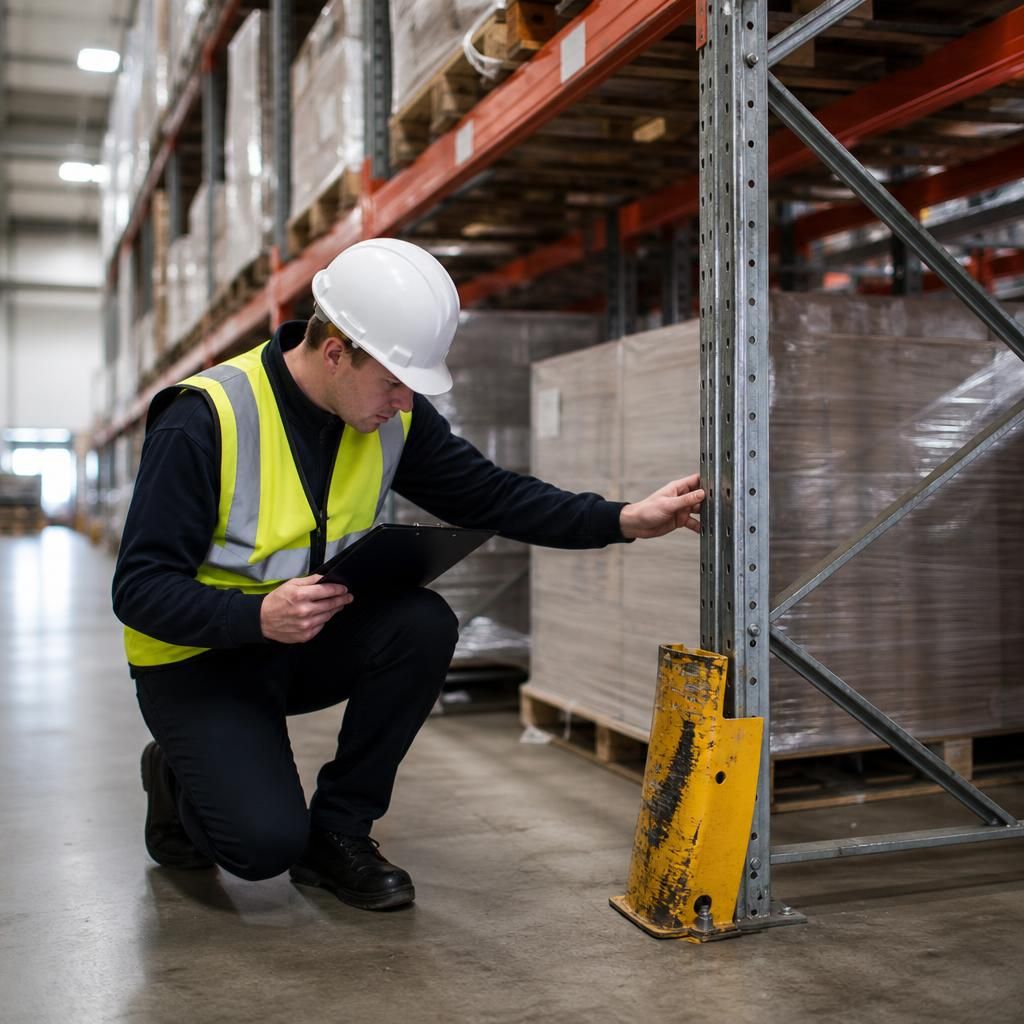
Impact damage is a primary hazard identified during a warehouse racking audit because forklift trucks and other handling equipment can weaken uprights, braces, beams, connections and floor fixings. Dents, bends, twists, displaced components and damaged protective finishes should not be dismissed as cosmetic defects, as distortion can affect the stability and load capacity of the wider storage system.
A competent inspection records the location and severity of each defect and determines whether the affected area can remain in service. Serious damage, instability or a falling-load risk may require the bay to be unloaded and isolated immediately. Repairs should use suitable components and approved methods, followed by a reinspection before normal operations resume.
Book Your Warehouse Racking Audit
Book your warehouse racking audit with Able Racking to identify safety hazards, prioritise corrective action and keep your storage system compliant and fit for purpose.