
What are the potential consequences of neglecting regular warehouse racking certification?
Neglecting regular warehouse racking certification can leave damage, overloading and installation defects undetected, increasing the risk of rack failure, falling loads, injuries and operational disruption. It can also contribute to non-compliance with workplace safety duties, costly emergency repairs and potential enforcement or liability issues.
Neglecting regular warehouse racking certification can allow damage, overloading, poor installation and unauthorised changes to remain undetected. These defects may cause falling goods, partial or complete warehouse racking failure, injuries, operational disruption, enforcement action and substantial repair costs.
A warehouse racking certification process provides documented evidence that the condition, configuration and use of a warehouse racking system have been assessed by a competent professional. When certification is allowed to lapse, a business loses an important opportunity to identify developing faults before they become serious incidents.
- Increased risk of collapse and falling loads: Impact damage, bent components, missing safety parts, overloaded beams and incorrectly positioned loads can reduce the capacity and stability of a warehouse racking system. Without regular assessment, these issues may remain in service until goods fall or part of the structure fails.
- Greater risk of injury: Employees, contractors and visitors may be exposed to falling stock, unstable loads, sharp damaged components or an unsafe warehouse racking structure. An incident can result in serious injury and may also affect staff confidence and safe working practices.
- Failure to meet workplace safety duties: Businesses have a responsibility to provide and maintain safe work equipment and a safe workplace. Although the term certification may be used commercially, the underlying inspection and maintenance duties remain important. Failing to arrange appropriate warehouse racking inspections and act on findings can make it more difficult to demonstrate that these duties have been met.
- Enforcement and liability concerns: Following an incident, regulators, insurers or legal representatives may ask for inspection records, evidence of remedial work and proof that competent people assessed the warehouse racking. Missing, outdated or incomplete documentation can weaken the business’s position and increase the risk of enforcement or liability proceedings.
- Unexpected repair and replacement costs: Minor damage is generally easier to isolate and repair than widespread structural deterioration or a collapse. Delayed action can lead to replacement components, specialist support, stock write-offs and urgent work outside normal operating arrangements.
- Operational disruption: Unsafe warehouse racking may need to be taken out of use immediately. Affected aisles or storage areas can then be closed while loads are removed, goods are relocated and repairs are completed. This may delay picking, replenishment, dispatch and customer orders.
- Damage to stock and equipment: A failed beam, frame or load can damage stored products, handling equipment, flooring and nearby warehouse racking. The resulting loss may extend beyond the original defect and affect several areas of the operation.
- Insurance and audit difficulties: Insurers, landlords, customers and internal auditors may request current inspection evidence. If a business cannot show a consistent process for assessing and maintaining warehouse racking, it may face additional questions about risk controls and claims management.
Neglect can also hide changes made during normal warehouse activity. New loads, altered beam levels, removed components, relocated safety equipment and changes to forklift routes can affect the suitability of a warehouse racking system. Certification should therefore be reviewed after significant alterations, impact damage or changes in loading arrangements, rather than treated as a one-off administrative task.
Regular warehouse racking certification does not replace routine visual checks by trained employees. Staff should continue to report impacts, visible damage, displaced loads and other concerns immediately. Any warehouse racking identified as dangerous should be unloaded or isolated in accordance with the inspection provider’s instructions until a competent person confirms the required action.
Where certification has been missed, the practical response is to arrange a competent inspection promptly, provide the assessor with existing drawings and load information, and make the warehouse racking safely accessible. Findings should be recorded, prioritised and closed out with suitable repairs or restrictions. Keeping the inspection report, remedial records and updated warehouse racking information together creates a clear audit trail and helps prevent the same issue from recurring.
Maintaining a planned inspection and certification programme is therefore a preventative control, not simply a paperwork exercise. It helps identify defects early, supports compliance, protects people and stock, and reduces the likelihood that a manageable warehouse racking repair becomes a serious safety or business interruption event.
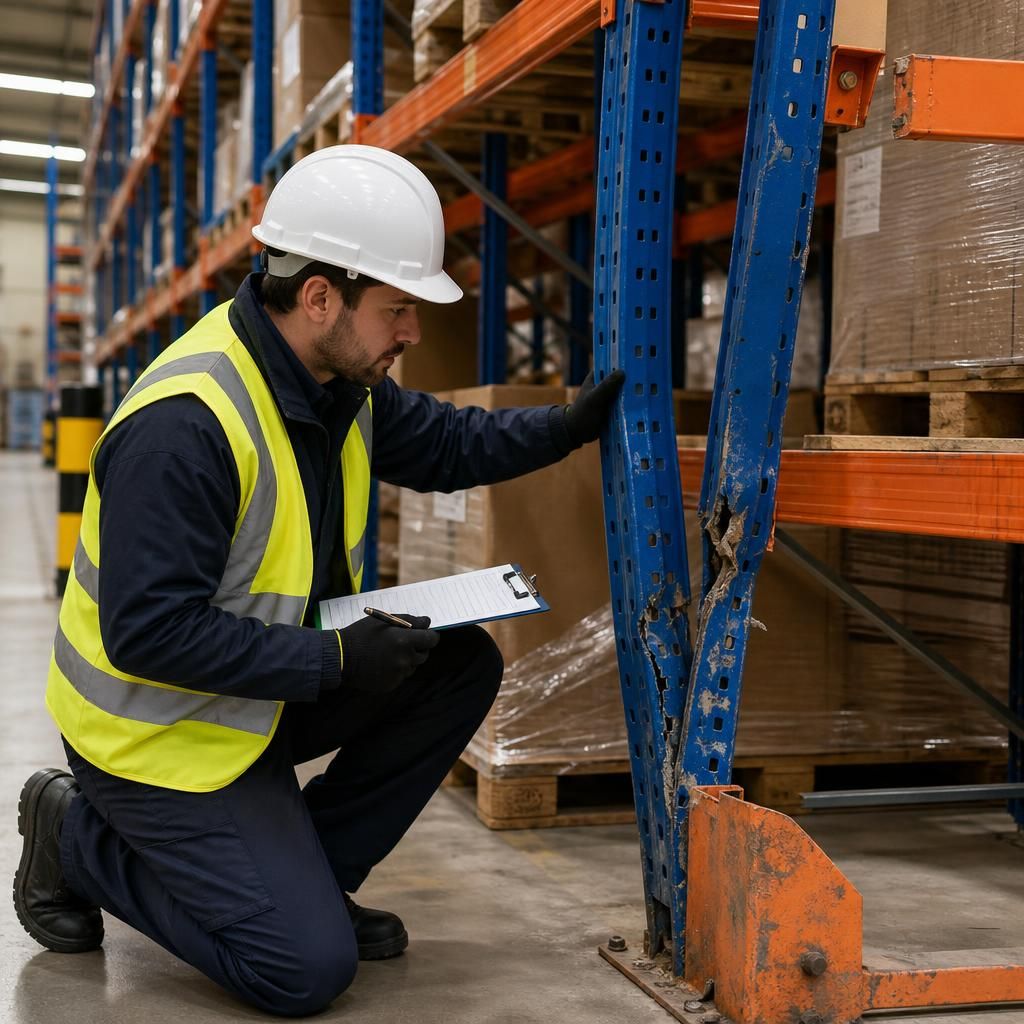
Neglecting regular warehouse racking certification allows damage, overloading and changes to remain undetected until they create a serious safety or operational problem. A competent assessment can identify defects early, before an affected bay or aisle has to be taken out of service.
When unsafe warehouse racking is discovered after an incident, the response may require urgent unloading, stock relocation, component replacement and restricted access. This can interrupt picking, replenishment and dispatch, while also increasing the likelihood of stock or handling-equipment damage. Keeping certification current supports planned repairs, provides a clear record of inspections and helps maintain safe, efficient warehouse operations.
Arrange your warehouse racking certification assessment
Arrange your warehouse racking certification assessment with Able Racking to identify defects, confirm compliance and address risks before they cause injury or disruption. Contact our experienced team to plan a competent inspection for your warehouse.