
How frequently should warehouse racking inspections be scheduled to maintain safety and compliance?
Warehouse racking should undergo a documented expert inspection at least every 12 months, supported by regular visual checks—typically weekly or based on a written risk assessment—by trained staff. Arrange an additional inspection after impact, significant damage, alteration, relocation or any event that could affect stability, and address reported defects without delay.
Warehouse racking should receive a documented inspection by a technically competent person at intervals of no more than twelve months. This annual inspection should be supported by regular visual checks, normally carried out weekly or at another frequency justified by a written risk assessment. Additional inspections are necessary after impact, significant damage, alteration, relocation or any event that could affect the stability or safe operation of the system.
The correct frequency depends on the working environment, the design and condition of the warehouse racking, and the way it is used. A busy warehouse with frequent forklift movements, high traffic routes, changing loads or a history of damage may require more frequent checks than a quieter, well-controlled area. The inspection schedule should therefore be based on the risks present rather than treated as a fixed administrative exercise.
Annual expert inspection
The formal inspection should be completed by a suitably trained and experienced warehouse racking inspector who can assess the system against its design, operating conditions and relevant safety guidance. The inspection should cover the structure, including frames, beams, bracing, connections, baseplates, floor fixings, protection and load notices. It should also consider whether the system is being used within its intended capacity and configuration.
The inspector should record damage, defects, missing components, unauthorised changes, overloading indicators and any conditions that could reduce stability. The resulting report should identify the location and seriousness of each issue, recommend corrective action and provide a clear record for follow-up. An inspection is not complete simply because the system has been visually reviewed; findings must be communicated and managed through to resolution.
Routine visual checks
Trained employees should carry out regular visual checks between formal inspections. These checks can identify obvious problems such as bent or displaced components, damaged guards, missing safety pins, loose fixings, impact marks, leaning frames, fallen stock or changes to the arrangement of loads. Employees should know what to look for, how to report concerns and when to stop using an affected area.
Visual checks do not replace the annual inspection. Their purpose is to identify developing or sudden damage promptly, allowing the business to control the risk before the next scheduled expert visit. The frequency should be documented and reviewed when working practices, traffic levels or the condition of the equipment change.
When an additional inspection is required
Arrange an additional inspection following any event that may have affected the integrity of the warehouse racking. This includes:
- Impact from a forklift, pallet truck or other vehicle
- Visible bending, twisting, cracking, displacement or other damage
- Unauthorised modification, repair or change of layout
- Relocation, extension or reconfiguration of the system
- A change in the type, size or weight of stored loads
- Evidence that loads have fallen or been placed incorrectly
- Building movement, flooding, fire or another event that could affect the floor or structure
- Repeated reports of instability, component failure or unsafe working practices
Where damage is suspected, the affected section should be assessed immediately. It may need to be unloaded, isolated and clearly marked until a competent person confirms that it is safe to use. Components should not be straightened, welded or replaced without confirming that the repair is suitable for the system and its design.
How to maintain an effective inspection schedule
- Document the inspection and visual-check arrangements in the warehouse safety procedures.
- Assign responsibility to named, trained employees for routine checks and defect reporting.
- Use a consistent method for recording locations, findings, photographs, actions and completion dates.
- Ensure reported damage is classified, controlled and repaired without avoidable delay.
- Review the schedule after incidents, layout changes, changes in usage or repeated defects.
- Keep inspection reports, repair evidence and training records available for audit.
The responsible person should also confirm that warehouse racking users understand load limits, safe loading practices and the reporting procedure. Good housekeeping, suitable impact protection and controlled vehicle movements reduce the likelihood of damage, but they do not remove the need for formal inspections.
In practical terms, the minimum sensible arrangement is regular documented visual checking, a competent formal inspection at least every twelve months, and immediate assessment after damage or change. A risk assessment may justify a shorter interval, particularly where the equipment is heavily used or exposed to a higher likelihood of impact. Keeping the schedule under review helps maintain compliance, protect people and stock, and identify defects before they become more serious.
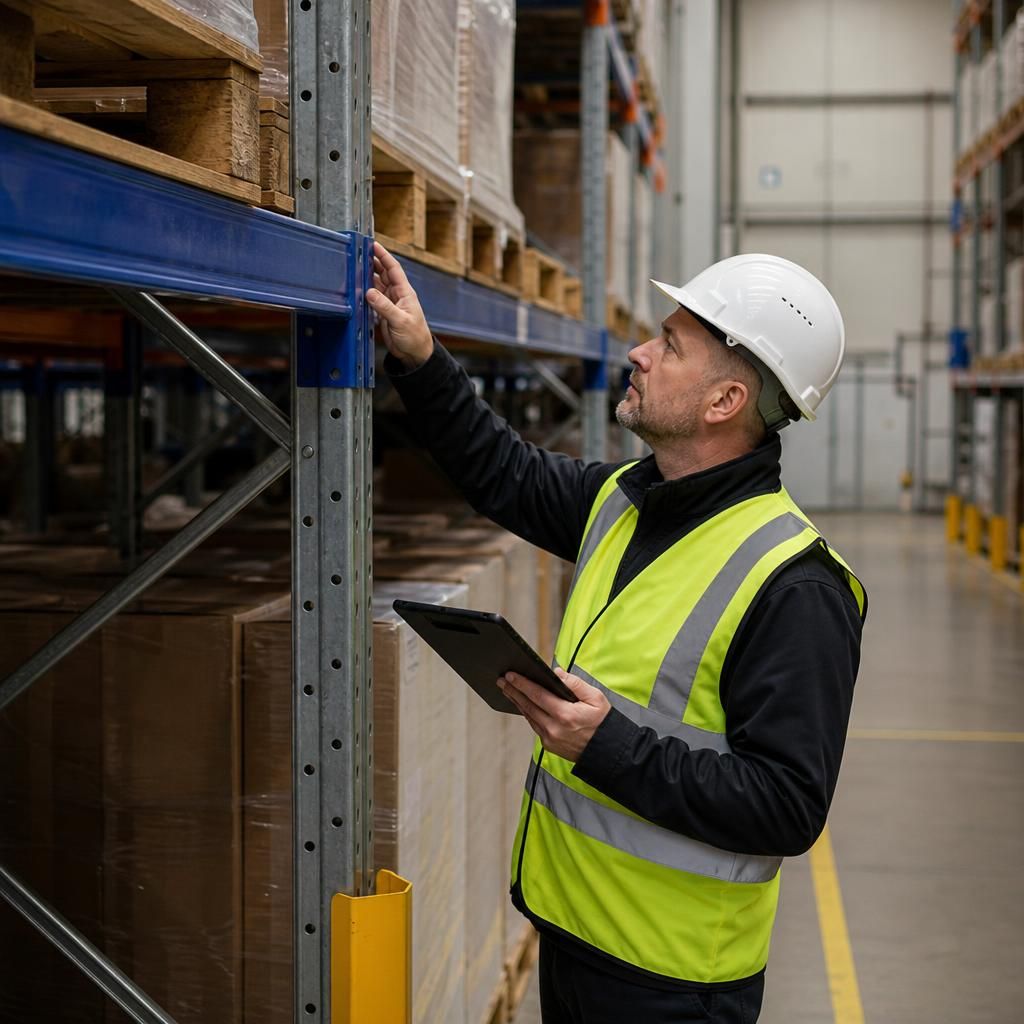
An additional warehouse racking inspection is required after any event that could affect the system’s stability, even if damage is not immediately obvious. This includes forklift impact, fallen loads, unauthorised alterations, relocation, changes in stored loads, flooding or fire.
The affected area should be assessed promptly by a technically competent inspector. Where damage is suspected, unload and isolate the section until it has been confirmed safe. Do not straighten, weld or replace damaged components without establishing that the proposed repair is suitable for the system and its design.
Arrange Your Warehouse Racking Inspection
Arrange your warehouse racking inspection with Able Racking to confirm that your system remains safe, compliant and suitable for its current use. Contact our experienced inspection team to schedule a formal assessment or discuss any damage, alterations or changes in operating conditions.