
What training and qualifications do the inspectors possess for conducting warehouse racking cross beam checks?
Able Racking inspectors are trained and experienced competent persons with practical expertise in warehouse racking inspections, including cross beam condition checks, risk assessment and defect reporting. Their training covers relevant UK safety guidance, manufacturer requirements and recognised warehouse racking inspection procedures, supported by ongoing professional development and hands-on experience.
Able Racking inspectors conducting warehouse racking cross beam checks are trained competent persons with practical experience in warehouse racking inspections, defect assessment and safety reporting. Their competence combines knowledge of recognised warehouse racking guidance, relevant UK health and safety requirements, manufacturer instructions and hands-on understanding of how warehouse racking systems are installed, loaded and used.
There is not one universal statutory licence that qualifies a person to inspect every warehouse racking system. Competence is demonstrated through appropriate training, relevant experience, an understanding of inspection procedures and the ability to identify, assess and report hazards accurately. Inspectors must also understand the limits of their role and refer structural, design or repair decisions to suitably qualified specialists where necessary.
The training and experience relevant to cross beam checks generally covers:
- Warehouse racking construction: identifying beams, frames, connectors, locking devices, protection components and other parts of a storage system.
- Condition assessment: recognising bending, twisting, impact damage, cracking, corrosion, missing components, displaced connectors and other defects that may affect load-bearing performance.
- Risk classification: judging the seriousness of observed damage and understanding when action is required, such as removing a damaged component from service, unloading a location or arranging an urgent repair.
- Safe inspection practice: working safely around warehouse traffic, forklifts, stored goods and operational hazards while maintaining a suitable inspection standard.
- Standards and guidance: applying relevant UK safety guidance, recognised warehouse racking inspection principles, applicable British or European standards and the storage system manufacturer’s instructions.
- Reporting and communication: recording defects clearly, identifying their location, explaining the required action and escalating significant risks promptly to the responsible person.
Inspectors are expected to understand the principles set out in BS EN 15635, which provides guidance on the use and maintenance of steel static storage systems. This includes the need for systematic visual inspections by a competent person, appropriate follow-up of reported damage and formal inspections at suitable intervals based on the warehouse operation and risk. The precise inspection arrangements must reflect the equipment, loading practices, traffic levels and site conditions rather than relying on a generic checklist alone.
Practical experience is particularly important during cross beam checks. A competent inspector does not only look for obvious damage. They consider whether a beam is correctly seated, whether locking components are present, whether loads are supported as intended and whether damage may have resulted from vehicle impact, overloading, poor load placement or movement within the system. They also compare findings with the warehouse racking layout, available load information and previous inspection records where these are available.
Training is supported by ongoing professional development and experience across different warehouse racking configurations and operating environments. This helps inspectors keep their knowledge current when guidance, equipment, manufacturers’ instructions or site risks change. It also supports consistent decisions when defects are less obvious or when several minor issues combine to create a material safety concern.
During a warehouse racking cross beam check, the inspector will normally:
- Review relevant site information, including the warehouse racking arrangement, known restrictions, previous findings and available load details.
- Inspect accessible cross beams and associated components for visible damage, displacement, deterioration and signs of misuse.
- Assess the likely significance of each defect using recognised inspection criteria and the condition of the wider system.
- Record the location and nature of findings so that the affected beam or bay can be identified without ambiguity.
- Report actions according to the level of risk, including monitoring, repair, replacement, unloading or taking an affected area out of use where appropriate.
- Escalate issues that require engineering assessment, specialist repair or confirmation of the warehouse racking system’s design capacity.
Inspector training does not replace the warehouse operator’s responsibilities. The person in control of the workplace must ensure that warehouse racking is used within its stated capacity, damage is reported, unauthorised alterations are prevented and recommended repairs or restrictions are acted upon. Regular checks by trained warehouse personnel should complement, not replace, a competent formal inspection.
For customers, the important assurance is that cross beam findings are based on recognised inspection practice, practical warehouse racking knowledge and documented risk assessment rather than a superficial visual check. Able Racking’s experienced operatives use their training and field experience to identify defects accurately, explain their significance in clear terms and provide proportionate recommendations that support safe, compliant and efficient warehouse operations.
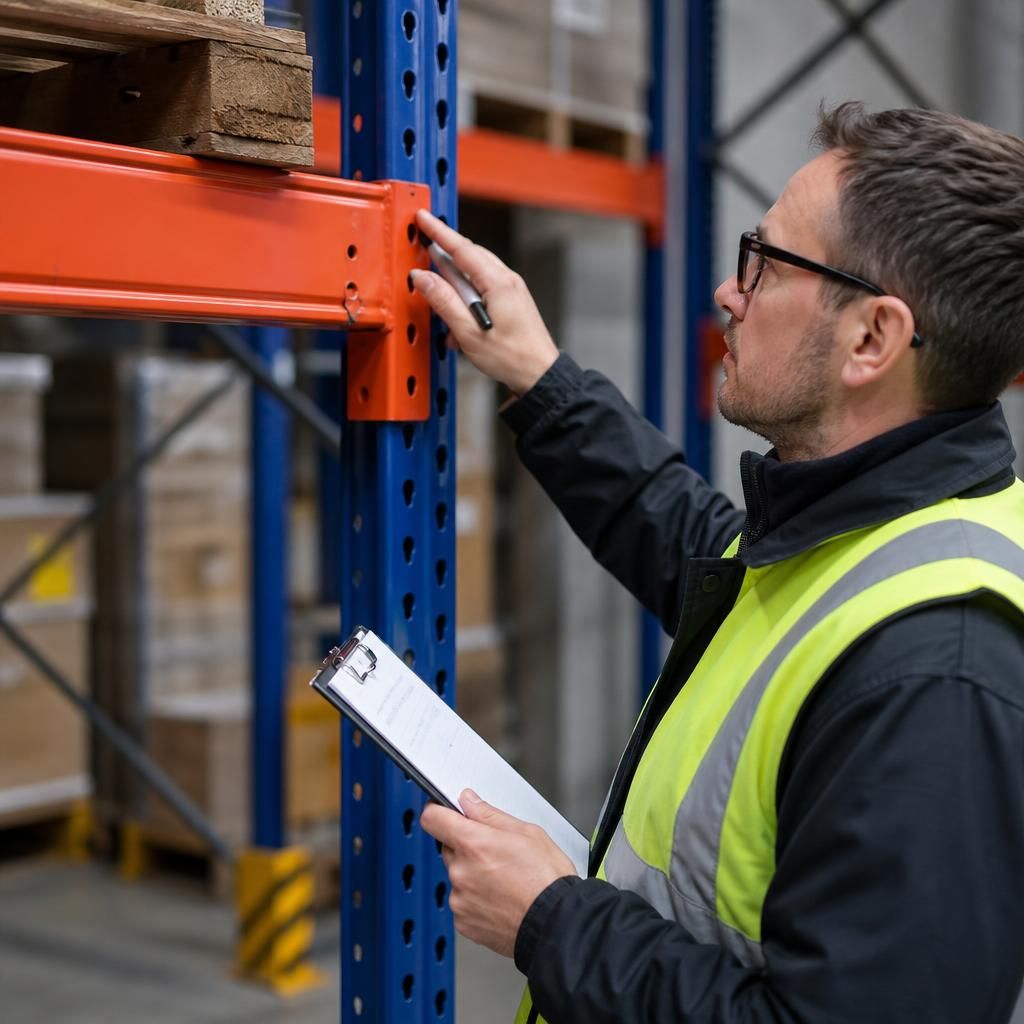
Warehouse racking cross beam checks should be carried out by a competent inspector with appropriate training, practical experience and a sound understanding of recognised warehouse racking inspection guidance. Competence includes identifying structural damage, assessing its potential risk and reporting the required action clearly.
Inspectors should understand relevant UK health and safety requirements, BS EN 15635 principles, manufacturer instructions and safe working practices around warehouse traffic and stored loads. Practical experience is essential because defects such as beam distortion, displaced connectors, missing locking devices, corrosion or impact damage must be assessed in the context of the complete warehouse racking system.
A reliable inspection also depends on accurate reporting. The inspector should identify the affected location, describe the defect, classify its significance and recommend proportionate action, such as monitoring, unloading, repair or specialist assessment. Able Racking combines formal training with hands-on experience so that cross beam findings are based on documented risk assessment rather than a superficial visual check.
Discuss your warehouse racking cross beam check
Discuss your warehouse racking cross beam check with Able Racking to review inspection findings, clarify recommended actions and arrange any further assessment or support required.